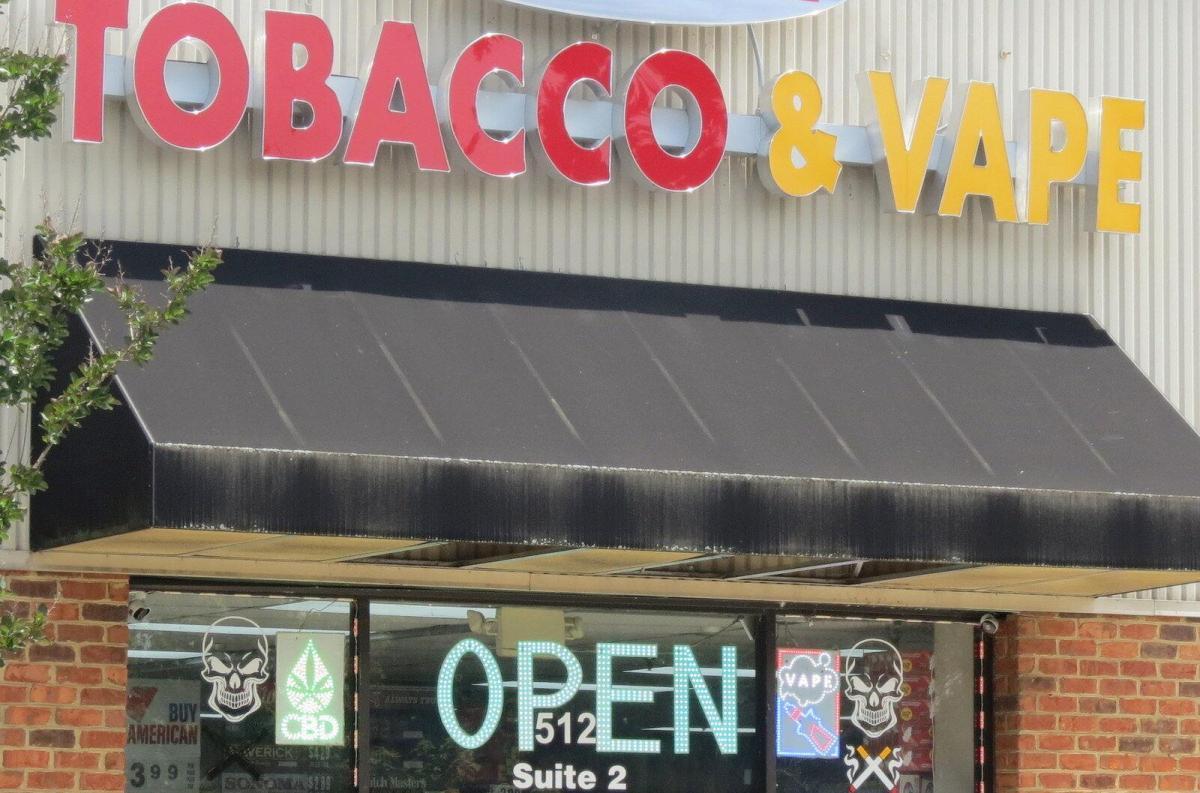
According to a report from mtairynews on April 7, the Mount Airy city government in North Carolina is considering a series of new measures to better manage the growth of local tobacco, e-cigarette, and marijuana shops.
The city's planning director, Andy Goodall, stated at a meeting on Thursday, April 4th, that the city actually has no relevant regulations in place. The council members voted during a city commissioner meeting to hold a public hearing on the proposed guidelines.
The public hearing is scheduled to be held at 6 p.m. on April 18th at city hall, to allow residents the opportunity to express their views on the regulations.
The proposal originated from Police Chief Dale Watson during a mid-February city council meeting discussing how to better regulate e-cigarettes, marijuana, and tobacco shops. He cited statistics showing that 70% of local middle school students have tried e-cigarettes, with 30% using them daily, while 75% of high school students have tried them, with 55% using them daily.
Currently, there are less than 10 businesses operating within the city that sell related products. Watson and Gould said that if any new regulations are approved, these businesses will not be affected. These regulations will provide a framework for the establishment and operation of future stores in the area.
The proposed new regulations include:
Restricting future e-cigarette/marijuana/tobacco retail stores to specific zones.
Stores are prohibited within 1,000 feet of churches, schools, libraries, daycare centers, or parks; existing residential or residential zone properties within 500 feet; or within 1,000 feet of established tobacco/e-cigarette/marijuana stores or licensed establishments;
Products including but not limited to Kratom, Cannabidiol (CBD), Delta-8, Delta-10, and similar non-tobacco items will be restricted to no more than 25% of total sales in stores.
The stores are required to comply with all federal, state, and local laws regarding advertising, age restrictions, and other regulations.
The proposed regulation in the city will define e-cigarette, marijuana, and tobacco shops as any professional retail establishment that primarily engages in the sale of any products containing tobacco or nicotine, accounting for 51% or more of total sales. This includes cigarettes, cigars, pipe tobacco, e-cigarettes, e-liquids, snuff, chewing tobacco, dissolvable tobacco products, heated tobacco products, and marijuana products. It also covers any electronic devices, such as e-cigarettes or vape devices, that deliver nicotine, THC, or other substances to individuals inhaling these products.
The city's planning commission reviewed the proposed amendments at the end of March and recommended approval with a 7-0 vote, making some minor modifications.
We welcome news tips, article submissions, interview requests, or comments on this piece.
Please contact us at info@2firsts.com, or reach out to Alan Zhao, CEO of 2Firsts, on LinkedIn
Notice
1. This article is intended solely for professional research purposes related to industry, technology, and policy. Any references to brands or products are made purely for objective description and do not constitute any form of endorsement, recommendation, or promotion by 2Firsts.
2. The use of nicotine-containing products — including, but not limited to, cigarettes, e-cigarettes, nicotine pouchand heated tobacco products — carries significant health risks. Users are responsible for complying with all applicable laws and regulations in their respective jurisdictions.
3. This article is not intended to serve as the basis for any investment decisions or financial advice. 2Firsts assumes no direct or indirect liability for any inaccuracies or errors in the content.
4. Access to this article is strictly prohibited for individuals below the legal age in their jurisdiction.
Copyright
This article is either an original work created by 2Firsts or a reproduction from third-party sources with proper attribution. All copyrights and usage rights belong to 2Firsts or the original content provider. Unauthorized reproduction, distribution, or any other form of unauthorized use by any individual or organization is strictly prohibited. Violators will be held legally accountable.
For copyright-related inquiries, please contact: info@2firsts.com
AI Assistance Disclaimer
This article may have been enhanced using AI tools to improve translation and editorial efficiency. However, due to technical limitations, inaccuracies may occur. Readers are encouraged to refer to the cited sources for the most accurate information.
We welcome any corrections or feedback. Please contact us at: info@2firsts.com