New Disposable VUSE GO 5000 and VUSE GO 6000 Launched

InnovationVUSE by 2FIRSTS.ai
Nov.23.2023
New Disposable VUSE GO 5000 and VUSE GO 6000 Launched
VUSE recently launched "VUSE GO 5000" and "VUSE GO 6000" disposable products in the Middle East market.

On November 23, 2FIRSTS, a popular vaping brand, discovered that VUSE has launched new disposable products called "VUSE GO 5000" and "VUSE GO 6000" in the Middle East market. These products come in high nicotine content variants, with the "VUSE GO 5000" offering 5000 puffs and the "VUSE GO 6000" offering 6000 puffs.
New Disposable VUSE GO 5000 and VUSE GO 6000 Launched
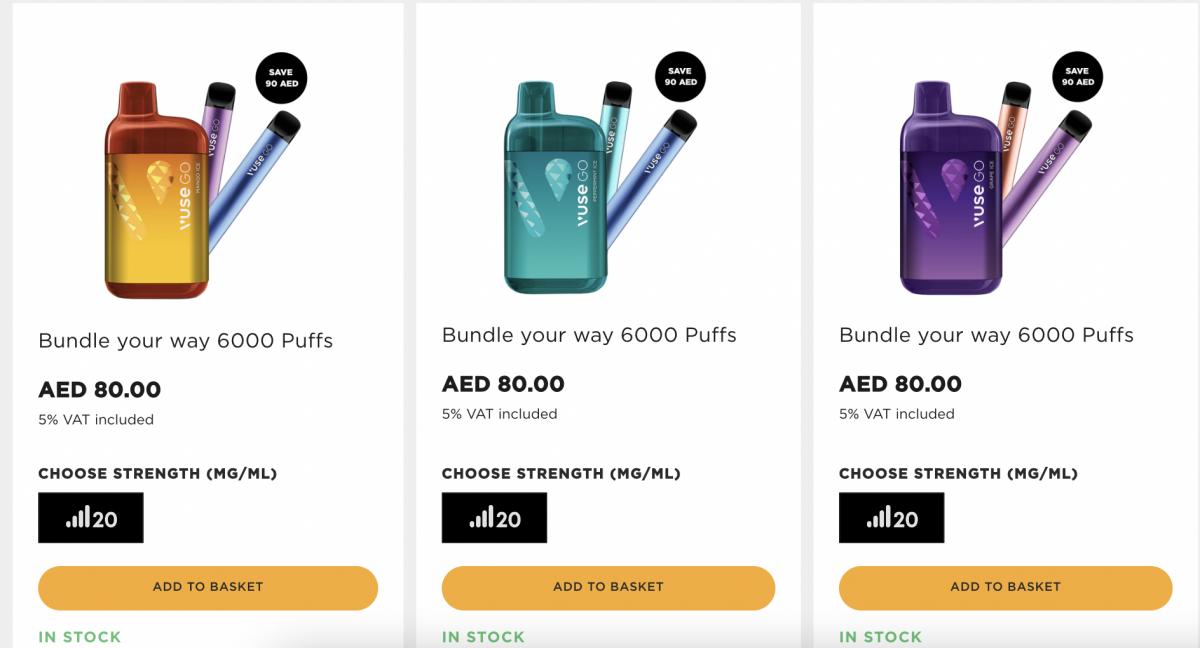
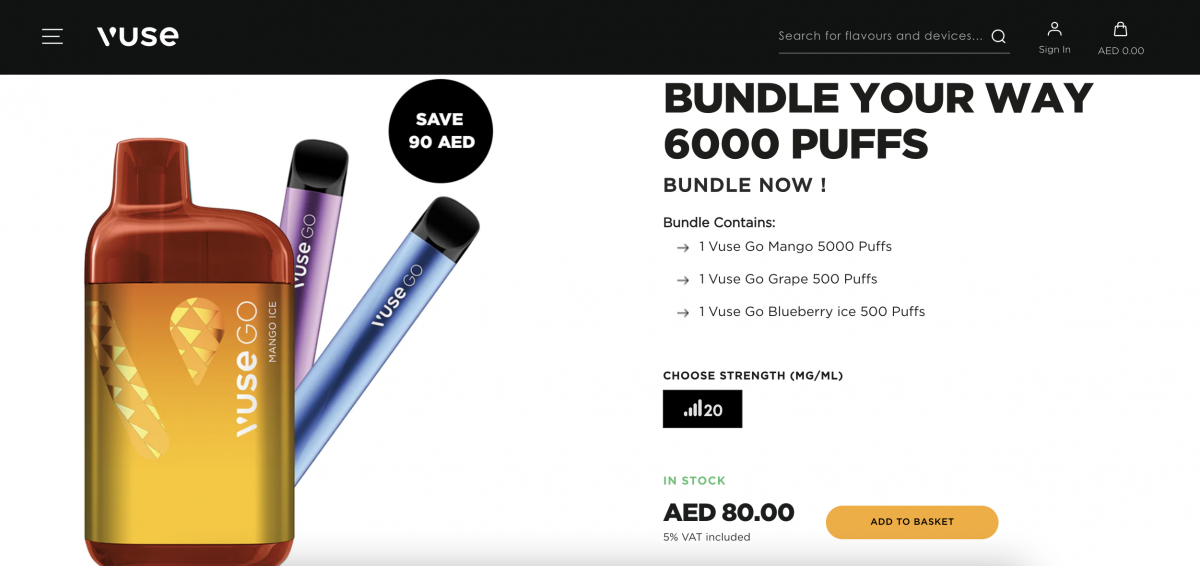
The product "VUSE GO 6000" sold on the VUSE official website | Image source: VUSE


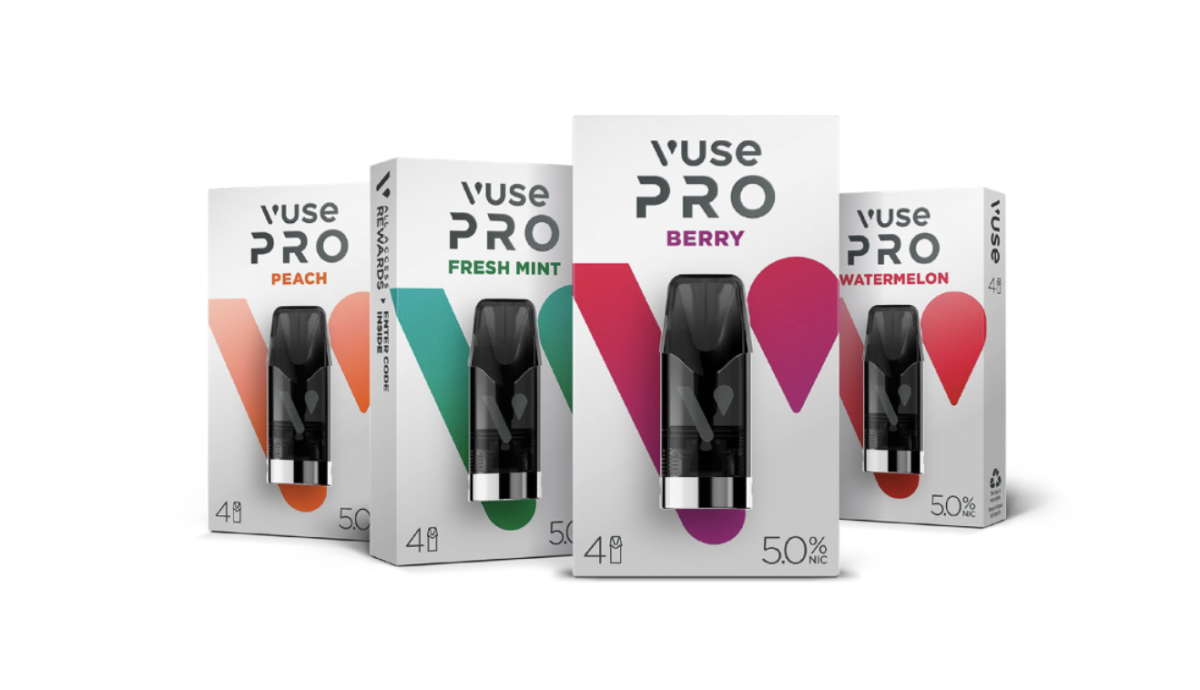
These two products each come in 5 different flavors, namely mango ice, grape ice, blueberry ice, mint ice, and blue raspberry.

New Disposable VUSE GO 5000 and VUSE GO 6000 Launched
The product "VUSE GO 5000" is sold on the official VUSE website. Image source: VUSE.


The official retail price of VUSE GO 5000 is 80 dirhams, equivalent to approximately 155 Chinese yuan.


Previously, 2FIRSTS conducted market research in Russia and found that VUSE had launched a product with a range of 5000 puffs in that market, with a retail price of 1300 Russian rubles, approximately 95 Chinese yuan, which was 60 Chinese yuan lower than the official VUSE website in the Middle East.


We welcome news tips, article submissions, interview requests, or comments on this piece.

Please contact us at info@2firsts.com, or reach out to Alan Zhao, CEO of 2Firsts, on LinkedIn


Notice

1.  This article is intended solely for professional research purposes related to industry, technology, and policy. Any references to brands or products are made purely for objective description and do not constitute any form of endorsement, recommendation, or promotion by 2Firsts.

2.  The use of nicotine-containing products — including, but not limited to, cigarettes, e-cigarettes, nicotine pouchand heated tobacco products — carries significant health risks. Users are responsible for complying with all applicable laws and regulations in their respective jurisdictions.

3.  This article is not intended to serve as the basis for any investment decisions or financial advice. 2Firsts assumes no direct or indirect liability for any inaccuracies or errors in the content.

4.  Access to this article is strictly prohibited for individuals below the legal age in their jurisdiction.


Copyright


This article is either an original work created by 2Firsts or a reproduction from third-party sources with proper attribution. All copyrights and usage rights belong to 2Firsts or the original content provider. Unauthorized reproduction, distribution, or any other form of unauthorized use by any individual or organization is strictly prohibited. Violators will be held legally accountable.

For copyright-related inquiries, please contact: info@2firsts.com


AI Assistance Disclaimer


This article may have been enhanced using AI tools to improve translation and editorial efficiency. However, due to technical limitations, inaccuracies may occur. Readers are encouraged to refer to the cited sources for the most accurate information.

We welcome any corrections or feedback. Please contact us at: info@2firsts.com

Nicotine Pouches Gain Ground in U.S. Convenience Stores as Vape Unit Sales Fall 14%
According to convenience retail publication CStore Decisions, U.S. convenience store tobacco categories are undergoing a structural shift. Based on Circana OmniMarket Total U.S. Convenience data for the 52 weeks ending June 14, 2026, cigarettes remained the largest category with $50.8 billion in sales, but unit sales declined 5.3%. Electronic smoking devices and vaping products also declined, while modern oral nicotine products continued to grow, with nicotine pouch sales rising 29% in dollars and 17% in units. Retailers said changing consumer preferences are reshaping tobacco product assortments at convenience stores.
Regulations
Aug.07
JT’s Ploom Volumes Rise 43.5% as Cigarettes Anchor Its Transition
JT’s Ploom heated-tobacco volumes rose 43.5% in the first half of 2026, while combustibles still represented about 97% of its tobacco volume and remained the main earnings base. In Japan, reduced-risk products now account for 48.7% of industry shipments, shifting competition from category adoption towards brand share, pricing and consumer retention. JT’s results offer a revealing case of a traditional tobacco company pursuing a prolonged, dual-track transformation.
JTI
Jul.30
Germany Probes 7.6 Million Illegal Vape Case With Estimated €33.3 Million Tax Loss; Four Chinese Manufacturer Employees Under Investigation, Some Packaging in Enforcement Images Resembles FUMOT Products
German prosecutors and customs authorities are conducting a criminal investigation into an alleged cross-border organised vape network. Authorities say that between January 2024 and March 2025, four employees of an unnamed Chinese e-cigarette manufacturer allegedly built a network of sales agents and wholesalers that brought more than 7.6 million nicotine disposable vapes into Germany, causing an estimated €33.3 million in excise-tax losses. The manufacturer has not been named. Some products visible in enforcement images have packaging resembling products from FUMOT’s portfolio. European regulatory records from 2024, FUMOT’s public overseas-sales materials and records involving German vape importer and distribution company Zamu-Pro GmbH also show FUMOT/RandM products and German distribution activity during the period covered by the investigation.
Sep.21
Kumulus Vape2026 H1 Revenue Falls 8.3% but Profit Rises 24% as B2B Weakens and Consumer Channels Grow
French vaping company Kumulus Vape reported first-half 2026 revenue of €25.5 million, down 8.3% year over year, as its core B2B distribution business fell 11% to €21.6 million. B2C and store-network revenue rose 5.6% and 17.8%, respectively. Commercial margin increased to 26.3% from 21.7%, while net profit rose 24.1% to €0.8 million. The company attributed the profitability improvement to catalog optimization, logistics restructuring and the ramp-up of Labster, its in-house production unit for proprietary brands.
Market
Sep.17 by 2Firsts Perspectives
From Product Innovation to Integrated Solutions: NEXTECH Expands Its Global Heated Tobacco Solutions
NEXTECH launched its NEXE Pro circumferential-heating tobacco stick globally at InterTabac 2026, as the company expands from product innovation into broader heated tobacco solutions. Amid intensifying competition across global HTP markets, NEXTECH is strengthening its R&D, manufacturing and pre-launch support capabilities to serve different types of business customers.
Industry Insight
Sep.15
Smoke-Free Business Hits 42% of Q2 Net Revenue as PMI’s First TNFD Report Covers Single-Use Electronics, Critical Raw Materials and IQOS Repairs
Philip Morris International has published its first report aligned with the Taskforce on Nature-related Financial Disclosures, bringing its electronics supply chain and the use and end-of-life stages of smoke-free devices and consumables into its nature-related assessment. PMI said its smoke-free business accounted for about 42% of total net revenues in the second quarter of 2026. The report says non-circular electronic products, particularly single-use items, can increase consumption of limited natural resources and also details an IQOS repair pilot. A 2040 circularity scenario tests assumptions including a 50% reduction in product waste-related costs, 10% raw-material savings and a 25% substitution rate for refurbished products versus new products.
Sep.23