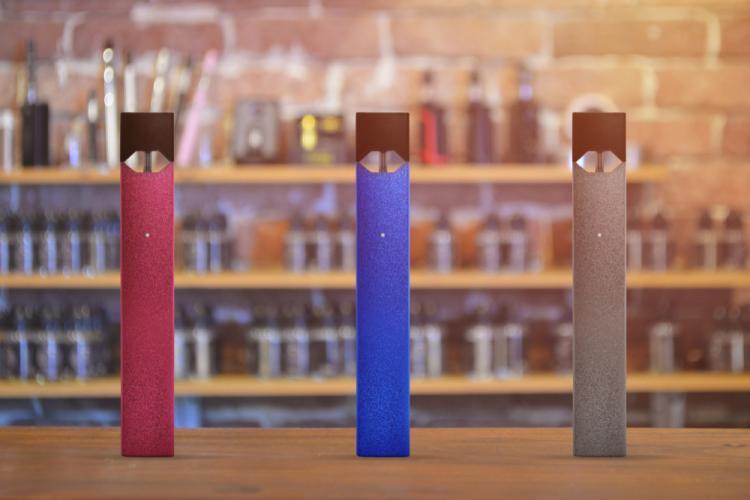
The New Jersey town of Secaucus has once again amended regulations and permits for electronic smoking devices and establishments. The ordinance updates Chapter 141 of the Town Code, previously enacted to restrict smoking in public places, and establishes permit requirements for establishments selling electronic smoking devices to promote public health.
Following a review and recommendations from the Health Committee, the mayor and council have decided to update this chapter to reflect updated permit regulations and fees. Specifically, the ordinance updates regulations to indicate that no more than 11 licenses may be issued to retail electronic smoking device establishments in town. The ordinance also adds a section outlining actions that can result in disqualification.
Mayor Michael Gonnelli and the city council introduced this ordinance during a meeting on October 12th. Mayor Gary Jeffas explained the changes that would be made according to the ordinance. "So we've developed an ordinance over the last several months," Jeffas said. "We have nine vendors, but since the passage of the ordinance, I've been in communication with the health department, and we currently have 11 licensed vendors." A previous ordinance passed in June had limited the number of e-cigarette establishments to nine. However, there are actually 11 existing establishments, making the new ordinance necessary, as the town does not wish to remove any of the existing establishments.
Therefore, we realized that the number in the regulation is actually less than our current suppliers," said Jefas. "So, revoking and canceling licenses is not the town's intention, but we don't want them to further expand their licenses. Therefore, the regulation is indeed being corrected, and the only change is that the number will be consistent with the actual licenses we currently have. So, 11 will be the maximum number of licenses available for the town in the future.
A summary of disqualifying irregularities.
Jeffas also pointed out that the town is considering other provisions regarding the cancelation of violations. "We included it to further clarify that if a store is breaking the law and selling products that aren't allowed, like marijuana or similar items, and they're causing harm from a law enforcement or public health perspective, then obviously we have the authority to revoke their license based on their actions," says Jeffas.
The town has been revising its regulations to update the limits, and as a result, the new bylaw includes sections on disqualification and related topics. "When I spoke with the town prosecutor, I said that since we are changing it, let's add other mechanisms where if they engage in any illegal activity or have any trouble with the police, they could have their license revoked if they don't comply with the proper way of selling their products," said Jeffas.
According to Jeffas, the amendment and previous legislation aim to limit the number of e-cigarette suppliers in Sycamore, as the town does not want too many.
The Health Committee requested the development of this law during their meeting, as they do not wish for the e-cigarette industry to continue to expand," said Jefas. "They desire a restriction so that towns will not be overtaken by them. Therefore, this is one of their urgent objectives.
Statement:
This article is compiled from third-party information and is intended for industry communication and learning purposes only.
This article does not represent the views of 2FIRSTS and 2FIRSTS cannot confirm the authenticity or accuracy of the article's content. The compilation of this article is intended only for industry communication and research.
Due to limitations in the translator's skills, the translated article may not fully convey the same message as the original. It is recommended to refer back to the original article for accuracy.
2FIRSTS maintains complete alignment with the Chinese government on any domestic, Hong Kong, Macau, Taiwan, or foreign-related expressions and positions.
The copyright of the compiled information belongs to the original media and author. If there is any infringement, please contact us for removal.
Disclaimer
This article is provided solely for professional research, industry discussion, and informational purposes. Any references to brands, companies, products, technologies, or policies are made for factual reporting and analytical purposes only, and do not constitute endorsement, recommendation, promotion, or advertising by 2Firsts.
Nicotine-containing products, including but not limited to cigarettes, e-cigarettes, heated tobacco products, and nicotine pouches, carry significant health risks. Readers are responsible for complying with all applicable laws and regulations in their respective jurisdictions, including age restrictions and access limitations.
The information contained in this article should not be regarded as investment, legal, medical, regulatory, or commercial advice. While 2Firsts strives to ensure the accuracy and reliability of its content, it does not assume liability for any direct or indirect loss arising from errors, omissions, inaccuracies, or reliance on the information contained herein.
This article is not intended for individuals below the legal age for accessing tobacco or nicotine-related information in their jurisdiction.
Copyright Notice
This article is either original content produced by 2Firsts or content reproduced, translated, summarized, or adapted from third-party sources with attribution where applicable. The intellectual property rights of the original content remain with 2Firsts or the respective original rights holders.
No individual or organization may copy, reproduce, distribute, republish, modify, translate, or otherwise use this content without prior authorization. Any unauthorized use may result in legal action.
For copyright-related inquiries, corrections, or removal requests, please contact: info@2firsts.com.
AI-Assisted Translation and Editing Notice
Portions of this article may have been translated, edited, or reviewed with the assistance of artificial intelligence tools to improve efficiency and readability. Due to the limitations of AI-assisted translation and editing, discrepancies, omissions, or inaccuracies may exist when compared with the original source.
Where applicable, readers are advised to refer to the original source for the most complete and accurate information. If you identify any errors or believe that any content infringes upon your rights, please contact us at info@2firsts.com, and we will review and address the matter promptly.