NSW government seizes $1m of illegal e-cigarette products in 19 weeks

2Firsts Events
Jun.13.2022

Cancer Council commends ‘zero tolerance’ for unlawful sales


Cancer Council NSW has commended the NSW Government’s “zero tolerance” of nicotine e-cigarette sales without a doctor’s prescription, following a major increase in the volume of illegal products seized in 2022 compared with the past two years.


Director of Cancer Prevention and Advocacy at Cancer Council NSW, Anita Dessaix, said the surge in illegal product seizures comes only six weeks after Australian National University (ANU) published a landmark study highlighting the extensive harms of e-cigarettes especially to young people.


“In the 18 months from July 2020 to the end of last year, $2 million worth of illegal nicotine e-cigarette products was seized – and the government has since seized half as much again in only 19 weeks this year,” Ms Dessaix said.


As it stands, the only legal way to access a vape containing nicotine is via a valid doctor’s prescription for those who feel it will aid their quit smoking journey. However, illegal seizure trends are growing exponentially,


“We see unlawful e-cigarette use everywhere we look, with young people the main users. Community concern among parents and teachers in particular is rising..


“The recently published ANU report showed that the majority of e-cigarette users are young, they are not using e-cigarettes to quit smoking, they are using e-cigarettes with, not instead of, tobacco and those who don’t smoke face a three-fold risk of smoking uptake.

“We congratulate the NSW Government for warning retailers selling e-cigarettes without a valid prescription that they could face fines and even jail for contributing to this crisis.


“For the sake of a profit, these merchants are addicting young people to nicotine, they are exposing young people to a three-fold risk of smoking uptake, and they are flouting federal and state laws designed to protect public health.


“NSW Government, and its Chief Health Officer, Dr Kerry Chant, have shown great leadership in highlighting the major harms of e-cigarettes and putting the merchants who are contributing to it on notice.”


“This is about ensuring that vaping doesn’t undo decades of public health efforts to prevent harm caused by tobacco products”.

Product | OXVA Introduces XLIM PRO 4 With Liquid-Level Anti-Burn Technology and Dedicated Pods
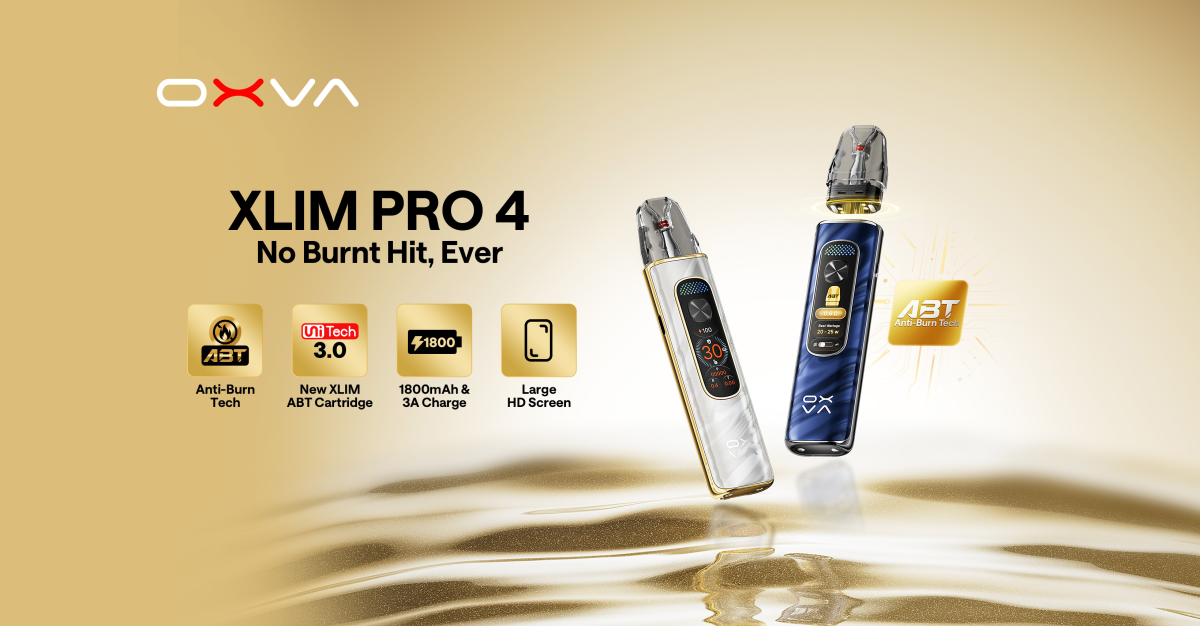
Vaping brand OXVA introduced the XLIM PRO 4 refillable pod system in October 2026, featuring Anti-Burn Tech (ABT) based on smart e-liquid-level detection. The system can issue refill alerts and stop power output when e-liquid levels become too low. ABT requires the XLIM PRO 4 device and a dedicated XLIM ABT cartridge. Standard XLIM pods remain compatible but do not support ABT protection. OXVA previously introduced temperature-based anti-burn technology in the XLIM Pro 2 DNA, developed with Evolv. The new device features a 1,800mAh battery, 5–30W output and a 0.98-inch HD color screen. OXVA's official store lists the device at $37.90 and dedicated ABT replacement cartridges at $12.99. Independent testing confirmed the low-liquid protection response but recorded varying cartridge lifespans.
product
Oct.30
On-Site Report | After FDA Announces Review of PMTA Framework, CTP Director Details Reform Priorities
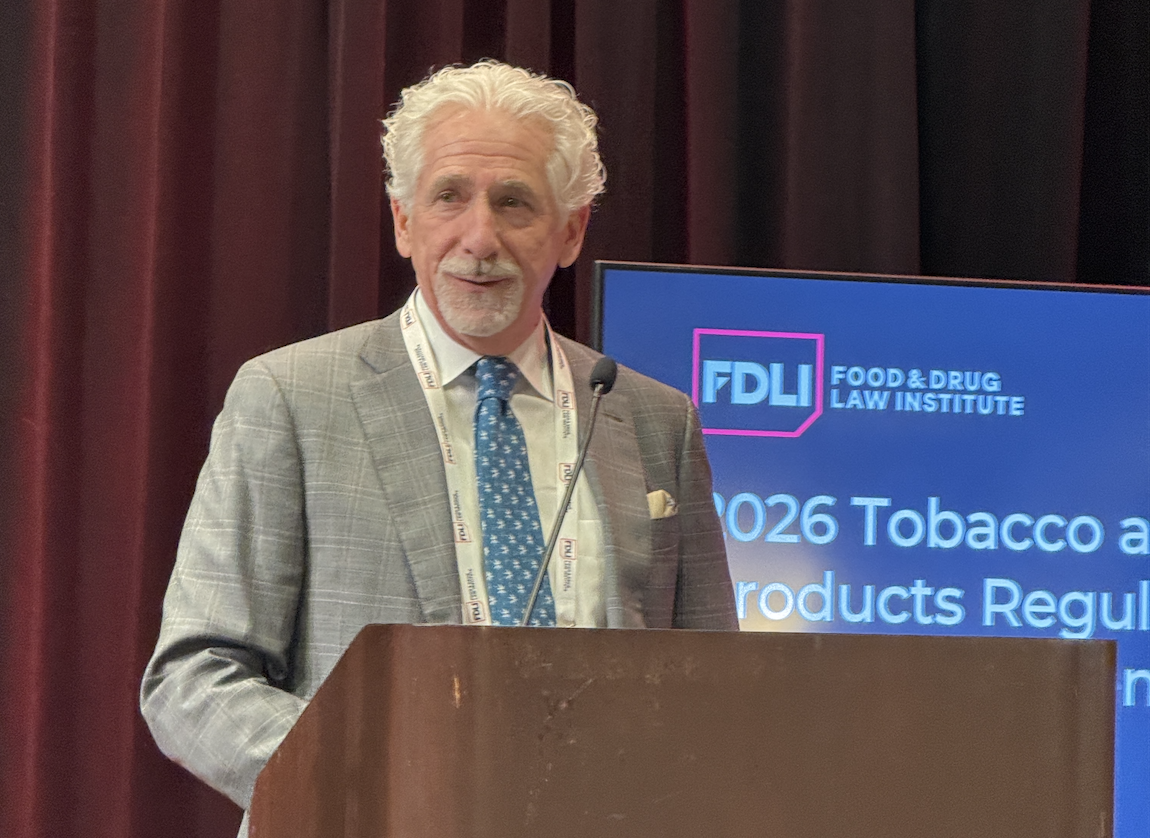
FDA CTP Director Bret Koplow used his FDLI keynote in Washington to outline how the agency is rethinking the PMTA framework. He discussed category-specific review, nicotine pouch and sPMTA pilots, AI-assisted review, a 70% reduction in pending applications, and a major staffing constraint: CTP currently has only nine scientific review teams. He also reaffirmed tobacco harm reduction while stressing youth protection, flavored products, risk communication, and the challenge of unauthorized e-cigarettes.
Regulations
Oct.06
As Regulators Focus on Nicotine Pouch Child Safety, Safeguard Pursues an External Packaging Route
As regulators pay closer attention to child safety in nicotine pouches, manufacturers face a practical challenge: how to strengthen child-resistant packaging without unnecessarily reworking products, production lines and regulatory submissions already in place. In a written interview with 2Firsts, Chemular detailed Safeguard’s external packaging approach, its customer-specific testing requirements and possible PMTA pathways. The model remains early-stage, but it offers a new way to think about an increasingly important regulatory and manufacturing issue.
Industry Insight
Sep.19
India Steps Up Nicotine Pouch Enforcement as ZYN, White Fox Circulate and Drug Panel Urges Halt to New Nicotine Formulations
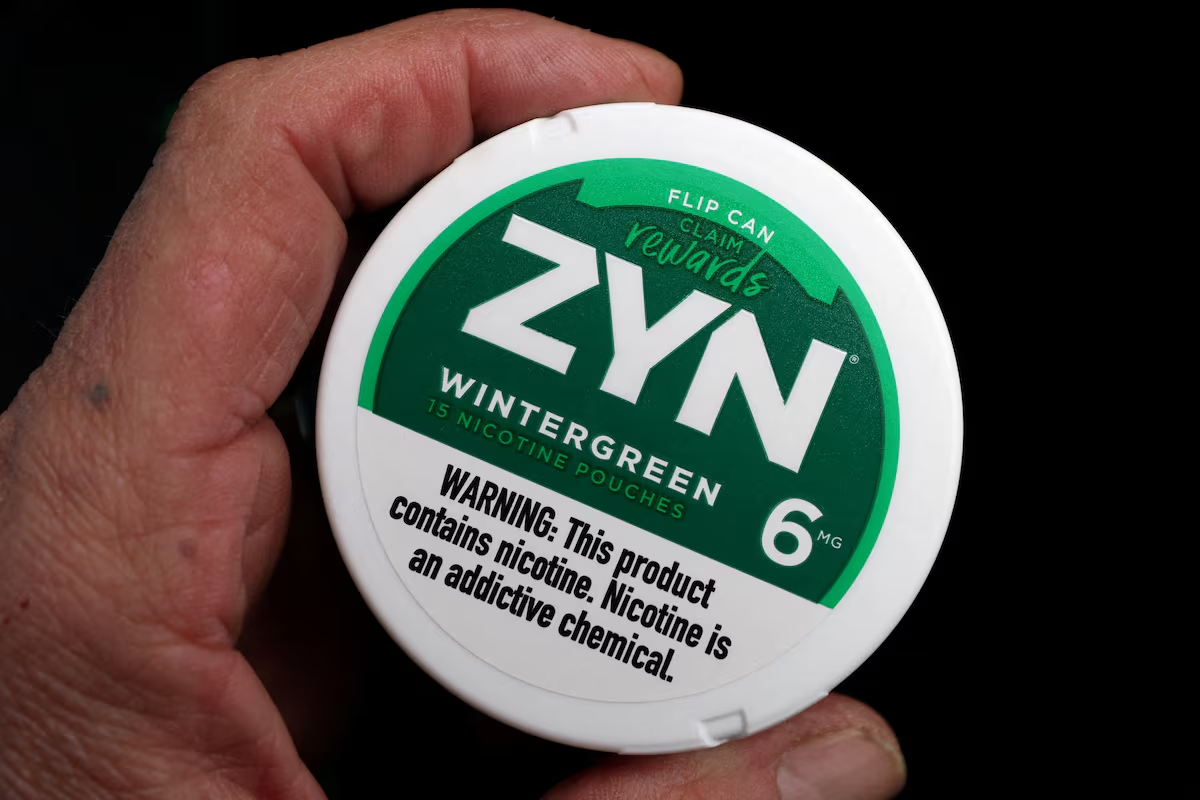
India's Ministry of Health and Family Welfare has directed states to step up enforcement against nicotine pouch sales, citing increased availability through online and offline channels and concern about nicotine exposure among children. Reuters reported that international brands including ZYN and White Fox are being sold in India. A study led by ICMR-NICPR found pouches in seven of 10 surveyed locations and identified 68 brands and 445 flavors online. Separately, India's Drugs Technical Advisory Board recommended in August that no new nicotine formulation be approved.
Regulations
Sep.28 by 2Firsts Perspectives
GSTHR Estimates 200 Million People Use Non-Combustible Nicotine Products as 28 Countries Show Rising Use Alongside Falling Smoking Rates
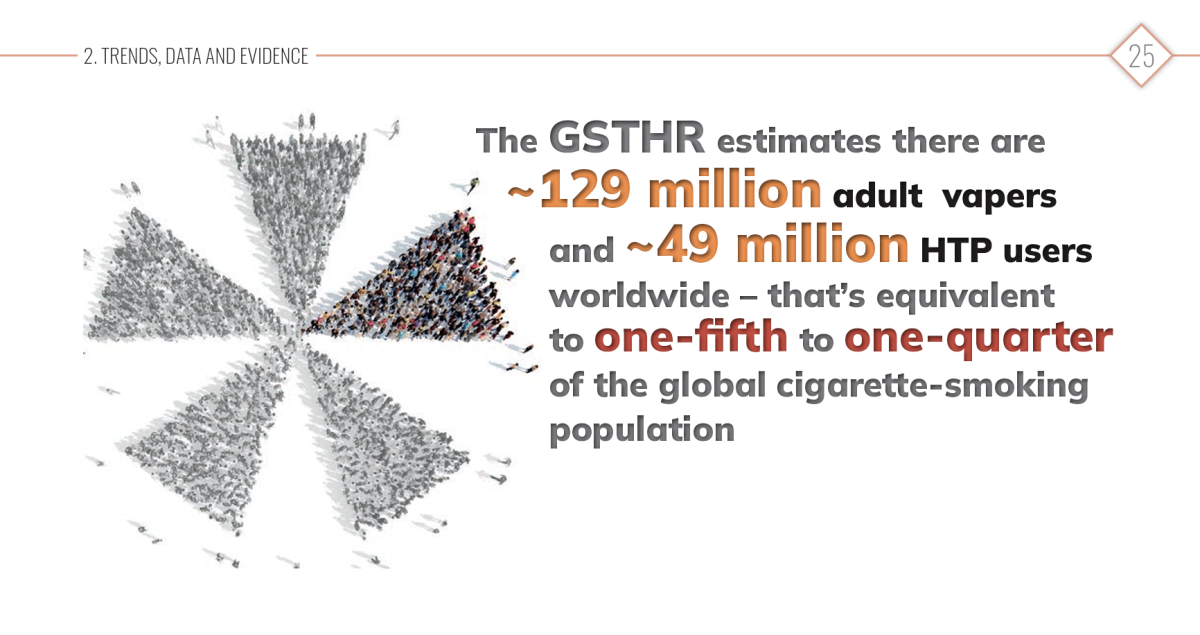
The Global State of Tobacco Harm Reduction, a project operated by Knowledge·Action·Change, estimates that about 200 million people worldwide use non-combustible nicotine products including vapes, heated tobacco, nicotine pouches and snus. Its 2026 report says use of these products rose alongside declining smoking rates in 28 countries it analyzed. The data do not establish that all 200 million users have quit smoking, nor do they prove a direct causal relationship. GSTHR also says regulatory restrictions on the products continue to expand in many markets.
Sep.10
Latest UK ONS Data: Vaping Rate Edges Down to 9.9% in 2025, a Year After Overtaking Cigarette Smoking
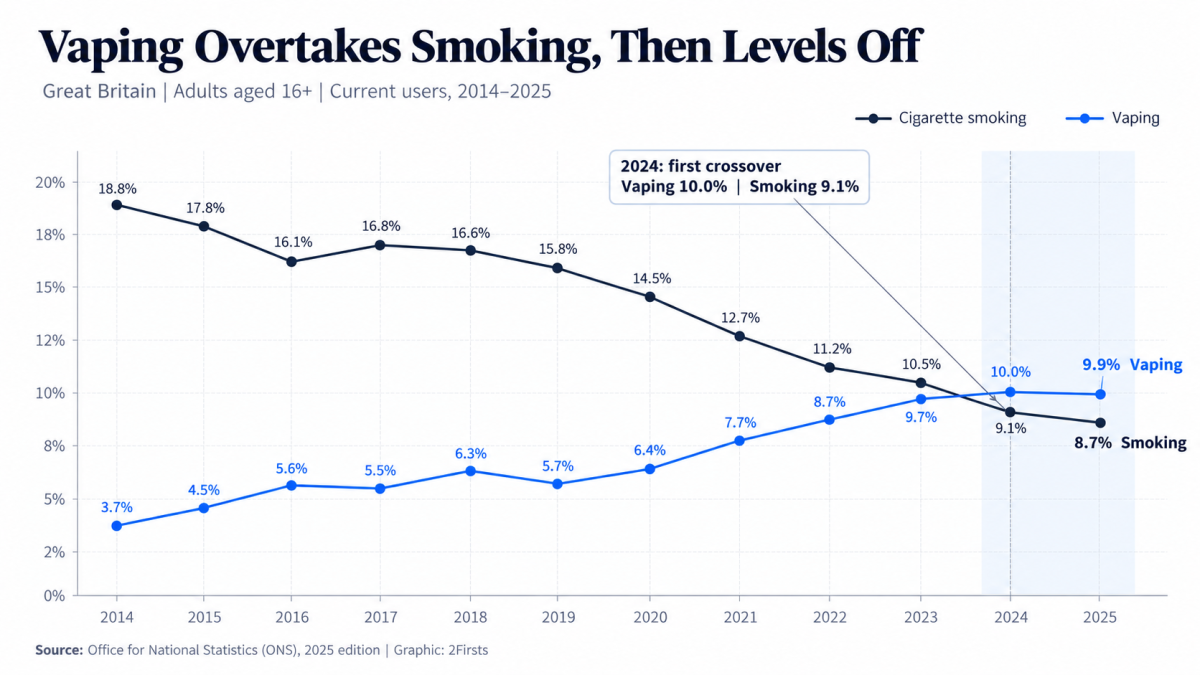
Vaping prevalence in Great Britain edged down to 9.9% in 2025 from 10.0% in 2024, with the number of adult users holding at approximately 5.4 million for a second consecutive year, according to the Office for National Statistics (ONS). E-cigarette use had risen from 6.4% in 2020 to 10.0% in 2024, when it exceeded cigarette smoking prevalence for the first time. Cigarette smoking continued to decline to 8.7% in 2025, widening the gap to 1.2 percentage points. Daily vaping declined slightly, while usage among adults aged 25–34 increased despite falling rates in other age groups.
DATA
Oct.14