Philip Morris Brazil Urges Regulation of E-cigarettes in Brazil

PMI by 2FIRSTS.ai
Dec.18.2023
Philip Morris Brazil Urges Regulation of E-cigarettes in Brazil
Philip Morris Brazil is pressuring the Brazilian National Health Surveillance Agency (Anvisa) to regulate e-cigarettes in Brazil.

According to a report on December 15th by Brazilian newspaper, O Globo, Philip Morris Brasil is putting pressure on Brazil's National Health Surveillance Agency (Anvisa) to regulate e-cigarettes in the country.


Last Tuesday (December 12th), Anvisa conducted a public consultation on the issue of e-cigarettes. Philip Morris Brazil quickly launched a voting campaign, advocating for the regulation of electronic products. The campaign was called "I Choose," and it opposed a legislative ban on e-cigarettes, listing reasons supporting the regulation of e-cigarettes.


Philip Morris of Brazil claims that for any smoker, the best choice is to quit smoking. However, if quitting is not possible, they should opt for smokeless products such as e-cigarettes, as these products entail lesser "potential harm" to health.


Rafael Bastos, the Senior Corporate Affairs Manager of Philip Morris Brazil, stated that "smoking e-cigarettes poses significantly less harm to one's health compared to traditional tobacco combustion, which is considered the worst way to consume nicotine.


In addition, he pointed out that currently Anvisa does not know what substances are contained in e-cigarettes, which is also due to the lack of transparency in the illicit market. This issue can be resolved by implementing compliance management for e-cigarettes.


A survey conducted by the investigation agency Ipec reveals that despite a ban on the use of electronic devices since 2009, approximately 2.2 million Brazilians are e-cigarette users.


Philip Morris believes that Brazilian consumers have already made their decision to use their product, regardless of its legality. Therefore, it is necessary to regulate in order to ensure the best possible manner of consumption.


These products are increasingly entering the country, and the reasons for their entry are very clear – because of demand. Today, the smuggling of e-cigarettes is providing funding for criminal gangs," said Bastos.


The public consultation by Anvisa on the subject will continue until February 9, 2024.


We welcome news tips, article submissions, interview requests, or comments on this piece.

Please contact us at info@2firsts.com, or reach out to Alan Zhao, CEO of 2Firsts, on LinkedIn


Notice

1.  This article is intended solely for professional research purposes related to industry, technology, and policy. Any references to brands or products are made purely for objective description and do not constitute any form of endorsement, recommendation, or promotion by 2Firsts.

2.  The use of nicotine-containing products — including, but not limited to, cigarettes, e-cigarettes, nicotine pouchand heated tobacco products — carries significant health risks. Users are responsible for complying with all applicable laws and regulations in their respective jurisdictions.

3.  This article is not intended to serve as the basis for any investment decisions or financial advice. 2Firsts assumes no direct or indirect liability for any inaccuracies or errors in the content.

4.  Access to this article is strictly prohibited for individuals below the legal age in their jurisdiction.


Copyright


This article is either an original work created by 2Firsts or a reproduction from third-party sources with proper attribution. All copyrights and usage rights belong to 2Firsts or the original content provider. Unauthorized reproduction, distribution, or any other form of unauthorized use by any individual or organization is strictly prohibited. Violators will be held legally accountable.

For copyright-related inquiries, please contact: info@2firsts.com


AI Assistance Disclaimer


This article may have been enhanced using AI tools to improve translation and editorial efficiency. However, due to technical limitations, inaccuracies may occur. Readers are encouraged to refer to the cited sources for the most accurate information.

We welcome any corrections or feedback. Please contact us at: info@2firsts.com

Smoke-Free Business Hits 42% of Q2 Net Revenue as PMI’s First TNFD Report Covers Single-Use Electronics, Critical Raw Materials and IQOS Repairs
Philip Morris International has published its first report aligned with the Taskforce on Nature-related Financial Disclosures, bringing its electronics supply chain and the use and end-of-life stages of smoke-free devices and consumables into its nature-related assessment. PMI said its smoke-free business accounted for about 42% of total net revenues in the second quarter of 2026. The report says non-circular electronic products, particularly single-use items, can increase consumption of limited natural resources and also details an IQOS repair pilot. A 2040 circularity scenario tests assumptions including a 50% reduction in product waste-related costs, 10% raw-material savings and a 25% substitution rate for refurbished products versus new products.
Sep.23
Gallery | InterTabac 2026 Opens as VAPORESSO, SKE, GREENTANK, GEEK BAR and Other Brands Take the Floor
InterTabac 2026 opened in Dortmund, Germany, on September 15 alongside NUBIZ and InterSupply. According to the latest figures released by the organizer, the three trade shows bring together around 750 exhibitors from 64 countries. On site, 2Firsts observed vaping and related brands including VAPORESSO, DOJO, SKE, GREENTANK, GEEK BAR, HQD and ELUX.
Special Report
Sep.15
South Korea Constitutional Court Upholds Volume-Based E-Liquid Tax, With Challenged Rates at KRW 370 and KRW 628 per Milliliter
South Korea's Constitutional Court has upheld fixed taxes on nicotine-containing e-cigarette liquids based on solution volume, ruling that challenged provisions imposing KRW 370 per milliliter in individual consumption tax and KRW 628 per milliliter in tobacco consumption tax do not violate the Constitution. The cases stemmed from historical disputes involving importers that reported nicotine as being extracted from tobacco stems rather than leaves. South Korea has since broadened its tobacco definition to include synthetic nicotine, while current tax laws provide reduced rates for certain products not derived from tobacco.
Sep.18
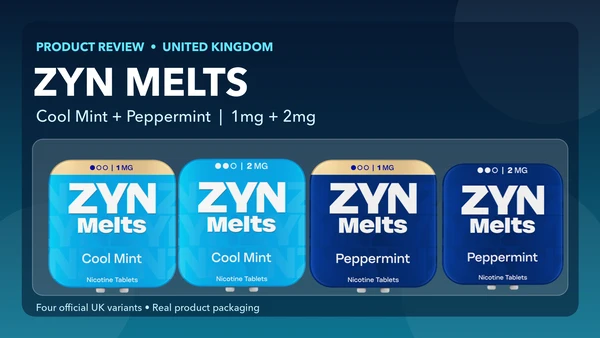
Product | PMI Launches ZYN Melts in UK, Extending ZYN Beyond Nicotine Pouches Into Dissolvable Tablets
Philip Morris International (PMI) has launched ZYN Melts in the UK, introducing a fully dissolvable oral nicotine tablet format alongside the brand's existing nicotine pouches. The range includes Cool Mint and Peppermint, each offered at 1mg and 2mg of nicotine per tablet, creating four SKUs. Each can contains 20 tablets and is priced at £6.50 in the UK. Unlike ZYN nicotine pouches, Melts are placed between the upper lip and gum and dissolve completely during use.
News
Sep.29 by 2Firsts Perspectives
Special Report | How Capital Is Reassessing the Global Tobacco and Modern Nicotine Industry: Lessons from a New York Forum
Capital is reassessing the global tobacco and modern nicotine industry as heated tobacco, vaping and nicotine pouches reshape demand, profitability and regulation. At the 2026 New Approaches Summit in New York, investors and analysts examined whether smoke-free growth can sustain earnings, how regulation shapes startup value, and whether shareholder engagement can be more effective than divestment. The debate points to a broader shift: tobacco transition is increasingly becoming a capital-allocation, governance and valuation question.
Capital Markets
Oct.05
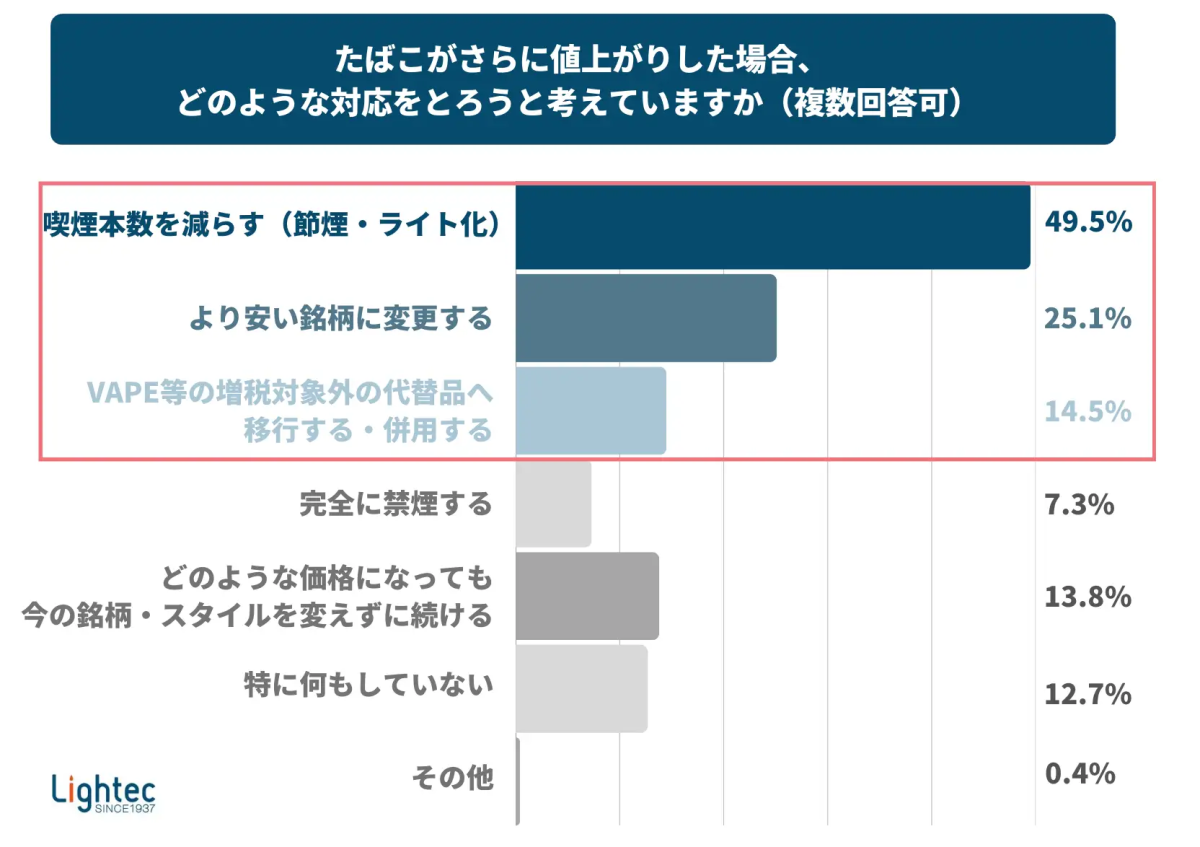
Japan Survey Finds 49.5% Would Cut Tobacco Use if Prices Rise, 64.6% Show Interest in Nicotine-Free Alternatives
A September online survey commissioned by Japanese smoking-accessories company Lightec found that 49.5% of respondents would consider reducing tobacco use if prices rose further, while 25.1% would consider switching to cheaper brands and 14.5% would consider using or combining alternatives such as vapes and nicotine-free herbal sticks. Another 64.6% expressed some level of interest in such alternatives. The survey covered 1,088 respondents aged 20 to 70 and was conducted by a company that sells NICOLESS nicotine-free vaping and herbal-stick products, meaning its findings should not be treated as representative of Japan's smoking population.
DATA
Oct.12