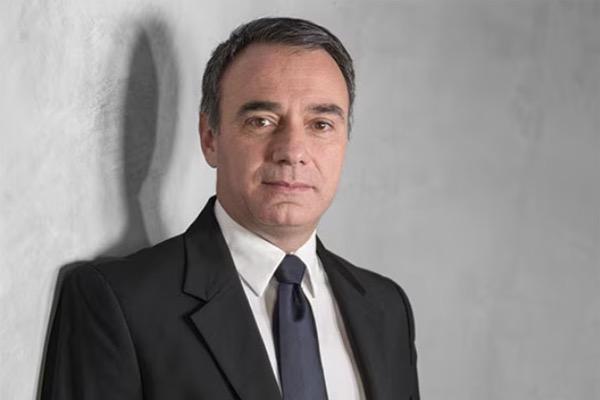
In a recent interview with Interfax Ukraine, Massimo Andolina, the European Regional President of Philip Morris International (PMI), discussed the impact of Russia's invasion on multinational corporations in Ukraine. Andolina stated that PMI is exploring plans to restore production in Ukraine.
PMI has ceased production at its factory in Kharkiv due to ongoing security concerns resulting from the ongoing conflict. Currently, the company's brands in Ukraine are being temporarily produced by Imperial Tobacco. However, PMI intends to establish its own production facility in Ukraine.
Maximo Andolina emphasized two reasons for the decision: first, the desire to produce PMI's own products locally, and secondly, the company's commitment to investing in Ukraine even during times of war. He stated that PMI is actively exploring various alternative options for establishing new production facilities and plans to make relevant announcements in the near future.
The interview also touched on the decrease in PMI sales in the Ukrainian market. Massimo Andolina mentioned two factors: some people leaving the country or residing in occupied territory, resulting in consumer loss, and competition from illegal products. He stated that PMI has discussed with the government to address this issue and expressed confidence in the government's commitment to combating corruption and criminal activity. The company expects significant progress in combating illegal trade in the coming years.
Maximo Adonilna also shared his opinion on the government's decision to tax cigarettes and heated non-burning products. He stated that PMI believes these products should be considered different categories and taxed accordingly. They have noticed the success of heated tobacco products in the Ukrainian market and emphasized the necessity for differentiated tax treatment.
During the interview, the position of PMI in Russia was also addressed. According to Massimo Andolina, the company's top priority during the war was the protection of its Ukrainian employees' safety. Therefore, they temporarily suspended their investments in Russia and reduced their business operations. Despite PMI's previous announcement of its intention to withdraw from the Russian market, the changing regulatory environment has made it challenging for the company, which has significant business and assets in the country, to do so.
Reference List:
PMI is considering restarting production in Ukraine.
Disclaimer
This article is provided solely for professional research, industry discussion, and informational purposes. Any references to brands, companies, products, technologies, or policies are made for factual reporting and analytical purposes only, and do not constitute endorsement, recommendation, promotion, or advertising by 2Firsts.
Nicotine-containing products, including but not limited to cigarettes, e-cigarettes, heated tobacco products, and nicotine pouches, carry significant health risks. Readers are responsible for complying with all applicable laws and regulations in their respective jurisdictions, including age restrictions and access limitations.
The information contained in this article should not be regarded as investment, legal, medical, regulatory, or commercial advice. While 2Firsts strives to ensure the accuracy and reliability of its content, it does not assume liability for any direct or indirect loss arising from errors, omissions, inaccuracies, or reliance on the information contained herein.
This article is not intended for individuals below the legal age for accessing tobacco or nicotine-related information in their jurisdiction.
Copyright Notice
This article is either original content produced by 2Firsts or content reproduced, translated, summarized, or adapted from third-party sources with attribution where applicable. The intellectual property rights of the original content remain with 2Firsts or the respective original rights holders.
No individual or organization may copy, reproduce, distribute, republish, modify, translate, or otherwise use this content without prior authorization. Any unauthorized use may result in legal action.
For copyright-related inquiries, corrections, or removal requests, please contact: info@2firsts.com.
AI-Assisted Translation and Editing Notice
Portions of this article may have been translated, edited, or reviewed with the assistance of artificial intelligence tools to improve efficiency and readability. Due to the limitations of AI-assisted translation and editing, discrepancies, omissions, or inaccuracies may exist when compared with the original source.
Where applicable, readers are advised to refer to the original source for the most complete and accurate information. If you identify any errors or believe that any content infringes upon your rights, please contact us at info@2firsts.com, and we will review and address the matter promptly.