PMI Plans New Factory in Brazil if E-Cigarette Ban Lifted

May.30.2023
PMI Plans New Factory in Brazil if E-Cigarette Ban Lifted
Philip Morris International plans to open a new factory in southern Brazil if the government lifts the ban on e-cigarettes.

Recently, Gregoire Verdeaux, the Senior Vice President of the Philip Morris International (PMI) Company, stated in an interview that if the Brazilian National Health Surveillance Agency (Anvisa) lifts the ban on electronic cigarettes and heated non-combustible products, PMI will plan to build a new factory in South Rio Grande (a southern Brazilian city).


Verdeaux stated that PMI is interested in investing in Brazil because it is the largest tobacco exporting country in the world. However, they will not be adding any new factories in the country until the ban on e-cigarettes is lifted.


Verdeaux stated that "for Brazil, having a heated tobacco factory that exports worldwide but is prohibited in the country makes no sense. We look forward to a certain level of debate and modern discussion on regulation, which is not all or nothing, but an opportunity to be found. Brazil has 20 million smokers who should have regulated access to alternatives." He emphasized that currently, e-cigarettes in the country are smuggled and there is no quality control on the substances in their composition.


Tommaso Di Giovanni, Vice President of International Communications at PMI, stated that their market share in Brazil is 20%. "From a profitability perspective, it's not the most profitable, but it has potential," he explained.


According to reports, PMI's existing factory is located in South Santa Cruz, with 1,800 employees responsible for preparing the company's entire product portfolio, including Marlboro, L&M, and Chesterfield. "As we expand these products (DEF), we must also expand manufacturing and production. We continue to analyze investment opportunities, including in Brazil," Verdeaux added.


References:


Philip Morris intends to invest in a factory in Rio Grande do Sul if Anvisa (the Brazilian health regulatory agency) approves electronic cigarettes.


Disclaimer

This article is provided solely for professional research, industry discussion, and informational purposes. Any references to brands, companies, products, technologies, or policies are made for factual reporting and analytical purposes only, and do not constitute endorsement, recommendation, promotion, or advertising by 2Firsts.

Nicotine-containing products, including but not limited to cigarettes, e-cigarettes, heated tobacco products, and nicotine pouches, carry significant health risks. Readers are responsible for complying with all applicable laws and regulations in their respective jurisdictions, including age restrictions and access limitations.

The information contained in this article should not be regarded as investment, legal, medical, regulatory, or commercial advice. While 2Firsts strives to ensure the accuracy and reliability of its content, it does not assume liability for any direct or indirect loss arising from errors, omissions, inaccuracies, or reliance on the information contained herein.

This article is not intended for individuals below the legal age for accessing tobacco or nicotine-related information in their jurisdiction.


Copyright Notice

This article is either original content produced by 2Firsts or content reproduced, translated, summarized, or adapted from third-party sources with attribution where applicable. The intellectual property rights of the original content remain with 2Firsts or the respective original rights holders.

No individual or organization may copy, reproduce, distribute, republish, modify, translate, or otherwise use this content without prior authorization. Any unauthorized use may result in legal action.

For copyright-related inquiries, corrections, or removal requests, please contact: info@2firsts.com.


AI-Assisted Translation and Editing Notice

Portions of this article may have been translated, edited, or reviewed with the assistance of artificial intelligence tools to improve efficiency and readability. Due to the limitations of AI-assisted translation and editing, discrepancies, omissions, or inaccuracies may exist when compared with the original source.

Where applicable, readers are advised to refer to the original source for the most complete and accurate information. If you identify any errors or believe that any content infringes upon your rights, please contact us at info@2firsts.com, and we will review and address the matter promptly.


As JUUL2 Wins FDA Authorization, Harm Reduction Journal Highlights the Role of Real-World Evidence in Nicotine Product Regulation
A commentary published in the international open-access, peer-reviewed Harm Reduction Journal argues that randomized controlled trials remain central to evaluating smoking cessation efficacy but cannot alone capture real-world uptake, complete switching, longer-term use and population impact of non-combustible nicotine products such as e-cigarettes, heated tobacco and nicotine pouches. The authors frame impact as “reach × efficacy” and call for real-world evidence to complement RCTs. Three days after publication, the FDA authorized three JUUL2 products and highlighted complete switching among adult smokers in explaining its decision, providing a timely regulatory backdrop to the debate.
Sep.08
Australian Coalition Taskforce Calls for 80% Tobacco Tax Cut to Combat Illicit Market
According to SGST on August 26, 2026, Australia’s Coalition Illegal Tobacco Taskforce released a report recommending an up to 80% cut in tobacco excise to reduce the appeal of the illicit tobacco market. The report claimed organised crime groups now control about 80% of Australia’s tobacco market and argued that high excise rates have widened the price gap between legal and illegal products. The recommendation remains a policy proposal and has not been adopted by the Australian government, which said its focus remains on enforcement, compliance and additional resources.
Aug.27
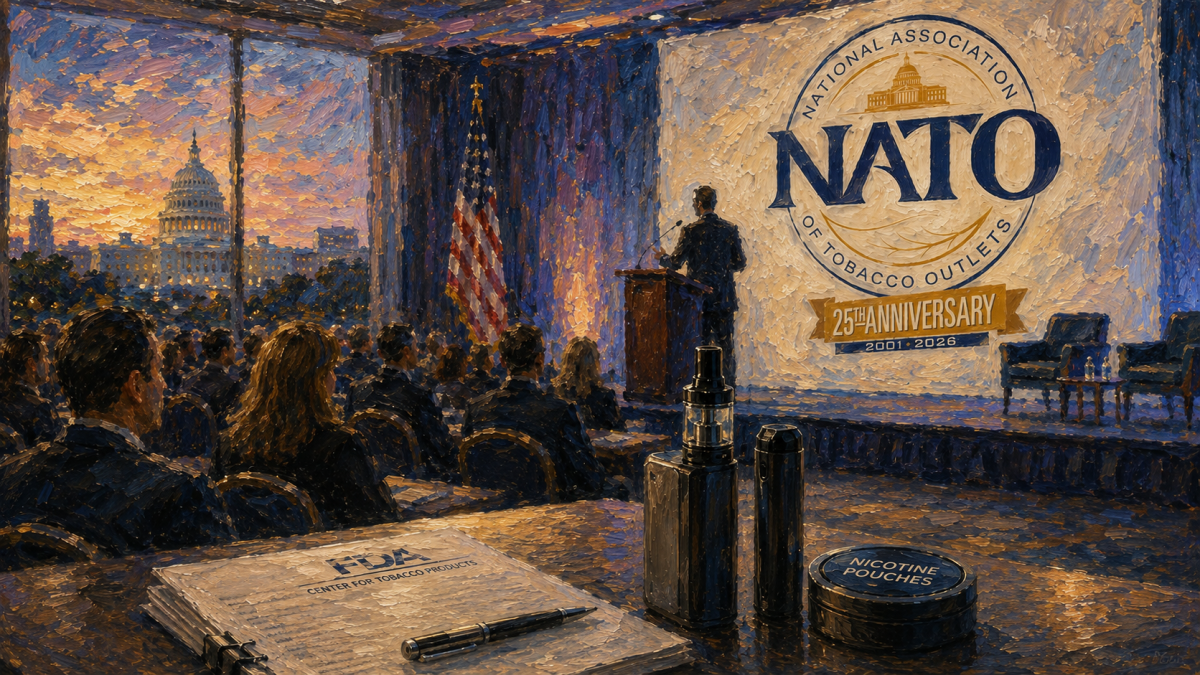
As FDA Reshapes PMTA Reviews and ENDS Enforcement Priorities, CTP Acting Director Bret Koplow to Keynote NATO Event for a Retail Network of 66,000-Plus Stores
Bret Koplow, acting director of the U.S. Food and Drug Administration's Center for Tobacco Products, will deliver a keynote and participate in a fireside chat at the National Association of Tobacco Outlets' Sept. 29-30 conference in Washington. His appearance comes months after the FDA moved to accelerate PMTA reviews and introduced a more differentiated enforcement policy for certain unauthorized ENDS and oral nicotine pouch products. The agency also plans a public list identifying manufacturers and products it does not currently intend to prioritize for enforcement under the May guidance. NATO says its membership includes more than 66,000 retail stores, making product-status transparency and enforcement boundaries directly relevant to the retail sector.
Aug.14
Smoore Seeks to Toss CCELL Price-Fixing Claim as Court Weighs Vertical Distribution Versus Horizontal Conspiracy
Smoore and four authorized U.S. CCELL distributors are asking a California federal court to permanently dismiss a core antitrust claim brought by direct purchasers. Plaintiffs allege that Smoore coordinated minimum wholesale prices, customer allocation and limits on price competition among distributors, amounting to a per se unlawful horizontal conspiracy. The defendants say the alleged conduct reflects ordinary vertical relationships between a manufacturer and its distributors. The court previously dismissed a similar claim, and the latest dispute centers on whether the second amended complaint adds sufficient facts to establish a horizontal agreement.
Sep.14
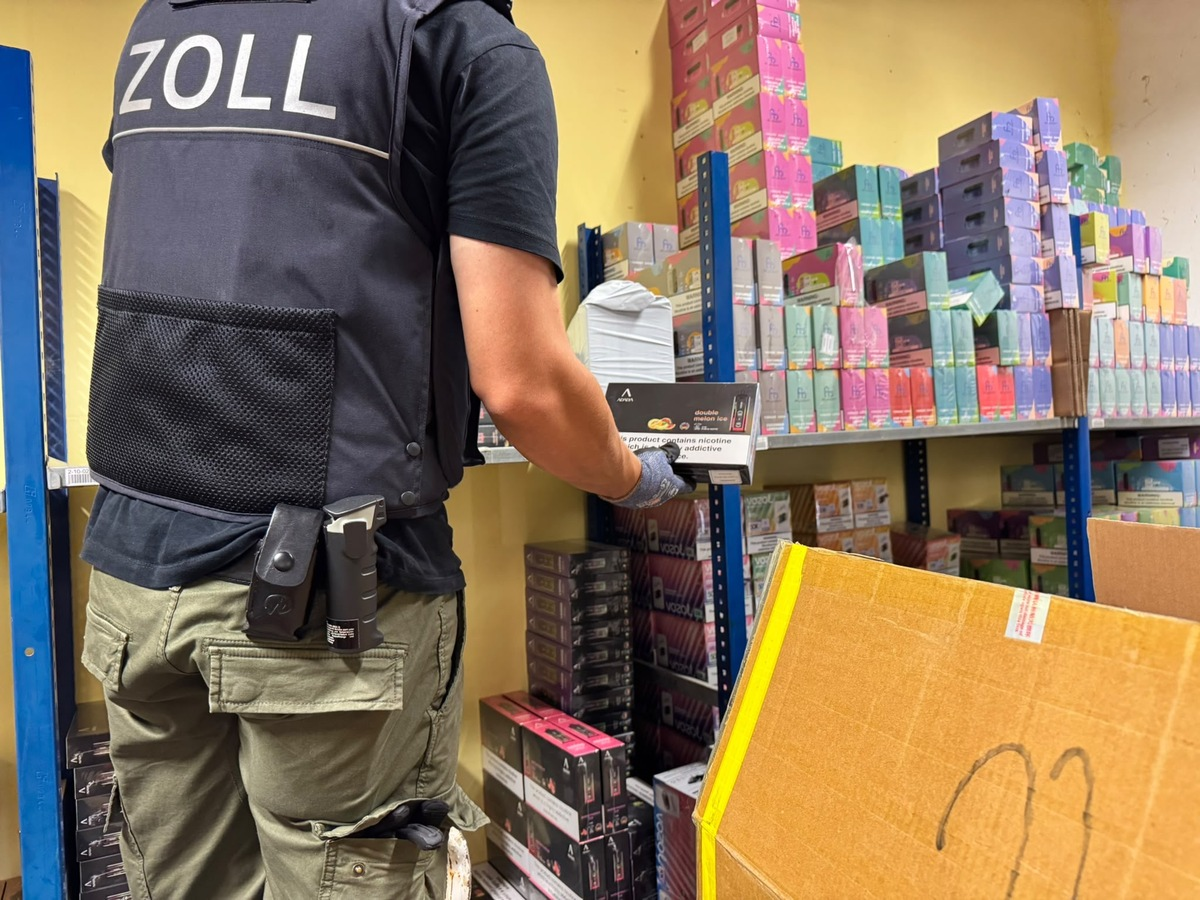
Germany Probes 7.6 Million Illegal Vape Case With Estimated €33.3 Million Tax Loss; Four Chinese Manufacturer Employees Under Investigation, Some Packaging in Enforcement Images Resembles FUMOT Products
German prosecutors and customs authorities are conducting a criminal investigation into an alleged cross-border organised vape network. Authorities say that between January 2024 and March 2025, four employees of an unnamed Chinese e-cigarette manufacturer allegedly built a network of sales agents and wholesalers that brought more than 7.6 million nicotine disposable vapes into Germany, causing an estimated €33.3 million in excise-tax losses. The manufacturer has not been named. Some products visible in enforcement images have packaging resembling products from FUMOT’s portfolio. European regulatory records from 2024, FUMOT’s public overseas-sales materials and records involving German vape importer and distribution company Zamu-Pro GmbH also show FUMOT/RandM products and German distribution activity during the period covered by the investigation.
Sep.21
U.S. Fifth Circuit Vacates NicQuid Vape MDO, Says FDA Comparative-Efficacy Standard Violated APA Procedures
According to VitalLaw on August 27, 2026, the U.S. Court of Appeals for the Fifth Circuit vacated an FDA marketing denial order (MDO) against NicQuid LLC, ruling that the agency’s comparative-efficacy standard for electronic nicotine delivery system (ENDS) applications had become a substantive rule requiring notice-and-comment rulemaking under the Administrative Procedure Act (APA). The court did not reject FDA’s authority to compare the public health benefits and risks of flavored vapes, but held that the agency could not establish a broadly binding standard through informal adjudications. The case was remanded to FDA for further proceedings.
Aug.28