Polish Police Seize Millions Worth of Untaxed E-cigarettes

Regulations by 2FIRSTS.ai
Jul.01.2024
Polish Police Seize Millions Worth of Untaxed E-cigarettes
Police in Warsaw seized millions worth of untaxed e-cigarettes, leading to over $500,000 in estimated losses, with arrests made.

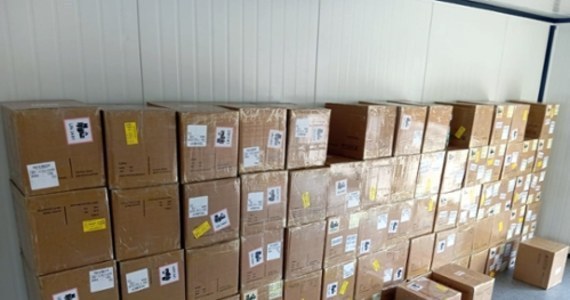
According to RMF 24 on July 1st, the Polish police seized untaxed e-cigarettes worth over 17 million złoty (4.25 million USD) in Wólka Kosowska and Tarczyn, near Warsaw. It is estimated that the treasury has lost over 5 million złoty (1.25 million USD).


In the Wólka Kosowska area, Warsaw police have "caught in the act" two Indian citizens. The two men were driving a Opel Movano car, which they drove to a container storage area in Tarczyn and unloaded many boxes. They then left and returned to the warehouse area, at which point the police intervened to make the arrests. It is understood that the 32-year-old and 37-year-old men were transporting boxes filled with duty-free e-cigarettes.


Police have confirmed that the e-cigarette boxes are still located in another warehouse, which is near the container. Similar goods were earlier transported by men to Tarczyn, where police detained a 46-year-old Ukrainian citizen.


Police seized nearly 300,000 e-cigarettes containing over 4,600 liters of untaxed e-cigarette liquid. Due to the unpaid taxes, the national treasury is estimated to have incurred a loss of over 5 million Poz (1.25 million USD), with the seized goods valued at 17 million Poz (4.25 million USD).


Police have detained two Indian citizens and one Ukrainian citizen who have been accused of evading taxes on goods, resulting in a loss of over 5 million Poze (125,000 USD) to the national treasury.


They will face fines or potentially be deprived of their freedom.


The case is currently being investigated by the Piaseczno Prosecutor's Office.


We welcome news tips, article submissions, interview requests, or comments on this piece.

Please contact us at info@2firsts.com, or reach out to Alan Zhao, CEO of 2Firsts, on LinkedIn


Notice

1.  This article is intended solely for professional research purposes related to industry, technology, and policy. Any references to brands or products are made purely for objective description and do not constitute any form of endorsement, recommendation, or promotion by 2Firsts.

2.  The use of nicotine-containing products — including, but not limited to, cigarettes, e-cigarettes, nicotine pouchand heated tobacco products — carries significant health risks. Users are responsible for complying with all applicable laws and regulations in their respective jurisdictions.

3.  This article is not intended to serve as the basis for any investment decisions or financial advice. 2Firsts assumes no direct or indirect liability for any inaccuracies or errors in the content.

4.  Access to this article is strictly prohibited for individuals below the legal age in their jurisdiction.


Copyright


This article is either an original work created by 2Firsts or a reproduction from third-party sources with proper attribution. All copyrights and usage rights belong to 2Firsts or the original content provider. Unauthorized reproduction, distribution, or any other form of unauthorized use by any individual or organization is strictly prohibited. Violators will be held legally accountable.

For copyright-related inquiries, please contact: info@2firsts.com


AI Assistance Disclaimer


This article may have been enhanced using AI tools to improve translation and editorial efficiency. However, due to technical limitations, inaccuracies may occur. Readers are encouraged to refer to the cited sources for the most accurate information.

We welcome any corrections or feedback. Please contact us at: info@2firsts.com

Charlie’s Says 30 PACHA Vape SKUs Tentatively Identified for FDA’s Non-Priority Enforcement Public List
Charlie’s Holdings said the U.S. Food and Drug Administration notified the company on June 23, 2026, that 30 PACHA vape SKUs with submitted PMTAs had been tentatively identified for inclusion on a planned public-facing FDA webpage. Under enforcement guidance issued by FDA in May, the webpage is intended to identify certain unauthorized products for which the agency generally does not intend to prioritize enforcement of premarket authorization requirements. Charlie’s disclosed the development alongside second-quarter revenue of $3.8 million, up 116% year over year.
Aug.25
FDA Authorizes JUUL2, Cites Adult Switching Amid Efforts to Speed PMTA Reviews
The FDA authorized the JUUL2 device and tobacco- and menthol-flavored pods on Aug. 28, bringing the number of authorized e-cigarette products to 48. The agency highlighted complete switching among adult smokers, with six-week switching rates reaching 28.4%–49.3% for the menthol pod. The decision comes as FDA works to speed PMTA reviews, reduce application backlogs and expand authorized e-cigarette and nicotine-pouch products while maintaining enforcement priorities for unauthorized products.
Regulations
Aug.29
2Firsts Data | China’s Vape Exports Rise 3.1% in H1 2026 as 6-Methyl Nicotine-Related Products Surge 65.2%
China’s vape exports showed resilience in the first half of 2026 after a short-term shock from China’s export rebate adjustment. But customs data points to more than a simple recovery: the structure of growth is changing. Vaping devices and atomization hardware emerged as the strongest growth driver, while nicotine-containing vaping products remained broadly stable. Meanwhile, nicotine substitute-related products represented by 6-methyl nicotine expanded rapidly, becoming a new category to watch for both industry and regulators. After the U.S. market went through a cycle of shortages, replenishment and inventory rebuilding in 2025, China’s vape supply chain is entering a new phase of reallocation.
Special Report
Jul.20
Product | SnowPlus Launches Nicotine-Free DASH in South Korea, Localising an Established Disposable Platform
SnowPlus has introduced a nicotine-free version of DASH in South Korea, adapting an existing overseas disposable platform for the local market. The Korean version retains the series’ flat duckbill-style mouthpiece, ceramic heating architecture and disposable form factor while reducing nicotine content to 0%. By comparison, the overseas DASH 4000 platform typically features 7.5ml of prefilled e-liquid, up to 4,000 puffs and a 530mAh rechargeable battery, with nicotine-containing variants available in some markets. The product update centers on formulation localisation rather than a new hardware generation.
Aug.31
Kaival Brands Explores Nicotine Pouches as Smaller Nicotine Companies Seek Smoke-Free Growth
U.S. nicotine company Kaival Brands Innovations Group is exploring opportunities in nicotine pouches and other modern nicotine products, reflecting a broader shift among smaller nicotine businesses beyond traditional vaping products.
Jul.17
U.S. Fifth Circuit Vacates NicQuid Vape MDO, Says FDA Comparative-Efficacy Standard Violated APA Procedures
According to VitalLaw on August 27, 2026, the U.S. Court of Appeals for the Fifth Circuit vacated an FDA marketing denial order (MDO) against NicQuid LLC, ruling that the agency’s comparative-efficacy standard for electronic nicotine delivery system (ENDS) applications had become a substantive rule requiring notice-and-comment rulemaking under the Administrative Procedure Act (APA). The court did not reject FDA’s authority to compare the public health benefits and risks of flavored vapes, but held that the agency could not establish a broadly binding standard through informal adjudications. The case was remanded to FDA for further proceedings.
Aug.28