The BBC filmed a Trading Standards undercover operation
Children are at risk from vaping, and more should be done to protect them from illegal and unregulated products containing high levels of nicotine, doctors are warning.
Trading standards in England and Wales say the market is being flooded by unsafe, disposable vapes aimed at children.
The colourful, sweet-flavoured devices are growing in popularity among teens.
Some teachers say vaping is becoming a problem in secondary schools.
Selling e-cigarettes or vapes to children is illegal in the UK, and every vaping product sold containing nicotine must be registered by the medicines and healthcare products regulator, the MHRA.
But the BBC has been told of a rise in complaints to Trading Standards over illicit vapes and shops selling them to children - increasing from dozens each month last year to hundreds per month in 2022, with thousands of counterfeit and unregulated products being seized.
A recent survey by health charity ASH suggests nearly a third of 16 and 17-year-olds have tried vaping, and 14% are currently vapers. Among 11-17-year-olds, 7% are vaping - up from 4% in 2020.
Vaping - is it a risk-free option?
When Radio 5live joined trading standards officers in Newcastle carrying out spot checks on shops, they found that two out of the 10 stores visited that day sold vaping products illegally to girls aged 15 and 17.
Child health experts want plain packaging introduced and rules tightened so that vapes can only be advertised as an aid to stopping smoking, rather than as a fun and colourful lifestyle product.
"Vaping is far from risk-free and may be addictive," said Dr Max Davie, from the Royal College of Paediatrics and Child Health. "We must make efforts to stop children and young people picking up and using these products."
Vapes or e-cigarettes don't contain the harmful tobacco present in normal cigarettes, but they do contain nicotine - the substance which makes people addicted to smoking.
They are growing in popularity as an aid for quitting smoking, along with other nicotine replacement products like patches or gum.
The Department of Health and Social Care in England says that while they're not risk-free, UK-regulated vapes are far less harmful than smoked tobacco. But it continues to strongly discourage non-smokers and children from using them.
UK laws limit how much nicotine and e-liquid is allowed, and health warnings are required on packaging.
However, large numbers of vapes which are not designed for the UK market, are being smuggled into the country.
"There's no way of knowing what's in them," said Helen Donegan, senior trading standards officer with Leicestershire County Council, who told the BBC that 8,000 illegal vapes had been found at one premises alone.
"They are making them extremely attractive to young people - but they could be inhaling a banned substance."
Some look very similar to big-name vape brands, but are fake - others contain illegal amounts of nicotine and e-liquid.

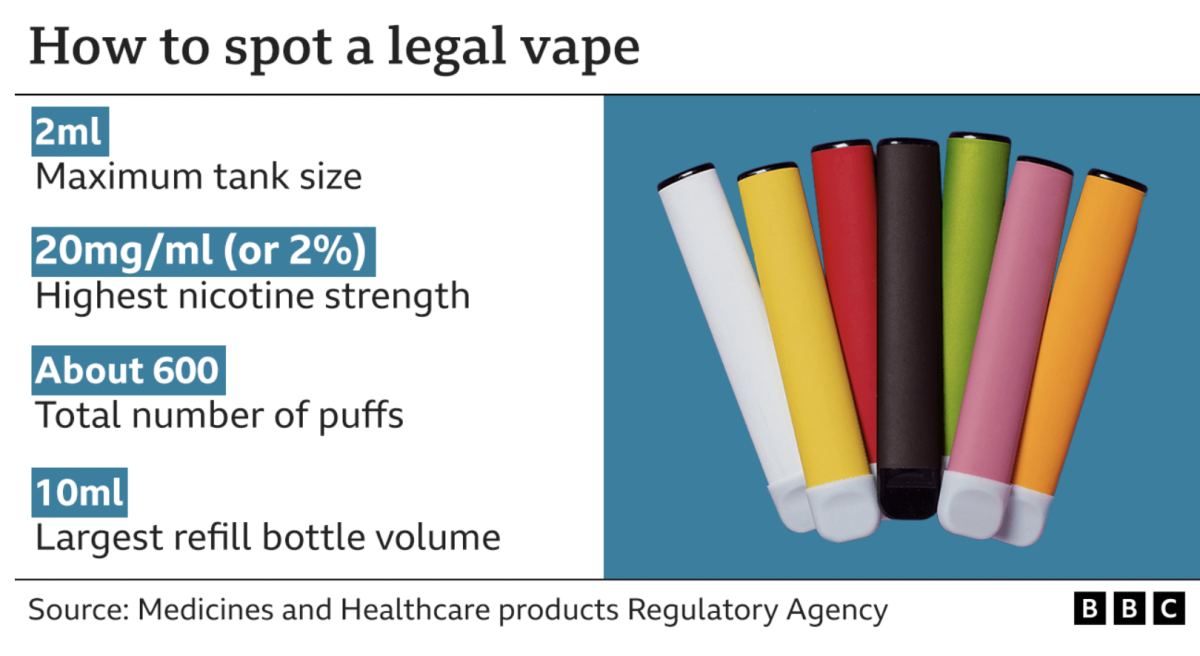
Instead of containing around 600 puffs, which is what UK regulations allow, disposable vape devices containing up to 10,000 puffs are being sold in the UK.
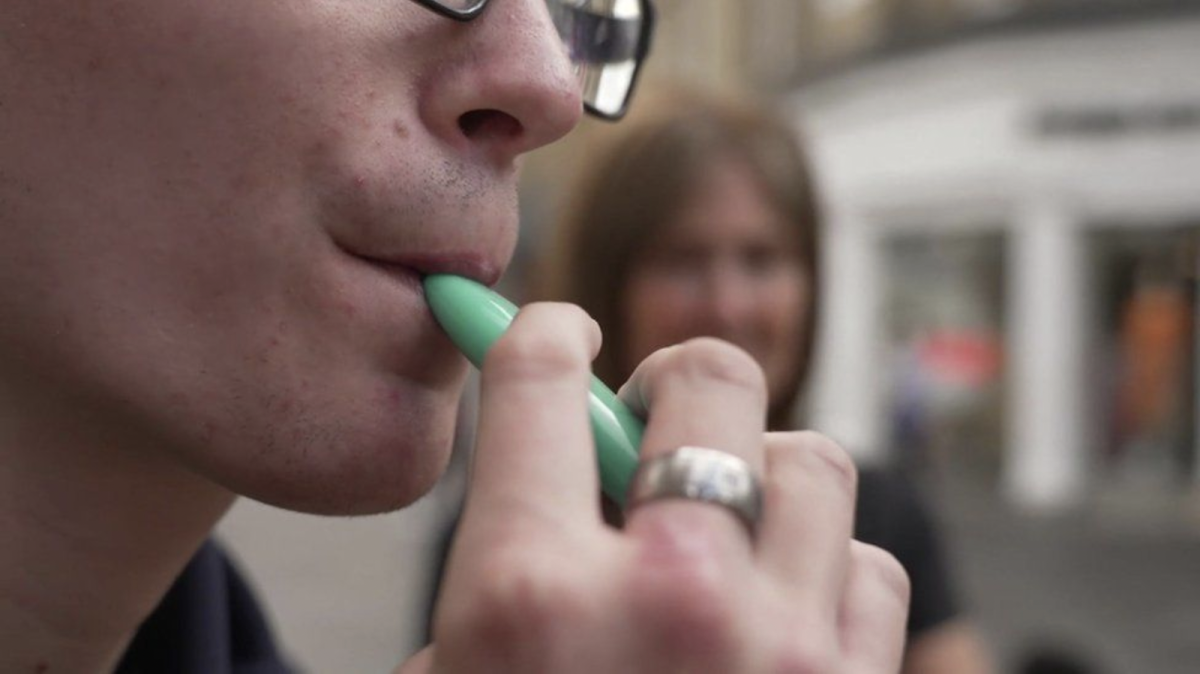
Dominic, 17, from Newcastle, has been vaping since he was 15, after switching from smoking when his friends started using vapes: "Most of my friends vape or smoke - about 90%."
Secondary school teachers are noticing the problem too. A recent survey of 3,000 found half have caught a pupil vaping in school in the last year, and one in five teachers said they'd caught a pupil as young as 11 with a vape.
The charity ASH says more should be done to prevent the products being promoted widely on platforms like TikTok.
"The flood of glamorous promotion of vaping on social media is completely inappropriate and social media platforms should take responsibility and turn off the tap," said chief executive Deborah Arnott.
The UK Vaping Industry Association wants the government "to greatly increase fines to £10,000" every time a shop is caught selling vapes to children.
It is also calling for outlets selling vape products to be licensed, and the fee used to fund further trading enforcement efforts by Trading Standards.
The Department of Health and Social Care in England said vapes should only be used as a tool for smokers giving up smoking.
It said it had put in place "proportionate regulations for all vape products relating to product safety, labelling and restrictions on advertising".
This means they must not resemble a food or a cosmetic product, and must limit nicotine strength to 20mg/ml.
"We continue to strongly discourage non-smokers and children from using them," a spokesperson said. They added there are no current plans to increase the fine issued, but the measure would be kept under review.
And the Department for Education said schools had powers under which they could ban vapes, and to confiscate any found on pupils.
A government report on vaping among young people and adults in England is due to be published in the coming months.
What are UK rules on vaping?
·only those aged 18 and over can buy vapes or e-cigarettes
·certain ingredients, such a caffeine and taurine, are banned
·nicotine ingredient warnings must appear on packaging
·packaging should be child-proof
·all e-cigarette and e-liquids containing nicotine have to be certified by the Medicines and Healthcare Products Regulatory Agency (MHRA) before they can be sold in the UK. Search up brands on the MHRA website.
·any product that is not listed should be returned to the shop where it was bought or to your local trading standards office
·anyone's experience of suspected side-effects from using vapes can be sent to the MHRA via the Yellow Card scheme
·nicotine-free e-cigarettes do not have to be certified by the MHRA - they are subject to product safety regulations by Trading Standards
The content excerpted or reproduced in this article comes from a third-party, and the copyright belongs to the original media and author. If any infringement is found, please contact us to delete it. Any entity or individual wishing to forward the information, please contact the author and refrain from forwarding directly from here.