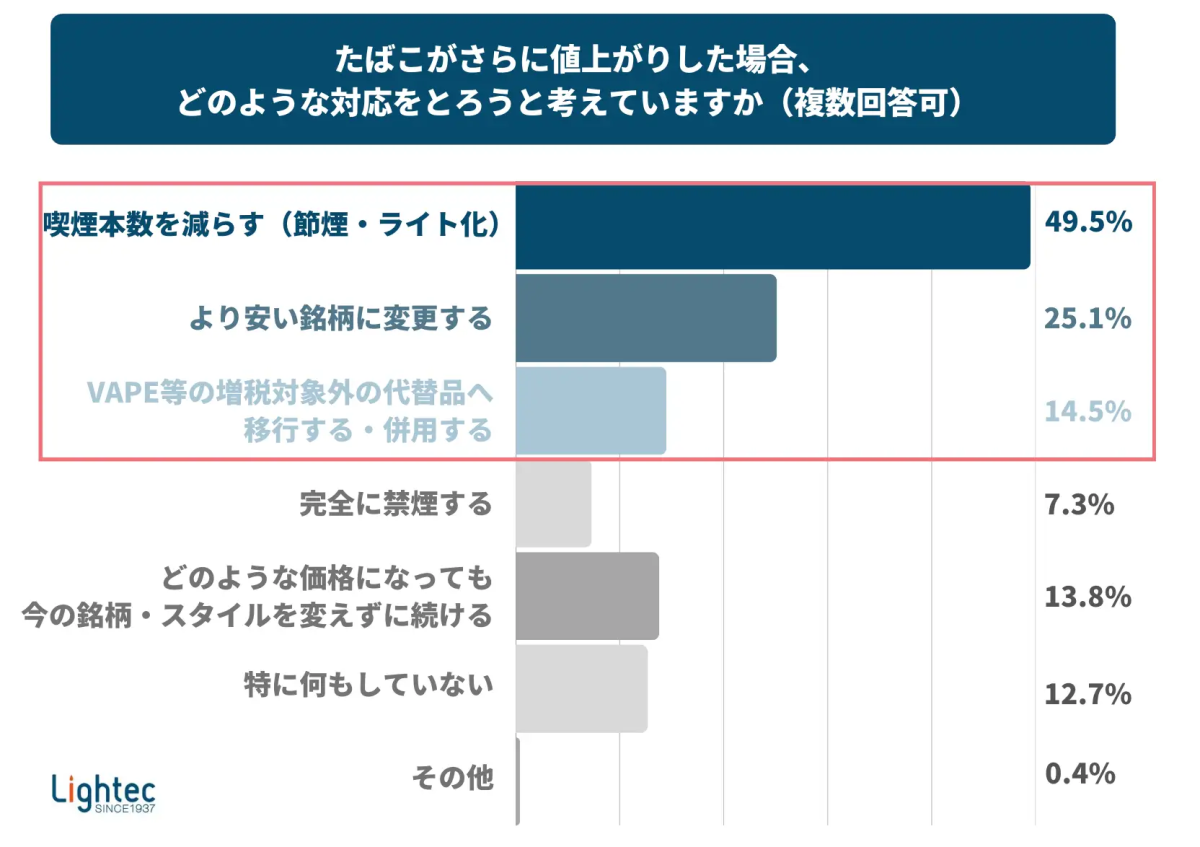
One of the financial resources for boosting national defense is "increasing tobacco taxes". The Liberal Democratic Party is considering raising taxes on heated tobacco products that are cheaper than traditional cigarettes. In fact, cigarette prices suddenly rose in October.
The manager of a tobacco shop strongly opposes the possibility of further price increases, stating, "It's obvious you should start with the places where it's easier to buy, so I'm wondering if I should look into other options." At noon in Tokyo's Shinbashi district, there was a long queue at the smoking area. When asked about people smoking heated tobacco, some complained, "I think smoking anything is bad," while others said, "I'm fine." Various resignations were heard, such as "Isn't there any other way? If the economy is tight." On the other hand, "non-smokers" stated, "I don't smoke, so I don't care how much it costs, but I don't think it's right to spend defense costs on cigarettes." "Doesn't that matter?" was also heard from some.
During a press conference held on the 10th, Prime Minister Kishida emphasized the importance of strengthening defense capabilities, stating that "the objective is not to increase tax revenue, but rather to strengthen and maintain defense capabilities." There is increasing pressure within the ruling party for Prime Minister Kishida to provide a thorough explanation to the public regarding the reasons for strengthening defense capabilities before implementing any tax increases.
Yanagisawa Hidehito "Cabinet Faces Internal Differences of Opinion
Journalist Yanagawa Hideo discussed the lack of coordination within the cabinet, giving the impression that Prime Minister Kishida has failed to unite and work together effectively.
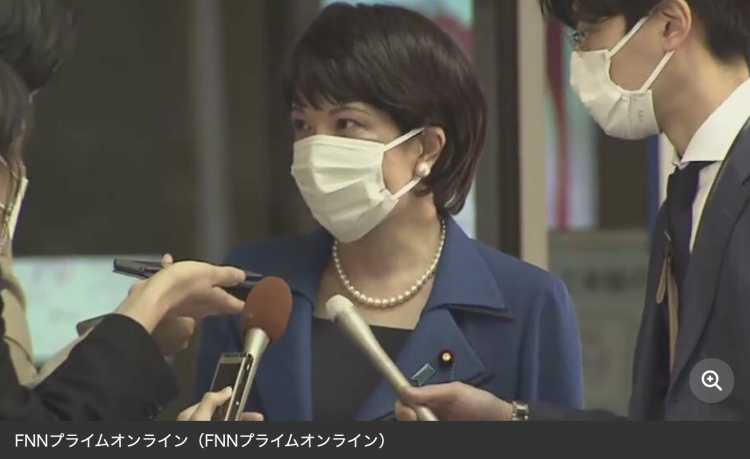
Yuze Yoshio believes that, from our perspective, Mr. Takashi's speech represents a "cabinet disagreement". While the Liberal Democratic Party stated they would carefully explain the reasons for strengthening defense capabilities to the public before implementing tax increases, Yoshio believes this is an internal party stance rather than a widely held belief. In fact, even members within the party are speaking out in a similar way, suggesting their aim is not to discuss tax increases but rather to shake things up within the government. It is crucial to pay attention to what will happen within the Kishida government before the start of the parliamentary session at the beginning of the year.
2FIRSTS will continue to report on this topic, with further updates available on the '2FIRSTSAPP'. Scan the QR code below to download the app.
Disclaimer
This article is provided solely for professional research, industry discussion, and informational purposes. Any references to brands, companies, products, technologies, or policies are made for factual reporting and analytical purposes only, and do not constitute endorsement, recommendation, promotion, or advertising by 2Firsts.
Nicotine-containing products, including but not limited to cigarettes, e-cigarettes, heated tobacco products, and nicotine pouches, carry significant health risks. Readers are responsible for complying with all applicable laws and regulations in their respective jurisdictions, including age restrictions and access limitations.
The information contained in this article should not be regarded as investment, legal, medical, regulatory, or commercial advice. While 2Firsts strives to ensure the accuracy and reliability of its content, it does not assume liability for any direct or indirect loss arising from errors, omissions, inaccuracies, or reliance on the information contained herein.
This article is not intended for individuals below the legal age for accessing tobacco or nicotine-related information in their jurisdiction.
Copyright Notice
This article is either original content produced by 2Firsts or content reproduced, translated, summarized, or adapted from third-party sources with attribution where applicable. The intellectual property rights of the original content remain with 2Firsts or the respective original rights holders.
No individual or organization may copy, reproduce, distribute, republish, modify, translate, or otherwise use this content without prior authorization. Any unauthorized use may result in legal action.
For copyright-related inquiries, corrections, or removal requests, please contact: info@2firsts.com.
AI-Assisted Translation and Editing Notice
Portions of this article may have been translated, edited, or reviewed with the assistance of artificial intelligence tools to improve efficiency and readability. Due to the limitations of AI-assisted translation and editing, discrepancies, omissions, or inaccuracies may exist when compared with the original source.
Where applicable, readers are advised to refer to the original source for the most complete and accurate information. If you identify any errors or believe that any content infringes upon your rights, please contact us at info@2firsts.com, and we will review and address the matter promptly.