Recall of Nicotine Pouch Product Zyn by Canadian Government

Regulations by 2FIRSTS.ai
Jun.13.2024
Recall of Nicotine Pouch Product Zyn by Canadian Government
Canada issues recall for popular nicotine pouch Zyn by Philip Morris over lack of authorization, impacting various retailers.

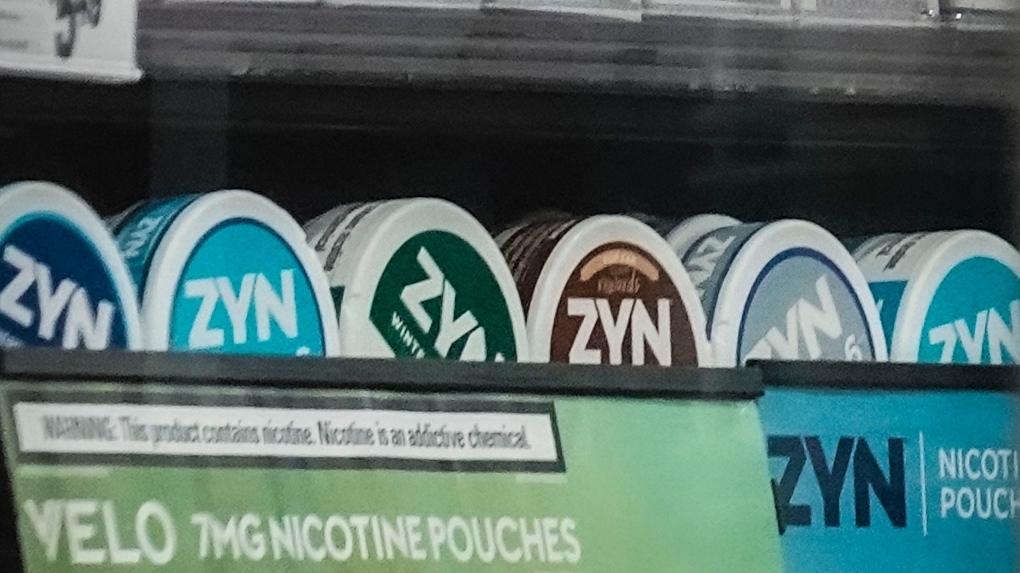
According to a report by Canadian media CTV News on June 12th, the Canadian government has issued a recall order for the nicotine pouch product Zyn, which is owned by Philip Morris. It is worth noting that Zyn nicotine pouches have recently gained popularity as smoking alternatives. The government stated that these products have not been authorized for sale domestically.


This recall impacts retailers selling various flavors of nicotine pouches, including apple mint, black cherry, citrus, peppermint, original, espresso, spearmint, and Bellini (named after the Italian cocktail). Most of these flavors contain 3mg of nicotine per pouch, with the spearmint flavor containing 1.5mg of nicotine. According to data from Nicorette, a typical cigarette contains between 6 to 12.6mg of nicotine each.


Earlier this year, nicotine pouches captured public attention. Canadian government officials and parents expressed concerns, believing that these various flavored products would appeal to adolescents. British Columbia Health Minister Adrian Dix pointed out that because these products are classified as smoking cessation aids, minors can often legally purchase them.


The majority leader of the United States Senate, Chuck Schumer, has issued a warning to parents.


Because these nicotine pouches seem to target young children - teenagers, and even younger children, and attract them through social media.


A spokesperson for Philip Morris responded by saying that the marketing of Zyn is "strictly" targeted towards individuals aged 21 and older.


Zyn has been approved for sale in the United States. PMI announced in February of this year that the shipment volume of Zyn is expected to be around 350 million packets by 2023, which is a 62% increase from the previous year.


We welcome news tips, article submissions, interview requests, or comments on this piece.

Please contact us at info@2firsts.com, or reach out to Alan Zhao, CEO of 2Firsts, on LinkedIn


Notice

1.  This article is intended solely for professional research purposes related to industry, technology, and policy. Any references to brands or products are made purely for objective description and do not constitute any form of endorsement, recommendation, or promotion by 2Firsts.

2.  The use of nicotine-containing products — including, but not limited to, cigarettes, e-cigarettes, nicotine pouchand heated tobacco products — carries significant health risks. Users are responsible for complying with all applicable laws and regulations in their respective jurisdictions.

3.  This article is not intended to serve as the basis for any investment decisions or financial advice. 2Firsts assumes no direct or indirect liability for any inaccuracies or errors in the content.

4.  Access to this article is strictly prohibited for individuals below the legal age in their jurisdiction.


Copyright


This article is either an original work created by 2Firsts or a reproduction from third-party sources with proper attribution. All copyrights and usage rights belong to 2Firsts or the original content provider. Unauthorized reproduction, distribution, or any other form of unauthorized use by any individual or organization is strictly prohibited. Violators will be held legally accountable.

For copyright-related inquiries, please contact: info@2firsts.com


AI Assistance Disclaimer


This article may have been enhanced using AI tools to improve translation and editorial efficiency. However, due to technical limitations, inaccuracies may occur. Readers are encouraged to refer to the cited sources for the most accurate information.

We welcome any corrections or feedback. Please contact us at: info@2firsts.com

The new regulations on nicotine in Argentina are creating caution, expectations, and doubts about the market, according to a local reference in harm reduction for smoking.
The new Argentine framework for tobacco and nicotine marks a shift from prohibition towards registration, traceability, and health surveillance. Juan Facundo Teme told 2Firsts that adult consumers and some of the commercial sector are cautiously optimistic, although concerns remain about flavors, registration costs, and market access.
May.11
More Than 500 Stores in Russia’s Nizhny Novgorod Region Voluntarily Stop Selling Vapes
According to the Nizhny Novgorod regional government, 550 stores in the region have voluntarily removed vapes and e-liquids from their product assortments. Regional officials said a public offer encouraging businesses to self-restrict vape sales has been in place since September 2025, and that a large retail chain with more than 40 outlets in Nizhny Novgorod joined the initiative. The regional government also said a federal ban on vape sales is expected in the near future.
Apr.15 by 2FIRSTS.ai
Australian Government and Spotify Launch Third Phase of Youth Vaping Education Campaign
The Australian Government and Spotify have launched the third phase of the Youth Vaping Education Campaign under the theme “Buddy Up – Make a Pact to Quit Together.” This phase shifts the focus toward peer and community support by encouraging young people to quit vaping together.
Apr.16 by 2FIRSTS.ai
AP Questions FDA Rationale as Glas Fruit-Flavored Vapes Won Authorization Without Added Cessation Benefit
The U.S. Food and Drug Administration (FDA) recently authorized two fruit-flavored vaping products from Glas, but a newly released agency memo shows the products did not demonstrate greater smoking-cessation benefits than tobacco-flavored e-cigarettes. The Associated Press said the findings are likely to raise further questions about the FDA’s regulatory rationale and standards for flavored vaping products.
Jun.12
KT&G to Cancel All 10.87 Million Treasury Shares on April 23
KT&G disclosed on April 16 that it will cancel all 10.87 million treasury shares it currently holds, with the planned cancellation amounting to about KRW 1.85 trillion,(USD 1.26 billion). The cancellation date is scheduled for April 23.
Apr.17 by 2FIRSTS.ai
FDA Commissioner Marty Makary Resigns After Opposing Trump Administration’s Flavored Vape Push
FDA Commissioner Marty Makary resigned on May 12 after opposing the Trump administration’s push to authorize fruit-flavored vaping products, according to reporting by The New York Times. Makary reportedly objected over concerns that flavored vapes could attract young people and refused to support broader approvals.
News
May.13