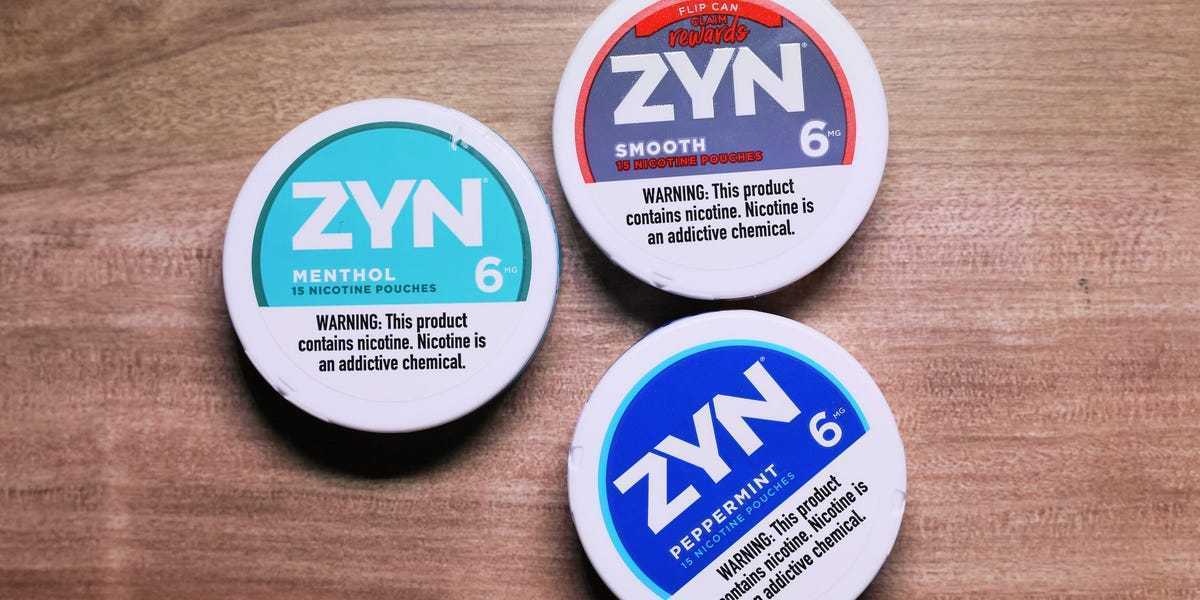
ZYN Nicotine Pouches Short in Supply in U.S. Due to Sales Surge

Market by 2FIRSTS.ai
May.20.2024
ZYN Nicotine Pouches Short in Supply in U.S. Due to Sales Surge
ZYN nicotine pouches may be hard to find in states like New York, New Jersey, and Florida, as demand rises.

According to a report by Bloomberg on May 20th, the popular nicotine pouch brand ZYN, owned by PMI, may become harder to find in several states, including New York, New Jersey, and Florida.


Some tobacco shops in New York have revealed that the nicotine pouches costing around $5 retail price have sold out. Wholesalers in New Jersey and Florida have also reported difficulties in stocking ZYN. It is said that this shortage has been ongoing for several weeks. During the April earnings conference call, the company's CFO Emmanuel Babeau stated that the growth of ZYN has "undoubtedly brought some tension to the supply chain."


In February of this year, PMI company reported that sales of ZYN in the United States are expected to reach nearly 385 million cans by 2023, a 62% increase compared to the previous year. The company predicts that business performance in 2024 will be even better, with sales in the US expected to reach 520 million cans this year. As global tobacco consumption continues to decline, the company has been pushing to create more smoke-free products.


In April 2024, the Food and Drug Administration (FDA) issued warning letters to retailers selling ZYN nicotine pouches to minors and filed civil penalty complaints. The agency stated that it had sent 119 warning letters to retailers from October 2023 to February 2024 and filed 41 civil lawsuits.


We welcome news tips, article submissions, interview requests, or comments on this piece.

Please contact us at info@2firsts.com, or reach out to Alan Zhao, CEO of 2Firsts, on LinkedIn


Notice

1.  This article is intended solely for professional research purposes related to industry, technology, and policy. Any references to brands or products are made purely for objective description and do not constitute any form of endorsement, recommendation, or promotion by 2Firsts.

2.  The use of nicotine-containing products — including, but not limited to, cigarettes, e-cigarettes, nicotine pouchand heated tobacco products — carries significant health risks. Users are responsible for complying with all applicable laws and regulations in their respective jurisdictions.

3.  This article is not intended to serve as the basis for any investment decisions or financial advice. 2Firsts assumes no direct or indirect liability for any inaccuracies or errors in the content.

4.  Access to this article is strictly prohibited for individuals below the legal age in their jurisdiction.


Copyright


This article is either an original work created by 2Firsts or a reproduction from third-party sources with proper attribution. All copyrights and usage rights belong to 2Firsts or the original content provider. Unauthorized reproduction, distribution, or any other form of unauthorized use by any individual or organization is strictly prohibited. Violators will be held legally accountable.

For copyright-related inquiries, please contact: info@2firsts.com


AI Assistance Disclaimer


This article may have been enhanced using AI tools to improve translation and editorial efficiency. However, due to technical limitations, inaccuracies may occur. Readers are encouraged to refer to the cited sources for the most accurate information.

We welcome any corrections or feedback. Please contact us at: info@2firsts.com

Bangladesh Approves Philip Morris Factory for Nicotine Pouches, Sparks Controversy: Regulator Says It’s “Completely Legal”
Philip Morris Bangladesh Limited (PMBL) has received approval to invest USD 5.82 million in a nicotine pouch factory in Narayanganj. Regulators say the project is legal under existing laws, while health groups argue it breaches a 2016 Supreme Court order and poses youth addiction risks.
Nov.07 by 2FIRSTS.ai
Latvia’s Constitutional Court Upholds Vape Flavor Ban as Constitutional
The Constitutional Court of Latvia upheld the 2025 vape-flavor ban as constitutional, rejecting appeals by Pro Vape and SIA MASS Industry. Judges said the restrictions serve a legitimate public-health purpose by protecting youth from nicotine addiction and that the social benefits outweigh business losses.
Oct.24 by 2FIRSTS.ai
Baltimore Moves to Zone Smoke Shops, Set Minimum Distance From Schools
Baltimore’s City Council in Maryland, building on recently enacted restrictions on “small box” dollar-store chains, has proposed a package of regulations for tobacco and vape retailers. The measures would create a standalone land-use category for “smoke shops,” establish distance buffers from schools and parks, limit exterior signage brightness, and schedule an informational hearing.
Oct.29 by 2FIRSTS.ai
Over 1,900 e-cigarettes seized in Johor; Malaysia to enforce nationwide ban from 2016
Over 1900 e-cigarette products seized in Johor shopping center; state-wide ban enforced since 2016; 10 illegal traders issued notices; national ban planned by 2026.
Oct.17 by 2FIRSTS.ai
Special Report | Belarus to centralize vaping market under state supervision
Belarus is preparing to overhaul its vaping market under tight state control — from monopolizing imports to banning online sales and restricting retail licenses. Officials say nearly 77% of the disposable e-cigarette market is supplied illegally, prompting sweeping regulatory measures that have already sparked strong pushback from consumers and vape retailers.
Dec.03
Australia TGA Warns Delivery Platforms: Don’t Promote or Supply Vapes Illegally
The Therapeutic Goods Administration (TGA) warned online delivery platforms not to breach Australian vape laws and said it worked with two major companies to remove non-compliant material. Under the Therapeutic Goods Act 1989, advertising vapes to the public is banned and sales are pharmacy-only; tobacconists and convenience stores cannot supply vapes. TGA will continue enforcement, with severe penalties for breaches.
Oct.30 by 2FIRSTS.ai