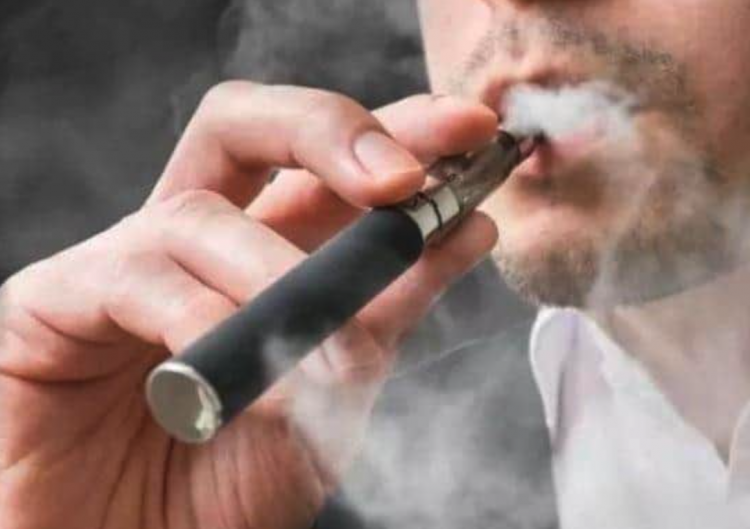
Dr. Arif Rajpura, the head of public health at Blackpool, is concerned that local schools in the area are indicating a sustained trend in increasing usage.
Dr. Arif Rajpura, Public Health Director of the Hikaze Council - Image source: The Gazette.
New statistical data from ASH (Action on Smoking and Health) reveals that 15.8% of UK teenagers between the ages of 11 and 17 have tried vaping, compared to 11.2% and 13.9% in 2021 and 2020, respectively. The percentage of current users in the same age group is 7%, down from 3.3% in 2021 and 4.1% in 2020.
Dr. Rajpura supports the position of the National Institute for Health and Care Excellence (NICE), which advises that non-smoking children, young people, and young adults should not try or regularly use e-cigarettes.
He said, "Through preliminary discussions with local schools regarding ASH statistics, we have heard many people express concerns about an increase in the use of these products among children and young adults.
We are awaiting the results of an investigation by SHEU (Schools and Student Health Education Department) to understand the local situation in Blackburn. The committee has also commissioned further collaboration with Healthwatch and the local community to gather more in-depth information.
E-cigarettes are a product with age restrictions as users could become addicted to nicotine-containing e-cigarettes. They are not a risk-free choice, especially for non-smokers for whom the long-term health effects of e-cigarettes are still unknown.
Further research is necessary on this issue, but it is advisable to discourage the use of electronic cigarettes. The support of families, guardians, and schools in promoting this message is crucial.
In the local area, we provide comprehensive personal, social, and health education support for schools focused on children and youth education, and endorse their protection policies.
Dr. Rajpura reiterated that it is illegal for anyone to sell cigarettes or e-cigarette products containing nicotine or tobacco to individuals under 18 years of age, or to purchase these products on behalf of individuals under 18 years of age. It is the responsibility of the Blackpool Trading Standards in the resort and the Lancashire Trading Standards of Fylde and Wyre to enforce laws regarding the sale of products to minors, illegal product sales, and sales point advertising.
Debra Challinor, the owner of the Saint Anne Let's Go Vape shop, has stated that her industry is well-regulated and part of this regulation involves checking the age of anyone entering an electronic cigarette store.
She said that all reputable professional e-cigarette stores adhere to very strict regulations, which have been in effect for some time.
We always check age and strictly refuse anyone under 18. It's not worth the risk for the business since fines can be very severe.
Electronic cigarettes are just one type of product that may not be strictly regulated in some stores, but our recommendation is always to use a specialized store that strictly follows the rules.
2FIRSTS will continue to follow and report on this issue. Further updates will be available on the "2FIRSTS APP". Scan the QR code below to download the app.
Disclaimer
This article is provided solely for professional research, industry discussion, and informational purposes. Any references to brands, companies, products, technologies, or policies are made for factual reporting and analytical purposes only, and do not constitute endorsement, recommendation, promotion, or advertising by 2Firsts.
Nicotine-containing products, including but not limited to cigarettes, e-cigarettes, heated tobacco products, and nicotine pouches, carry significant health risks. Readers are responsible for complying with all applicable laws and regulations in their respective jurisdictions, including age restrictions and access limitations.
The information contained in this article should not be regarded as investment, legal, medical, regulatory, or commercial advice. While 2Firsts strives to ensure the accuracy and reliability of its content, it does not assume liability for any direct or indirect loss arising from errors, omissions, inaccuracies, or reliance on the information contained herein.
This article is not intended for individuals below the legal age for accessing tobacco or nicotine-related information in their jurisdiction.
Copyright Notice
This article is either original content produced by 2Firsts or content reproduced, translated, summarized, or adapted from third-party sources with attribution where applicable. The intellectual property rights of the original content remain with 2Firsts or the respective original rights holders.
No individual or organization may copy, reproduce, distribute, republish, modify, translate, or otherwise use this content without prior authorization. Any unauthorized use may result in legal action.
For copyright-related inquiries, corrections, or removal requests, please contact: info@2firsts.com.
AI-Assisted Translation and Editing Notice
Portions of this article may have been translated, edited, or reviewed with the assistance of artificial intelligence tools to improve efficiency and readability. Due to the limitations of AI-assisted translation and editing, discrepancies, omissions, or inaccuracies may exist when compared with the original source.
Where applicable, readers are advised to refer to the original source for the most complete and accurate information. If you identify any errors or believe that any content infringes upon your rights, please contact us at info@2firsts.com, and we will review and address the matter promptly.