Shareholder Votes Against Smoking Ban in Bally's and Boyd Gaming

Regulations by 2FIRSTS.ai
May.21.2024
Shareholder Votes Against Smoking Ban in Bally's and Boyd Gaming
Bally's shareholders reject proposal to ban smoking in 15 casinos, following similar decision by Boyd Gaming investors.

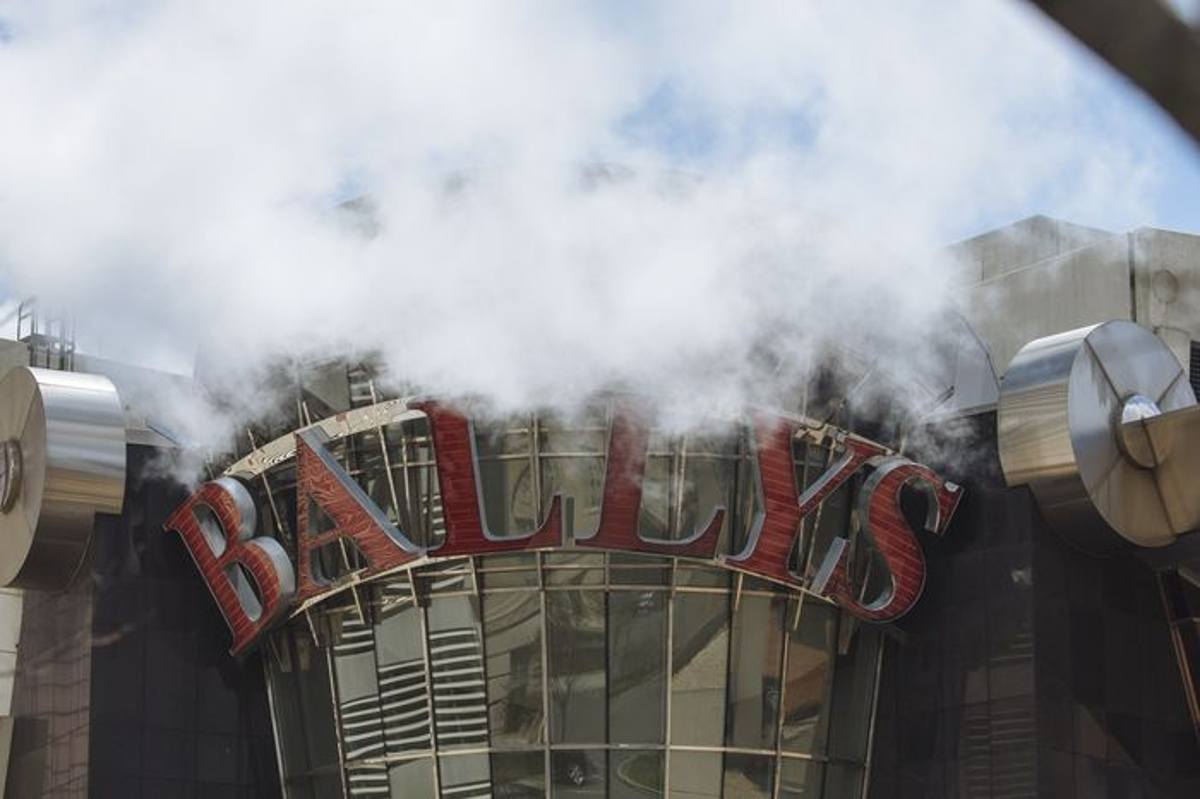
According to a report from The Wall Street Journal on May 20th, shareholders of Bally's Corporation voted against a proposal to ban smoking in its 15 casinos. Additionally, investors in Boyd Gaming have recently made a similar decision.


In April of this year, the Michigan-based healthcare system Trinity Health held 440 shares of stock in the Barley Corporation on the New York Stock Exchange, which proposed that Barley consider opening a smoke-free area in its casino. Trinity Health's investment in Barley accounts for 0.001% of the company's portfolio, and as of April, the company has issued a total of 40.5 million shares.


According to reports, shareholders of Bally have voted against the proposal to ban smoking in the company's nine casinos. The specific voting results will be disclosed in the upcoming regulatory filings.


The management of Bally Company did not comment on the voting results, but they had previously advised shareholders to vote against the proposal because they believed it was "unreasonable and excessive".


Prior to the results in Bali, shareholders of Boyd Gaming had already rejected a similar smoking ban proposal made by Trinity Health. Boyd Gaming stated that investors holding 63.6 million shares voted against the proposal, while 18.5 million shares voted in favor.


Caesars Entertainment will vote on this proposal at its annual shareholder meeting on June 11, which was also proposed by Tenet Healthcare.


Although the proposal by Trident Health was rejected in the ballots in Barry and Boyd, it is not a complete failure. This is because in the Boyd vote, there was over 5% support for implementing a smoking ban, so the issue can be raised again at the 2025 Boyd shareholders meeting. If similar results are seen in the Barry or Caesar votes, Trident Health will bring up the issue again next year.


Cynthia Hallett, CEO of the American Nonsmokers' Rights Foundation (ANRF), has participated in shareholder voting and stated, "We have built a very strong foundation from which to work. Most proposals did not even make it to a vote, let alone receive double-digit support. This issue has now reached a level where it can be discussed at the board level, and the company cannot avoid this important topic that affects the health of employees and guests.


The American Nonsmokers' Rights Foundation (ANRF) believes that although gambling and smoking have been intertwined for decades, banning smoking in casinos is inevitable. ANRF points out that smoking on commercial flights, once very common, was legislated against in federal regulations in February 1990. ANRF also emphasized the widespread indoor smoking in restaurants and bars in the past. Today, nearly 80% of restaurants in the United States are smoke-free, and the trend toward smoke-free hotels and eliminating smoking rooms continues to rise.


The ANRF suggests that with the continued decline in smoking rates and an increasing number of gambling patrons seeking smoke-free environments, today's smoke-free casinos can compete with those that allow smoking.


We welcome news tips, article submissions, interview requests, or comments on this piece.

Please contact us at info@2firsts.com, or reach out to Alan Zhao, CEO of 2Firsts, on LinkedIn


Notice

1.  This article is intended solely for professional research purposes related to industry, technology, and policy. Any references to brands or products are made purely for objective description and do not constitute any form of endorsement, recommendation, or promotion by 2Firsts.

2.  The use of nicotine-containing products — including, but not limited to, cigarettes, e-cigarettes, nicotine pouchand heated tobacco products — carries significant health risks. Users are responsible for complying with all applicable laws and regulations in their respective jurisdictions.

3.  This article is not intended to serve as the basis for any investment decisions or financial advice. 2Firsts assumes no direct or indirect liability for any inaccuracies or errors in the content.

4.  Access to this article is strictly prohibited for individuals below the legal age in their jurisdiction.


Copyright


This article is either an original work created by 2Firsts or a reproduction from third-party sources with proper attribution. All copyrights and usage rights belong to 2Firsts or the original content provider. Unauthorized reproduction, distribution, or any other form of unauthorized use by any individual or organization is strictly prohibited. Violators will be held legally accountable.

For copyright-related inquiries, please contact: info@2firsts.com


AI Assistance Disclaimer


This article may have been enhanced using AI tools to improve translation and editorial efficiency. However, due to technical limitations, inaccuracies may occur. Readers are encouraged to refer to the cited sources for the most accurate information.

We welcome any corrections or feedback. Please contact us at: info@2firsts.com

Philippine Local Governments Urge Marcos to Prioritize Smoke- and Vape-Free Bill
The League of Municipalities of the Philippines (LMP) has urged President Ferdinand Marcos Jr. to prioritize the Smoke- and Vape-Free Bill, seeking a nationwide legal framework for tobacco and vape regulation. Local government leaders said national legislation would help standardize enforcement and strengthen public health measures. The proposal remains at the advocacy stage and has not yet become law.
Jul.29
Japan’s Heated Tobacco Tax Changes Reshape Consumer Choices, Survey Reveals Impact of Price and Income
A consumer survey by Japanese heated tobacco information platform RELAZO found that rising tobacco prices and planned heated tobacco tax changes may influence smoking decisions among Japanese consumers. The survey covered 49,879 men and women aged 20 to 69 nationwide. It found that around 40% of respondents cumulatively indicated they may consider quitting when a pack reaches ¥600 (approximately US$4.1), while nearly 90% expressed potential quitting intentions at a ¥1,000 (approximately US$6.8) price level. The survey also found significant differences by income level, with lower-income respondents showing greater sensitivity to price increases.
Jul.24
U.S. Fifth Circuit Vacates NicQuid Vape MDO, Says FDA Comparative-Efficacy Standard Violated APA Procedures
According to VitalLaw on August 27, 2026, the U.S. Court of Appeals for the Fifth Circuit vacated an FDA marketing denial order (MDO) against NicQuid LLC, ruling that the agency’s comparative-efficacy standard for electronic nicotine delivery system (ENDS) applications had become a substantive rule requiring notice-and-comment rulemaking under the Administrative Procedure Act (APA). The court did not reject FDA’s authority to compare the public health benefits and risks of flavored vapes, but held that the agency could not establish a broadly binding standard through informal adjudications. The case was remanded to FDA for further proceedings.
Aug.28
FDA Grants PMTA Authorization to 11 ZYN ULTRA Nicotine Pouches, Bringing Total Authorized Pouches to 43
The U.S. Food and Drug Administration authorized 11 ZYN ULTRA nicotine pouch products made by Swedish Match USA through the premarket tobacco product application pathway on August 21, 2026. Ten of the authorized products have a labeled nicotine content of 9 mg, while ZYN ULTRA Smooth was authorized at 11 mg. The reviews were conducted through FDA’s nicotine pouch PMTA pilot program. FDA has now authorized 43 nicotine pouch products, including 23 through the pilot.
Aug.24
China’s Jiangsu Tobacco Monopoly Bureau and Drug Regulator Target Illegal Vape Sales Disguised as Medical Devices, Define Six Violations
China’s Jiangsu Tobacco Monopoly Bureau and Jiangsu Provincial Medical Products Administration have issued a joint notice targeting illegal production and sales of vape products disguised as medical devices. The notice identifies six categories of violations, including obtaining medical licenses through false materials, misusing medical device credentials, expanding production beyond approved scopes, and using medical device-related online platforms to promote or sell vape products. The action is based on China’s tobacco and medical device regulations and aims to strengthen vape oversight and consumer protection.
Aug.04
Special Report|AIR H1 Revenue Rises 3.7% as Shisha Volumes Fall 9%, Testing Its Shift Beyond Traditional Hookah
AIR’s first half-year results as a listed company offer a new test of how far a traditional hookah business can transform. H1 2026 revenue rose 3.7%, even as Flavored Shisha Molasses shipments fell 9%, with pricing and mix supporting growth. Traditional shisha still generates almost all revenue, while OOKA, Crown Switch, Greentank and U.S. regulatory spending point to accelerating diversification. The next test is whether those investments can become a second business of meaningful scale and profitability.
Capital Markets
Aug.21