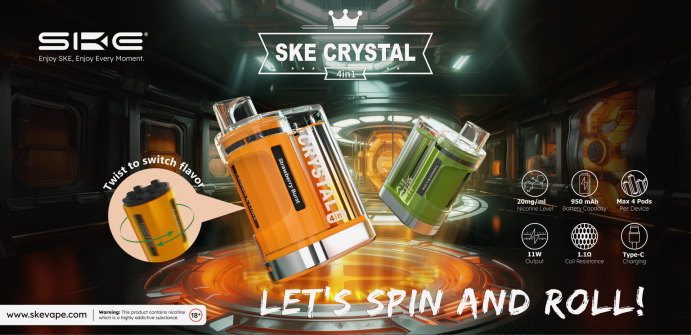
E-cigarette brand SKE has introduced a new multi-refill system product. The new series made its debut following the UK government's announcement of banning disposable e-cigarettes, signifying the first step in the market's transition from disposable products to reusable ones.
The 4-in-1 system by SKE (retail price: £12.99) can accommodate four different flavors of pods simultaneously, along with a revolving mechanism that enables users to switch between different pods and change flavors instantly.
SKE spokesperson stated, "The success of the e-cigarette industry lies in its disruptive and adaptive capabilities. We believe that other brands will also follow our lead in developing new products for adult individuals, particularly disposable tobacco users, who desire to quit smoking and steer clear from traditional cigarettes.
As the landscape of our industry changes, one major product category appears poised to be banned. The industry as a whole is making every effort to maximize the smoking cessation potential of e-cigarettes and continue supporting the government's ambitious vision for a smoke-free future. This is of utmost importance.
SKE's new device offers a selection of 16 flavors, including watermelon ice, watermelon strawberry, pink lemonade, melonberry, blueberry raspberry, cola ice, blueberry raspberry, blueberry peach, lemon lime, blueberry lime, tropical mix, lychee ice, cherry ice, strawberry burst, emerald cherry, and white peach dazzle.
We welcome news tips, article submissions, interview requests, or comments on this piece.
Please contact us at info@2firsts.com, or reach out to Alan Zhao, CEO of 2Firsts, on LinkedIn
Notice
1. This article is intended solely for professional research purposes related to industry, technology, and policy. Any references to brands or products are made purely for objective description and do not constitute any form of endorsement, recommendation, or promotion by 2Firsts.
2. The use of nicotine-containing products — including, but not limited to, cigarettes, e-cigarettes, nicotine pouchand heated tobacco products — carries significant health risks. Users are responsible for complying with all applicable laws and regulations in their respective jurisdictions.
3. This article is not intended to serve as the basis for any investment decisions or financial advice. 2Firsts assumes no direct or indirect liability for any inaccuracies or errors in the content.
4. Access to this article is strictly prohibited for individuals below the legal age in their jurisdiction.
Copyright
This article is either an original work created by 2Firsts or a reproduction from third-party sources with proper attribution. All copyrights and usage rights belong to 2Firsts or the original content provider. Unauthorized reproduction, distribution, or any other form of unauthorized use by any individual or organization is strictly prohibited. Violators will be held legally accountable.
For copyright-related inquiries, please contact: info@2firsts.com
AI Assistance Disclaimer
This article may have been enhanced using AI tools to improve translation and editorial efficiency. However, due to technical limitations, inaccuracies may occur. Readers are encouraged to refer to the cited sources for the most accurate information.
We welcome any corrections or feedback. Please contact us at: info@2firsts.com