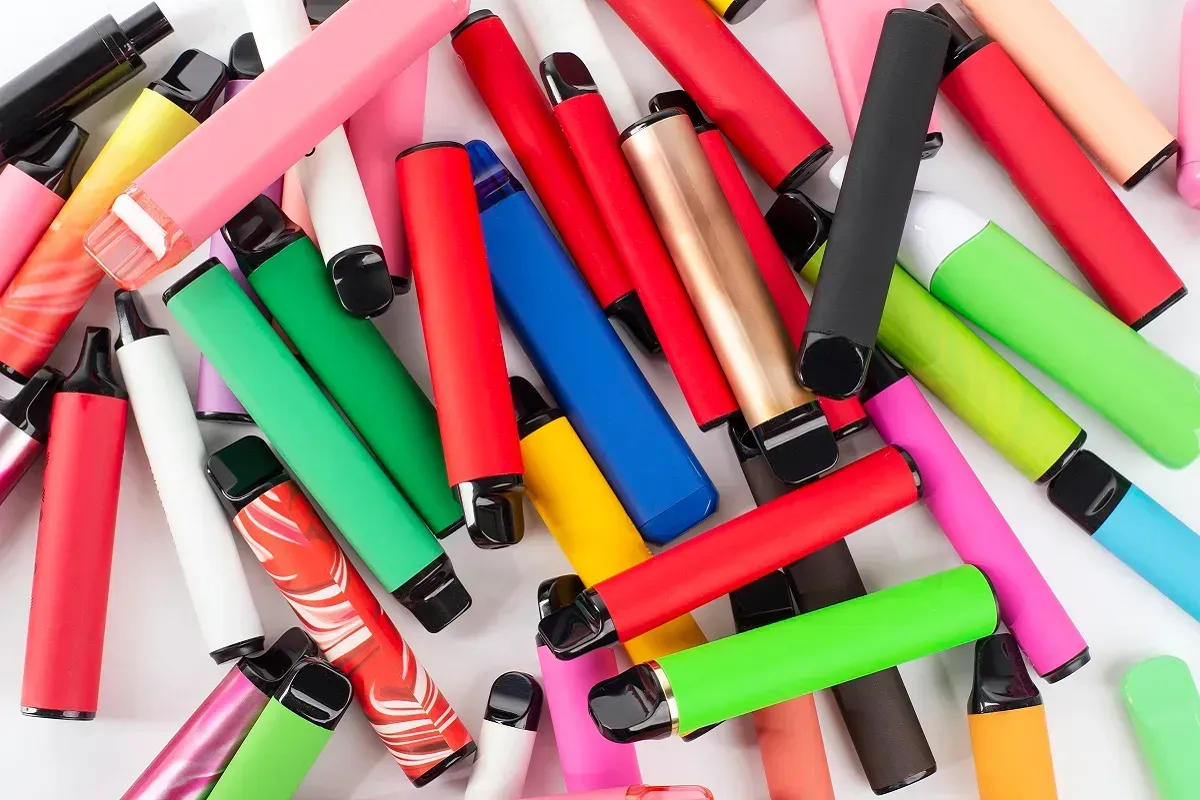
During surprise inspections across 60 retail stores in Sydney, illegal vaping devices and tobacco products worth $1.1 million were seized.
The raid operation, which took place from January 29th to February 2nd, resulted in the seizure of 30,000 e-cigarettes containing nicotine, 118,000 cigarettes, 45 kilograms of flavored tobacco and loose leaf tobacco, as well as 284 nicotine pouches by health inspectors from New South Wales, officers from the New South Wales Police, and officials from the Tobacco Goods Administration (TGA).
Despite the seizure of a significant amount of illegal products, Theo Foukkare, the CEO of the Australian Association of Convenience Stores (AACS), stated that the confiscated items represent less than half of the daily supply in the state of New South Wales.
The AACS is wholeheartedly committed to cracking down on illegal drug users, but the recent results of these surprise inspections show just how challenging it is to make even the slightest headway in the black market.
Unfortunately, the quantity seized by authorities in New South Wales is an insignificant drop in the ocean, not even half of what is supplied on the local black market in half a day.
According to the latest data from Roy Morgan, over 90,000 Australian adults started using e-cigarettes between September and December last year, with 34% of them residing in New South Wales.
Fukalei explained that the only way to curb demand in the black market is to regulate the sale of nicotine delivery devices, similar to the regulations in place for tobacco and alcohol. Only licensed and responsible retailers should be allowed to sell products that strictly adhere to legislation governing nicotine content, ingredients, flavors, and packaging.
Fukare argues that the decision by the Albanese government to require Australian e-cigarette users to obtain a prescription from a general practitioner and spend an additional 150 Australian dollars on medication is deeply flawed and plays right into the hands of the black market.
Prime Minister Anthony Albanese and Health Minister Mark Butler are imposing a requirement that adults who use marijuana must consult a doctor and pay $150 (approximately five times the price of black market marijuana) in order to purchase legal cannabis from pharmacies. This action is further exacerbating the burden on individuals during an already precarious period of rising living costs.
According to the federal government's own model, it is estimated that around 450,000 Australians will visit their general practitioner twice this year to obtain a prescription for vaping, resulting in a need for almost one million additional appointments.
The majority of Australians are struggling to put food on the table, so forcing them to pay the remaining amount of health insurance to see a doctor and then spend 150 Australian dollars to buy an e-cigarette at a pharmacy will only drive more people towards the black market, where they can easily access cheap but dangerous nicotine vaping devices, which are manufactured in China using deceptive chemicals.
Since July 2020, the estimated street value of illegal narcotics and tobacco products seized in New South Wales has surpassed AUD 31.6 million.
We welcome news tips, article submissions, interview requests, or comments on this piece.
Please contact us at info@2firsts.com, or reach out to Alan Zhao, CEO of 2Firsts, on LinkedIn
Notice
1. This article is intended solely for professional research purposes related to industry, technology, and policy. Any references to brands or products are made purely for objective description and do not constitute any form of endorsement, recommendation, or promotion by 2Firsts.
2. The use of nicotine-containing products — including, but not limited to, cigarettes, e-cigarettes, nicotine pouchand heated tobacco products — carries significant health risks. Users are responsible for complying with all applicable laws and regulations in their respective jurisdictions.
3. This article is not intended to serve as the basis for any investment decisions or financial advice. 2Firsts assumes no direct or indirect liability for any inaccuracies or errors in the content.
4. Access to this article is strictly prohibited for individuals below the legal age in their jurisdiction.
Copyright
This article is either an original work created by 2Firsts or a reproduction from third-party sources with proper attribution. All copyrights and usage rights belong to 2Firsts or the original content provider. Unauthorized reproduction, distribution, or any other form of unauthorized use by any individual or organization is strictly prohibited. Violators will be held legally accountable.
For copyright-related inquiries, please contact: info@2firsts.com
AI Assistance Disclaimer
This article may have been enhanced using AI tools to improve translation and editorial efficiency. However, due to technical limitations, inaccuracies may occur. Readers are encouraged to refer to the cited sources for the most accurate information.
We welcome any corrections or feedback. Please contact us at: info@2firsts.com