Key points to watch:
1. Thailand has stepped up its crackdown on e-cigarettes, with all seized cases being referred to the Anti-Money Laundering Office (AMLO) to trace the flow of funds and freeze assets. Cases involving over 500,000 Thai baht (15,000 US dollars) will be handled immediately.
2. The focus is on conducting awareness campaigns on the dangers of e-cigarettes in schools, developing an online reporting platform, using AI to screen keywords, and prohibiting the online sale and transportation of e-cigarettes.
3. Review and revise relevant laws, establish a committee to consolidate laws, and report progress to the Prime Minister by March 15.
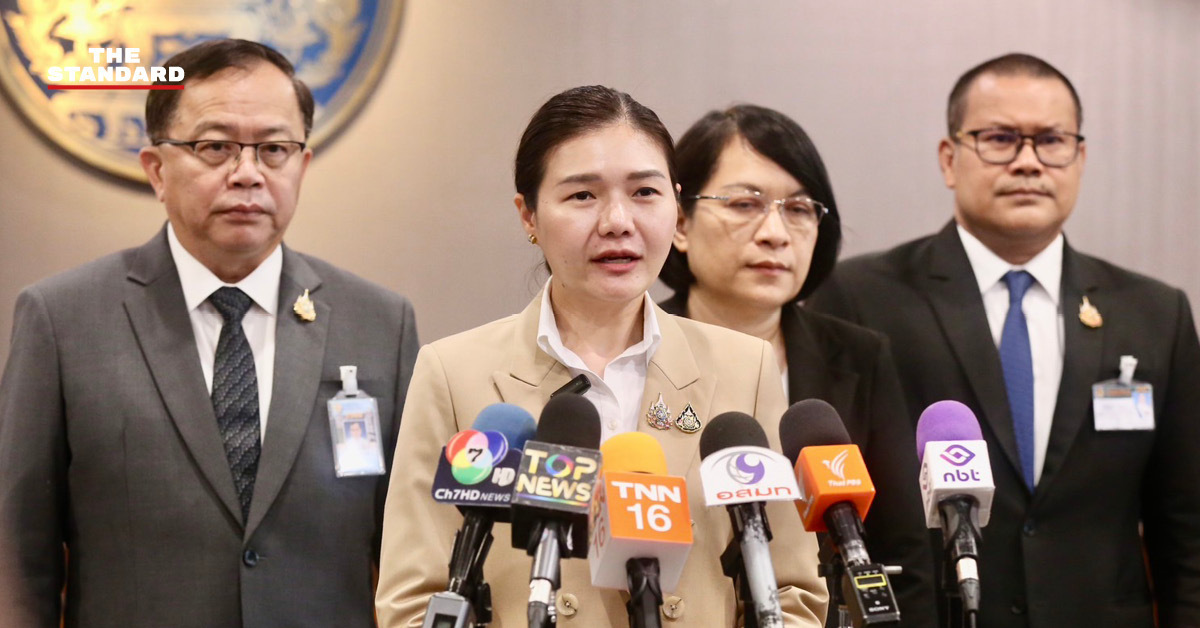
Jiraporn Sinthuprai, Minister of the Prime Minister's Office, said on March 6 that authorities would follow the prime minister’s directive on e-cigarettes after a meeting on the issue, The Standard reported.
Jiraporn said the meeting covered emergency measures against e-cigarettes, public awareness efforts, and legal revisions, while also proposing long-term solutions. She instructed law enforcement agencies to compile enforcement results, report to the prime minister weekly, and update the public.
The public can report e-cigarette information through the Consumer Protection Office (CPB) or hotline. To facilitate tracking, the Digital Government Development Agency (DGA) plans to develop an online platform for public reporting within 1 to 2 weeks.
Authorities will also prioritize school campaigns to raise awareness of e-cigarette risks and relevant laws, a key focus for the prime minister. Relevant departments will review laws for potential revisions and form a committee to consolidate legal changes.
In addition, another committee will be established to address long-term issues and report progress to the prime minister by March 15.
The Department of Digital Economy and Society (DE) will use AI to screen keywords and has recently convened major online platforms and transportation companies to stress that the sale and transportation of e-cigarettes are prohibited. Signs banning e-cigarette sales have also been posted at delivery points.
The smuggling of e-cigarettes through waterways and borders, especially along the northeastern border, is a serious issue. Customs will be the primary enforcement agency and will work with the security department to strengthen enforcement efforts.
Moving forward, all cases detected at customs checkpoints will be handled strictly and referred to the AMLO to track the flow of funds and freeze assets, followed by further investigation by the Central Investigation Bureau.
Confiscated items involved in the case will be destroyed if a conviction is reached. Customs is currently considering the method of destruction but has noted insufficient budget for the procedure. The matter will be reported to the prime minister for further action. Newly seized items will also have to wait for a conviction before being destroyed.
Jiraporn emphasized that, regardless of the case size, items valued over 500,000 Thai baht (15,000 US dollars) will be immediately transferred to the Anti-Money Laundering Office (AMLO) for handling. Items valued below 500,000 Thai baht will still be tracked and forwarded to AMLO for further processing.
We welcome news tips, article submissions, interview requests, or comments on this piece.
Please contact us at info@2firsts.com, or reach out to Alan Zhao, CEO of 2Firsts, on LinkedIn
Notice
1. This article is intended solely for professional research purposes related to industry, technology, and policy. Any references to brands or products are made purely for objective description and do not constitute any form of endorsement, recommendation, or promotion by 2Firsts.
2. The use of nicotine-containing products — including, but not limited to, cigarettes, e-cigarettes, nicotine pouchand heated tobacco products — carries significant health risks. Users are responsible for complying with all applicable laws and regulations in their respective jurisdictions.
3. This article is not intended to serve as the basis for any investment decisions or financial advice. 2Firsts assumes no direct or indirect liability for any inaccuracies or errors in the content.
4. Access to this article is strictly prohibited for individuals below the legal age in their jurisdiction.
Copyright
This article is either an original work created by 2Firsts or a reproduction from third-party sources with proper attribution. All copyrights and usage rights belong to 2Firsts or the original content provider. Unauthorized reproduction, distribution, or any other form of unauthorized use by any individual or organization is strictly prohibited. Violators will be held legally accountable.
For copyright-related inquiries, please contact: info@2firsts.com
AI Assistance Disclaimer
This article may have been enhanced using AI tools to improve translation and editorial efficiency. However, due to technical limitations, inaccuracies may occur. Readers are encouraged to refer to the cited sources for the most accurate information.
We welcome any corrections or feedback. Please contact us at: info@2firsts.com