The Concerns and Attention on Flourescent Pen-shaped e-cigarette

Aug.23.2023
The Concerns and Attention on Flourescent Pen-shaped e-cigarette
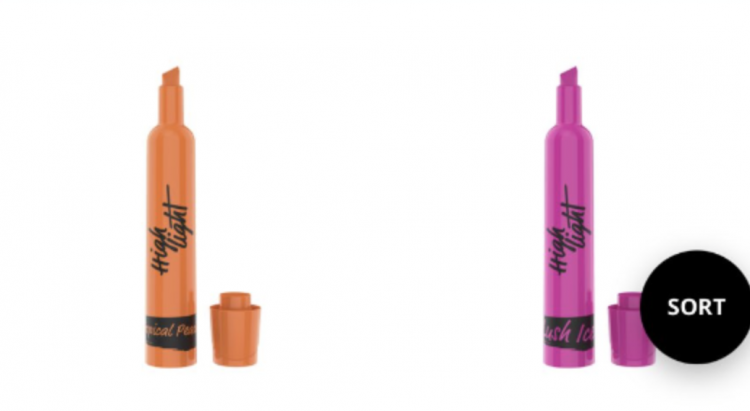
A fluorescent pen-shaped e-cigarette has sparked concerns about its appeal to teenagers, according to recent reports.

Special Announcement:


This article is for internal industry research and exchange purposes only. It does not endorse any brands or products. Minors are prohibited from accessing it.


On August 21, a user on Twitter, identified as being from the United States, posted a message about a "highlighter-like e-cigarette," which caught the attention of online users. The majority of users expressed concerns about the potential appeal of this e-cigarette to young people.


Internet users commented, "I have noticed that these e-cigarette companies still seem to be targeting young people, which is extremely disheartening.


Some internet users have also expressed their opinion that action should be taken against the individuals responsible for designing such products, suggesting that they should be fired. They believe that when these e-cigarette companies face legal action, teachers should actively participate in class-action lawsuits.


In addition, in recent days, several American media outlets including CBS and NewsNation, have reported on the concerning trend of fluorescent marker-shaped e-cigarettes, which has caught the attention of parents and teachers. It has also become a focus of regulatory authorities in the United States.


Experts are urging parents to take note of the learning materials they purchase and investigate if they find any unfamiliar items in their children's school bags or backpacks, according to a recent report.


Disclaimer

This article is provided solely for professional research, industry discussion, and informational purposes. Any references to brands, companies, products, technologies, or policies are made for factual reporting and analytical purposes only, and do not constitute endorsement, recommendation, promotion, or advertising by 2Firsts.

Nicotine-containing products, including but not limited to cigarettes, e-cigarettes, heated tobacco products, and nicotine pouches, carry significant health risks. Readers are responsible for complying with all applicable laws and regulations in their respective jurisdictions, including age restrictions and access limitations.

The information contained in this article should not be regarded as investment, legal, medical, regulatory, or commercial advice. While 2Firsts strives to ensure the accuracy and reliability of its content, it does not assume liability for any direct or indirect loss arising from errors, omissions, inaccuracies, or reliance on the information contained herein.

This article is not intended for individuals below the legal age for accessing tobacco or nicotine-related information in their jurisdiction.


Copyright Notice

This article is either original content produced by 2Firsts or content reproduced, translated, summarized, or adapted from third-party sources with attribution where applicable. The intellectual property rights of the original content remain with 2Firsts or the respective original rights holders.

No individual or organization may copy, reproduce, distribute, republish, modify, translate, or otherwise use this content without prior authorization. Any unauthorized use may result in legal action.

For copyright-related inquiries, corrections, or removal requests, please contact: info@2firsts.com.


AI-Assisted Translation and Editing Notice

Portions of this article may have been translated, edited, or reviewed with the assistance of artificial intelligence tools to improve efficiency and readability. Due to the limitations of AI-assisted translation and editing, discrepancies, omissions, or inaccuracies may exist when compared with the original source.

Where applicable, readers are advised to refer to the original source for the most complete and accurate information. If you identify any errors or believe that any content infringes upon your rights, please contact us at info@2firsts.com, and we will review and address the matter promptly.

Special Report|Japan Tobacco Buys CLEW: Can Its 160,000-Store Cigarette Network Help It Vie for U.S. Nicotine Pouch Share Against PMI and BAT?
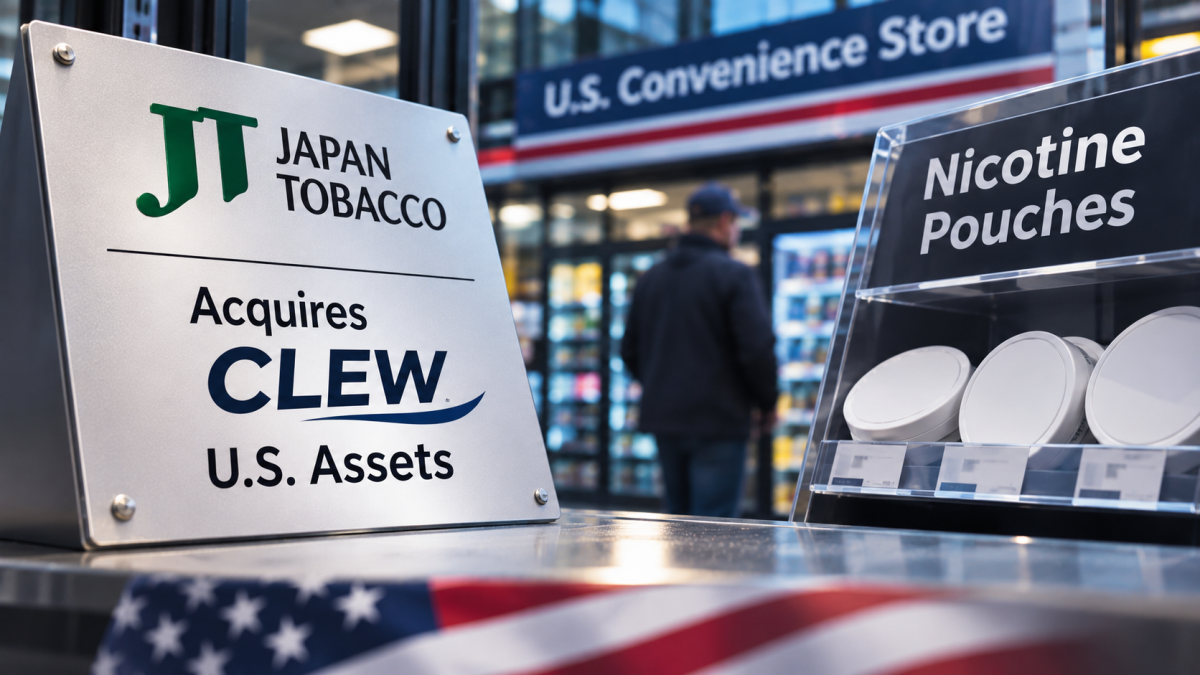
Japan Tobacco Inc. (JT) announced on November 12, 2026, that it had acquired the U.S. assets of nicotine pouch brand CLEW from Nevcore Innovations Inc., including trademarks, intellectual property, product formulations and a Premarket Tobacco Product Application (PMTA). CLEW, currently distributed through selected outlets in 13 U.S. states, will immediately join the JTI LIGGETT portfolio. The transaction follows JT's approximately $2.4 billion acquisition of U.S. cigarette maker Vector Group in 2024. JTI LIGGETT says its existing cigarette brands reach more than 160,000 U.S. retail stores. During the 2026 NACS Show in October, JTI LIGGETT booth staff told 2Firsts that the company had not yet launched nicotine pouches in the United States. Although Nevcore previously announced FDA acceptance of CLEW's PMTA, the brand is absent from the agency's current list of authorized nicotine pouch products. JT has not disclosed a retail expansion plan for CLEW.
Business
Nov.12
Special Report | From Oversupply to Supply Gaps: Global Tobacco Leaf Markets Diverge Ahead of 2027
Global tobacco leaf markets diverged sharply in 2026, with India cutting authorised FCV production amid oversupply while Malawi faced a supply shortfall. U.S. demand improved in some leaf categories, but growers in Brazil, Colombia, Tanzania and Zimbabwe faced pressure from prices, buyer access, costs and weather. With nicotine consumption patterns also shifting, 2027 will test whether supply, demand and grower profitability can move back toward balance.
Oct.26
South Korea's Tobacco Plan Excludes 6-Methyl Nicotine as Customs Tightens Import Controls and Analog Liquid Imports Fall 83%
South Korea's government unveiled its first Tobacco Harm Management Basic Plan for 2027–2031 on October 29, 2026, proposing broader testing of vaping and heated tobacco products while excluding nicotine analogs such as 6-methyl nicotine. Synthetic nicotine came under tobacco regulation on April 24, and a June investigation found 6-methyl nicotine in 12 liquid inhalation products marketed as nicotine-free. Customs data released in September showed that imports of nicotine analog solutions fell 83.3%, from 12 metric tons in January–April to 2 metric tons in May–August. By September 20, imports had reached approximately 15 metric tons for the year, with 99.99% originating from China. Customs authorities have tightened pre-clearance testing and supply-chain documentation requirements, while the MFDS expects to complete its assessment of nicotine analog hazards by the end of 2026.
Regulations
Nov.04
Special report|Indonesia's Vape Industry Has 200 Manufacturers and $1.7 Billion in Investment. Could a Regulatory Divide Derail Its Rise as the World's No. 2 Manufacturing Hub After Shenzhen?
Indonesia's Ministry of Industry said at a November 3, 2026, policy forum that the country has about 200 electronic cigarette companies, Rp31 trillion (approximately $1.71 billion) in cumulative industry investment and around 100,000 jobs across the supply chain. The National Narcotics Agency is seeking a comprehensive ban on vape use and circulation, while the industry ministry favors tighter import, product-standard and distribution controls. Indonesia exported approximately $518 million in vaping products in 2025, and Chinese manufacturers including Smoore, GEEKVAPE and Jinjia Group have established local operations. An international logistics specialist interviewed by 2Firsts said more Chinese vape companies began production in Indonesia from the second half of 2025, accompanied by increased shipments of manufacturing equipment and investment in logistics facilities. The regulatory debate comes as Indonesia expands its role in international vaping manufacturing.
Special Report
Nov.05
UK ONS Data: Vaping Rate Among Women Aged 25–34 Reaches 18.3%, Compared With 14.4% for Men
The vaping rate among women aged 25 to 34 in Great Britain reached 18.3% in 2025, up from 13.7% in 2024 and 8.3% in 2020, according to data from the Office for National Statistics (ONS). The figure was the highest for this group since records began in 2014 and exceeded the 14.4% recorded among men of the same age. Adults aged 25 to 34 also overtook those aged 16 to 24 as the age group with the highest vaping prevalence. Overall, about 5.4 million adults in Great Britain used e-cigarettes in 2025, broadly unchanged from the previous year.
DATA
Oct.13
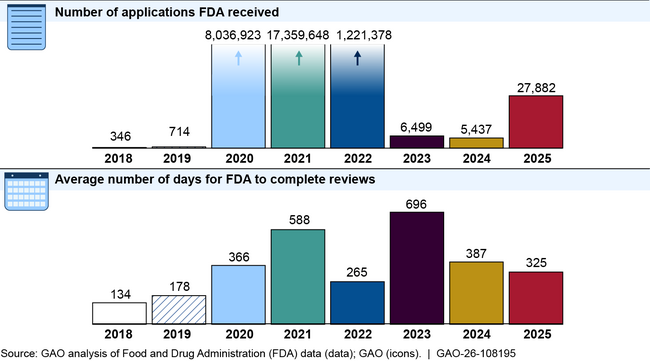
GAO Audit Finds Nearly 132,000 FDA Tobacco Applications Waiting an Average 1,266 Days as Nicotine Pouch Pilot Practices Move Into Vape PMTA Reviews
A U.S. Government Accountability Office audit found that 131,915 tobacco product applications submitted to the FDA since 2018 remained without a final review as of December 31, 2025, with pending applications waiting an average of 1,266 days. GAO also found FDA lacks the data needed to systematically determine whether scientific reviews meet applicable timelines. HHS agreed to upgrade the agency's tracking systems. At the same time, FDA has begun applying lessons from its nicotine pouch PMTA pilot to e-cigarette reviews, while changes to enforcement policy and electronic submissions are making the specific stage of a PMTA increasingly relevant to market access.
FDA
Oct.03