BAT Malaysia Pins Hopes on Dunhill to Reverse Sales Decline in SA Countries

BAT by 2FIRSTS.ai
Feb.07.2024
BAT Malaysia Pins Hopes on Dunhill to Reverse Sales Decline in SA Countries
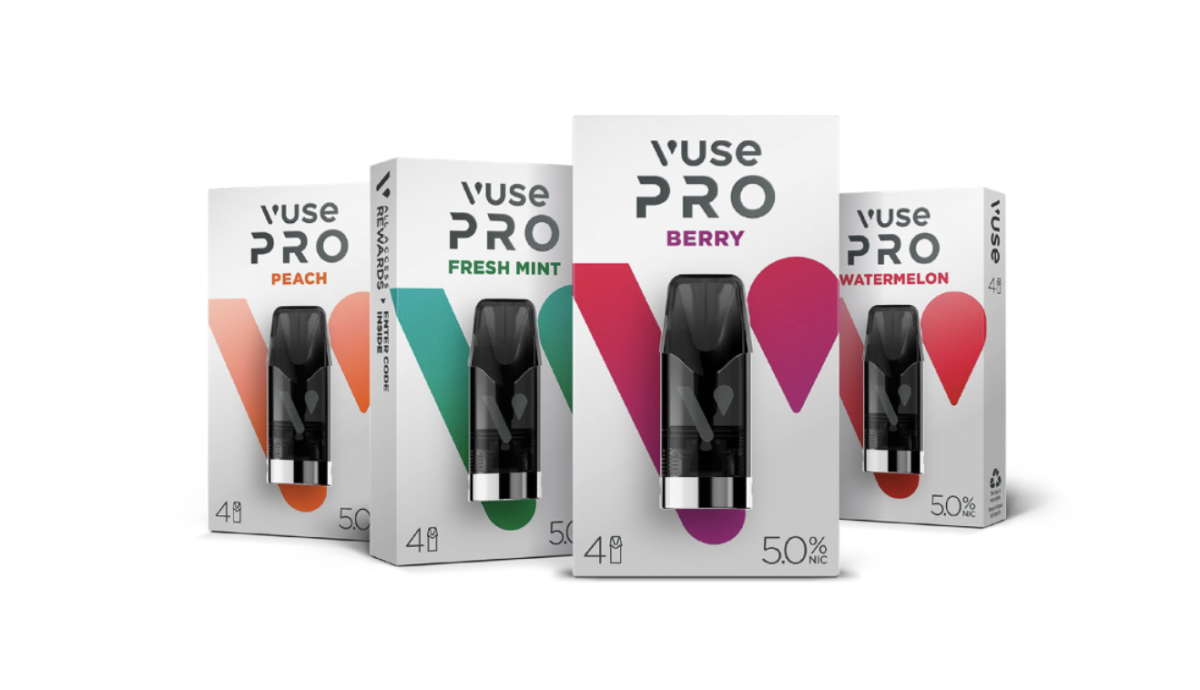
British American Tobacco's Malaysian subsidiary hopes that the Vuse e-cigarette will boost sales in Southeast Asia.

British American Tobacco Malaysia is hopeful that its brand "Dunhill" cigarettes will help reverse the decline in sales in Southeast Asian countries.


Nedal Louay Salem, the General Manager of British American Tobacco (Malaysia) Company, has stated that a rule reform introduced last year has enabled the company to start selling the Vuse brand of e-cigarettes in Malaysia. This has doubled the potential market size for the tobacco company locally, leading to significant confidence in the Vuse brand.


During an interview with Dow Jones Newswires, Salim expressed his ambition, stating, "Our objective is to establish Vuse as the e-cigarette equivalent of Dunhill in the cigarette industry. Our aim is to become Malaysia's leading vape brand.


He stated that these efforts have laid the foundation for an increase in sales. "In 2024, our sales will definitely be better than in the past.


As the manufacturer of one of Malaysia's most popular cigarette brands, Dunhill, British American Tobacco is facing formidable challenges in the country. The increasingly intense competition from unregulated vape products and illicit tobacco products has significantly eroded the market share of traditional cigarettes.


For most of the past decade, the company has experienced a continuous decline in profits, with its stock price falling by approximately 76% over the past five years. This year, the company's stock price has further dropped by 2.1%, leading BAT Malaysia's market value to fall below $550 million.


Analysts predict that during BAT Malaysia's financial report release on Tuesday evening, its sales for 2023 are expected to reach MYR 2.36 billion (approximately USD 496.8 million), which is lower than MYR 2.6 billion in 2022 and MYR 2.64 billion in 2021.


Salim highlighted that in the short term, the company's bottom line may continue to face pressure due to its investment in the "right mix of channels" to gain market share in the smoking accessories industry, following the launch of Vuse in Malaysia last August.


It is crucial for BAT to increase the sales of Vuse to the level of its competitor Dunhill cigarettes. According to their 2022 annual report, British American Tobacco's Malaysian branch, Dunhill, holds a 32% market share in the Malaysian tobacco market, dominating 62% of the country's high-end market.


Simultaneously, the company plans to continue improving its traditional products. Salim mentioned that consumption of the affordable Luckies cigarettes, introduced by BAT last year, has experienced rapid growth, while inflation risks are high at this time, particularly with impending subsidy cuts and tax increases.


Salim stated that BAT has a series of new product plans to be launched in the next nine months. He further added that the expansion into the e-cigarette sector supports the company's intent to not delist or go private, which was previously speculated by market analysts in the case of prolonged decline in the company's stock price.


"We are facing tremendous opportunities," he stated. "This is where the company's focus should lie, rather than privatization."


We welcome news tips, article submissions, interview requests, or comments on this piece.

Please contact us at info@2firsts.com, or reach out to Alan Zhao, CEO of 2Firsts, on LinkedIn


Notice

1.  This article is intended solely for professional research purposes related to industry, technology, and policy. Any references to brands or products are made purely for objective description and do not constitute any form of endorsement, recommendation, or promotion by 2Firsts.

2.  The use of nicotine-containing products — including, but not limited to, cigarettes, e-cigarettes, nicotine pouchand heated tobacco products — carries significant health risks. Users are responsible for complying with all applicable laws and regulations in their respective jurisdictions.

3.  This article is not intended to serve as the basis for any investment decisions or financial advice. 2Firsts assumes no direct or indirect liability for any inaccuracies or errors in the content.

4.  Access to this article is strictly prohibited for individuals below the legal age in their jurisdiction.


Copyright


This article is either an original work created by 2Firsts or a reproduction from third-party sources with proper attribution. All copyrights and usage rights belong to 2Firsts or the original content provider. Unauthorized reproduction, distribution, or any other form of unauthorized use by any individual or organization is strictly prohibited. Violators will be held legally accountable.

For copyright-related inquiries, please contact: info@2firsts.com


AI Assistance Disclaimer


This article may have been enhanced using AI tools to improve translation and editorial efficiency. However, due to technical limitations, inaccuracies may occur. Readers are encouraged to refer to the cited sources for the most accurate information.

We welcome any corrections or feedback. Please contact us at: info@2firsts.com

U.S. Military Could Test Nicotine Pouches and Vapes for Smoking Cessation as Washington Examiner Cites ZYN and Potential $4 Billion Reduction in Related Defense Costs
The House-passed FY2027 National Defense Authorization Act includes a provision authorizing the defense secretary to conduct a one-year smoking-cessation pilot for active-duty service members. Section 707 lists counseling, nicotine gum and patches alongside what the bill calls "electric nicotine delivery systems," nicotine pouches and heat-not-burn products. A recent Washington Examiner op-ed cited ZYN as an example in arguing for the provision, but the legislation does not name any commercial brand or supplier. ZYN is made by PMI-owned Swedish Match USA, with specified products holding FDA marketing authorizations and modified risk orders.
Sep.20
From Product Innovation to Integrated Solutions: NEXTECH Expands Its Global Heated Tobacco Solutions
NEXTECH launched its NEXE Pro circumferential-heating tobacco stick globally at InterTabac 2026, as the company expands from product innovation into broader heated tobacco solutions. Amid intensifying competition across global HTP markets, NEXTECH is strengthening its R&D, manufacturing and pre-launch support capabilities to serve different types of business customers.
Industry Insight
Sep.15
PMI Expands U.S. ZYN Portfolio With New 1.5 mg and 8 mg Strengths, Moves Toward a Unified 20-Pouch-Per-Can Format
Philip Morris International is expanding its U.S. ZYN nicotine pouch portfolio with new 1.5 mg and 8 mg strengths and plans to move its core 3 mg and 6 mg dry-pouch products from 15 to 20 pouches per can in the fourth quarter of 2026. ZYN ULTRA is also commercially available, with FDA authorization covering 10 products at 9 mg and one 11 mg Smooth product. PMI U.S. lists the new 1.5 mg and 8 mg strengths as commercially available, but as of September 10 they do not appear on the FDA’s public authorization list. Public materials do not identify which PMTA submissions cover the two new strengths or their current review status.
Sep.11
GSTHR Estimates 200 Million People Use Non-Combustible Nicotine Products as 28 Countries Show Rising Use Alongside Falling Smoking Rates
The Global State of Tobacco Harm Reduction, a project operated by Knowledge·Action·Change, estimates that about 200 million people worldwide use non-combustible nicotine products including vapes, heated tobacco, nicotine pouches and snus. Its 2026 report says use of these products rose alongside declining smoking rates in 28 countries it analyzed. The data do not establish that all 200 million users have quit smoking, nor do they prove a direct causal relationship. GSTHR also says regulatory restrictions on the products continue to expand in many markets.
Sep.10
China Tobacco Plans CNY 60 Billion Investment in ICBC, Agricultural Bank as Strategic Ties Extend Beyond Equity
China National Tobacco Corporation and several subsidiaries plan to invest a combined CNY 60 billion ($8.7 billion) in share placements by Industrial and Commercial Bank of China and Agricultural Bank of China as strategic investors. The agreements extend beyond equity investment to corporate governance, banking services and supply-chain finance. The filings also disclose 2025 data on China Tobacco’s tax and profit contributions and industry scale.
Sep.07
Florida Governor DeSantis Expands TANF Restrictions, Blocking Welfare Benefits From Buying Tobacco and Vapes
Florida Governor Ron DeSantis announced an expansion of Temporary Assistance for Needy Families (TANF) restrictions that would prohibit Electronic Benefit Transfer (EBT) funds from being used to purchase tobacco and vaping products. The state will amend its TANF State Plan and submit the changes for federal approval. Florida officials said the restrictions would not affect eligibility for temporary cash assistance or the amount of benefits received, but would change how funds can be spent.
Aug.25