Possibility of Increasing Cigarette Tax in South Korea

Regulations by 2FIRSTS.ai
Jan.17.2024
Possibility of Increasing Cigarette Tax in South Korea
South Korea considers raising cigarette taxes as prices have remained stagnant for 9 years, prompting widespread discussions.

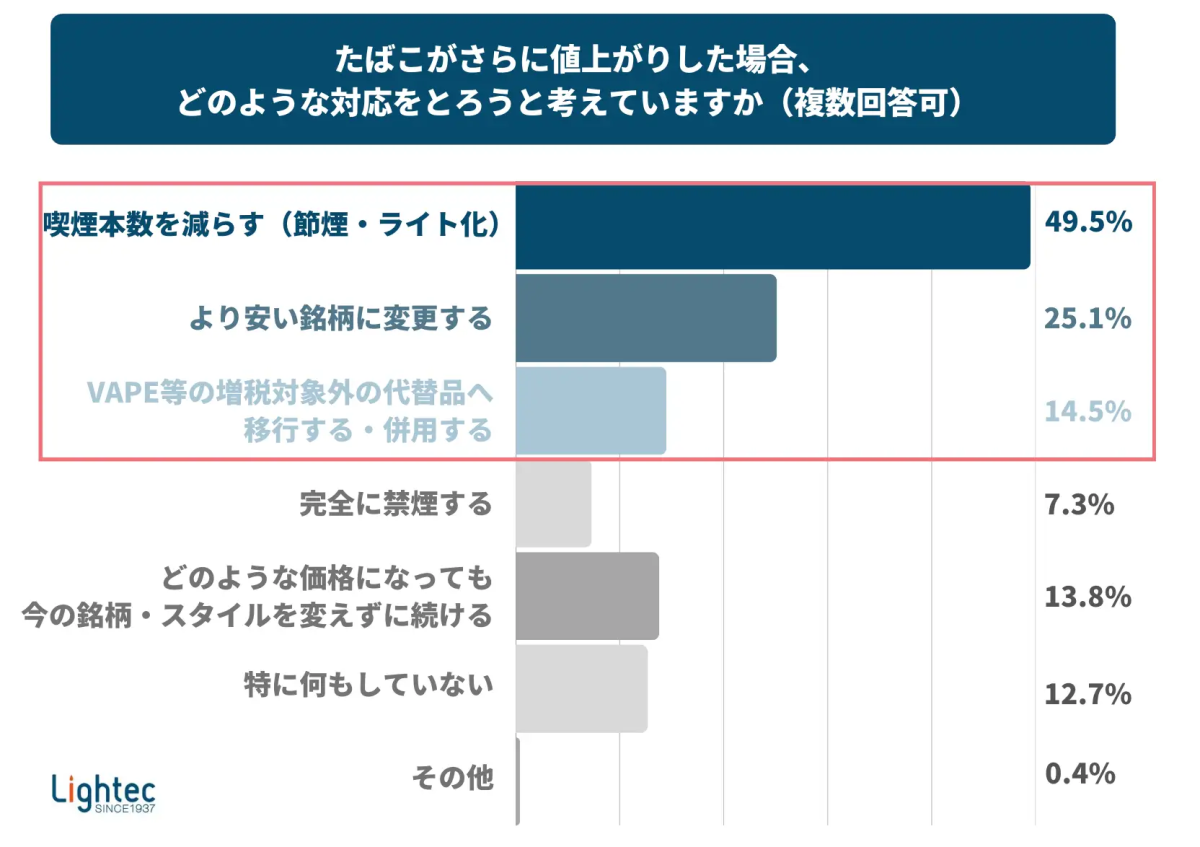
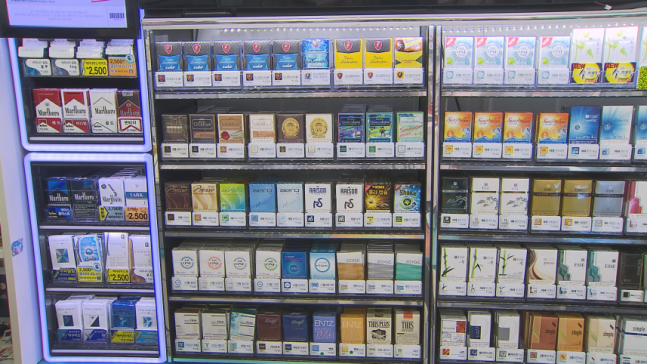
According to recent reports from South Korean media, cigarette prices in the country have remained stagnant at 4,500 Korean won (approximately 27 Chinese yuan) for nine consecutive years, sparking widespread discussions on increasing tobacco taxes.


Despite Deputy Prime Minister and Minister of Economy and Finance, Zhao Sang-hun, stating at a personnel hearing recently that "there are no plans to increase it," it appears that the current cigarette prices are actually trending downward when compared to the soaring inflation. Therefore, it seems that an increase in tobacco tax is only a matter of time.


In addition, due to the rising costs, the profits of the cigarette industry are also shrinking, hence the possibility of increasing tobacco taxes is quite high. In this regard, the academic community has proposed a plan to gradually increase tobacco taxes each year, aiming to raise cigarette prices to a range of 10,000 to 20,000 Korean won per pack by 2030.


In the debate on the increase in tobacco taxes, some arguments suggest that a price of 10,000 Korean won is too high, and 8,000 Korean won is an acceptable level, which also aligns with the average cigarette prices in OECD countries.


We welcome news tips, article submissions, interview requests, or comments on this piece.

Please contact us at info@2firsts.com, or reach out to Alan Zhao, CEO of 2Firsts, on LinkedIn


Notice

1.  This article is intended solely for professional research purposes related to industry, technology, and policy. Any references to brands or products are made purely for objective description and do not constitute any form of endorsement, recommendation, or promotion by 2Firsts.

2.  The use of nicotine-containing products — including, but not limited to, cigarettes, e-cigarettes, nicotine pouchand heated tobacco products — carries significant health risks. Users are responsible for complying with all applicable laws and regulations in their respective jurisdictions.

3.  This article is not intended to serve as the basis for any investment decisions or financial advice. 2Firsts assumes no direct or indirect liability for any inaccuracies or errors in the content.

4.  Access to this article is strictly prohibited for individuals below the legal age in their jurisdiction.


Copyright


This article is either an original work created by 2Firsts or a reproduction from third-party sources with proper attribution. All copyrights and usage rights belong to 2Firsts or the original content provider. Unauthorized reproduction, distribution, or any other form of unauthorized use by any individual or organization is strictly prohibited. Violators will be held legally accountable.

For copyright-related inquiries, please contact: info@2firsts.com


AI Assistance Disclaimer


This article may have been enhanced using AI tools to improve translation and editorial efficiency. However, due to technical limitations, inaccuracies may occur. Readers are encouraged to refer to the cited sources for the most accurate information.

We welcome any corrections or feedback. Please contact us at: info@2firsts.com

Samsung's battery explosion case proceeds as court finds manufacturer maintained “sufficient contacts” with the state
The Minnesota Court of Appeals has ruled that Samsung SDI Co., Ltd., a South Korean battery manufacturer, is subject to Minnesota jurisdiction in a product-liability case involving a vape battery explosion. The court found the company had “sufficient minimum contacts” with the state through extensive business activity.
Oct.20 by 2FIRSTS.ai
Australian Border Force Seizes 586M Cigarettes and 3M Vapes in Record First Quarter
Australian Border Force (ABF), 586 million cigarettes and over 3 million vapes were seized at Australia’s international border in the first quarter of the 2024–25 financial year (July 1–September 30), marking a continued upward trend over the past two years. Enhanced intelligence and data-sharing have enabled ABF to target suspicious consignments more effectively across all entry points.
Oct.24 by 2FIRSTS.ai
UK Retailers Urge Government to Include Age-Verification Tech in Tobacco and Vapes Bill
UK convenience retailers have written to several government ministers urging the adoption of age-verification technology in the Tobacco and Vapes Bill. The letter, led by Atul Sodha of Londis, Harefield, and co-signed by 29 other shop owners, calls for a “triple lock” approach combining manufacturer tech, retailer vigilance, and user-level verification to curb youth access.
Nov.28 by 2FIRSTS.ai
Selangor preparing regulatory policy that may gradually prohibit vape use
Selangor is drafting a policy paper outlining its regulatory direction for electronic cigarette products, including the possibility of gradually prohibiting vape use. The move aligns with the Tobacco Product Control Act for Public Health 2023 (Act 852) and aims to strengthen enforcement and youth health education.
Nov.21 by 2FIRSTS.ai
Two Malaysian Men Charged Over Illegal Import of  Vape Items at Singapore Checkpoint
Two Malaysian Men Charged Over Illegal Import of Vape Items at Singapore Checkpoint
Two Malaysian men arrested for illegally importing e-cigarettes at Woodlands Checkpoint, facing charges, court hearing on December 15. (20 words)
Nov.18 by 2FIRSTS.ai
South Korea Implements Law Requiring Full Disclosure of Tobacco Harmful Substances
South Korea has enacted the Tobacco Harm Management Act, effective November 1, 2025, requiring tobacco manufacturers and importers to test and report harmful substances in their products every two years. Results for all tobacco types—including combustible cigarettes, heated tobacco, and e-cigarettes—will be publicly available from mid-2026.
Nov.04 by 2FIRSTS.ai