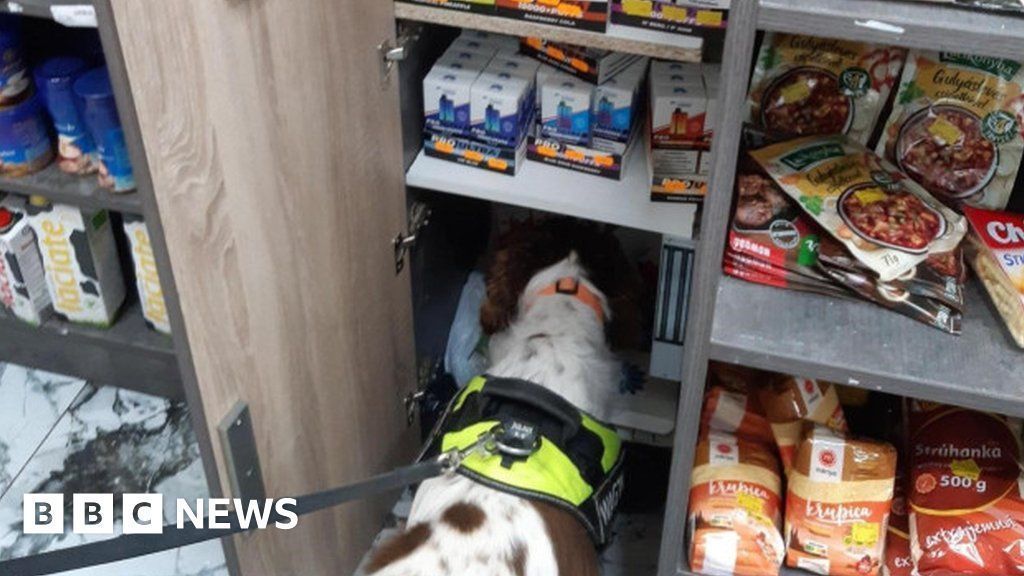
According to a report by the BBC on May 28th, the Oxfordshire County Council has recently issued guidelines to help the public identify illegal activities. This comes in response to the seizure of 10,000 illegal e-cigarettes in the county. The crackdown on illegal behavior reflects a nationwide trend and is a response to safety risks, as well as in line with the government's plans to ban these devices.
The government has stated that there is evidence showing that these disposable illegal e-cigarettes are being sold by organized crime groups. Meanwhile, data from the anti-smoking group ASH shows that 7.6% of adolescents aged 11 to 17 now regularly or occasionally use e-cigarettes, a sharp increase from 4.1% in 2020.
The government also advises the public to inspect e-cigarette packaging for potential "tell-tale signs" that may indicate illegal properties. Dr. Nathan Ley, an expert in public health, inequality, and community safety, stated that rechargeable e-cigarettes are a "practical tool for adult smokers to quit smoking.
However, he emphasized that due to the highly addictive nature of nicotine and its long-term impact on health, children and non-smokers should not use these devices.
The head of the government trade standards team, Jody Kerman, stated, "There is clear evidence that illegal e-cigarettes are now being intentionally sold by organized crime gangs." She said, "We have recently uncovered a worrying but predictable trend, where criminal gangs are using fairly sophisticated methods, such as electromagnetic blocking devices, to try to evade detection.
We welcome news tips, article submissions, interview requests, or comments on this piece.
Please contact us at info@2firsts.com, or reach out to Alan Zhao, CEO of 2Firsts, on LinkedIn
Notice
1. This article is intended solely for professional research purposes related to industry, technology, and policy. Any references to brands or products are made purely for objective description and do not constitute any form of endorsement, recommendation, or promotion by 2Firsts.
2. The use of nicotine-containing products — including, but not limited to, cigarettes, e-cigarettes, nicotine pouchand heated tobacco products — carries significant health risks. Users are responsible for complying with all applicable laws and regulations in their respective jurisdictions.
3. This article is not intended to serve as the basis for any investment decisions or financial advice. 2Firsts assumes no direct or indirect liability for any inaccuracies or errors in the content.
4. Access to this article is strictly prohibited for individuals below the legal age in their jurisdiction.
Copyright
This article is either an original work created by 2Firsts or a reproduction from third-party sources with proper attribution. All copyrights and usage rights belong to 2Firsts or the original content provider. Unauthorized reproduction, distribution, or any other form of unauthorized use by any individual or organization is strictly prohibited. Violators will be held legally accountable.
For copyright-related inquiries, please contact: info@2firsts.com
AI Assistance Disclaimer
This article may have been enhanced using AI tools to improve translation and editorial efficiency. However, due to technical limitations, inaccuracies may occur. Readers are encouraged to refer to the cited sources for the most accurate information.
We welcome any corrections or feedback. Please contact us at: info@2firsts.com