Trade Summary: E-cigarette Exports from China to New Zealand (April 2024)

Jun.13.2024
Trade Summary: E-cigarette Exports from China to New Zealand (April 2024)
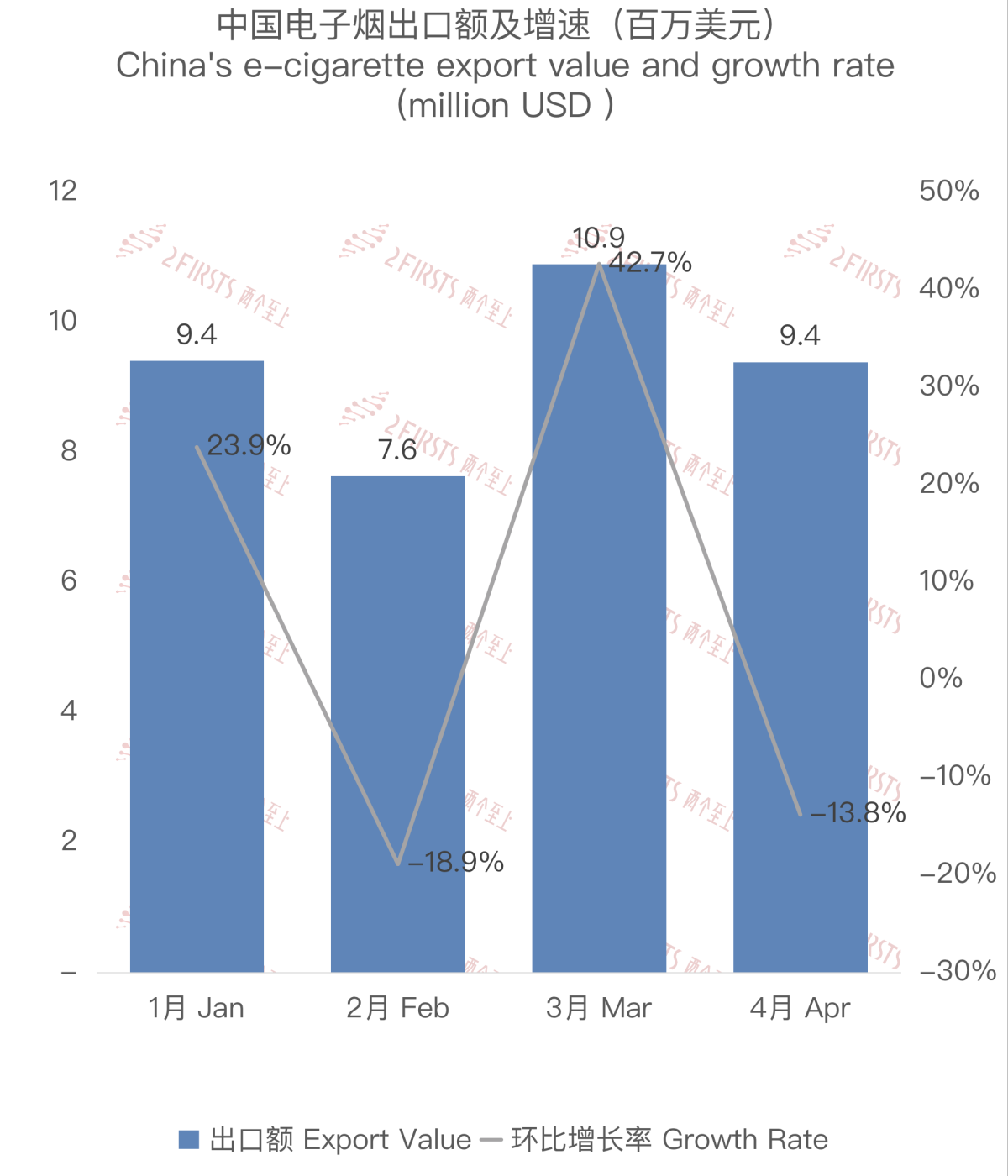
China's e-cigarette exports to New Zealand in April 2024 saw a 13.8% monthly decrease, with an 0.17% year-on-year increase.

According to updated trade data from the General Administration of Customs, 2FIRSTS compiled e-cigarette export data from China to New Zealand in April 2024.
Trade Summary: E-cigarette Exports from China to New Zealand (April 2024)
Image source: 2FIRSTS


Here are the details:

Trade Summary: E-cigarette Exports from China to New Zealand (April 2024)
Image source: 2FIRSTS


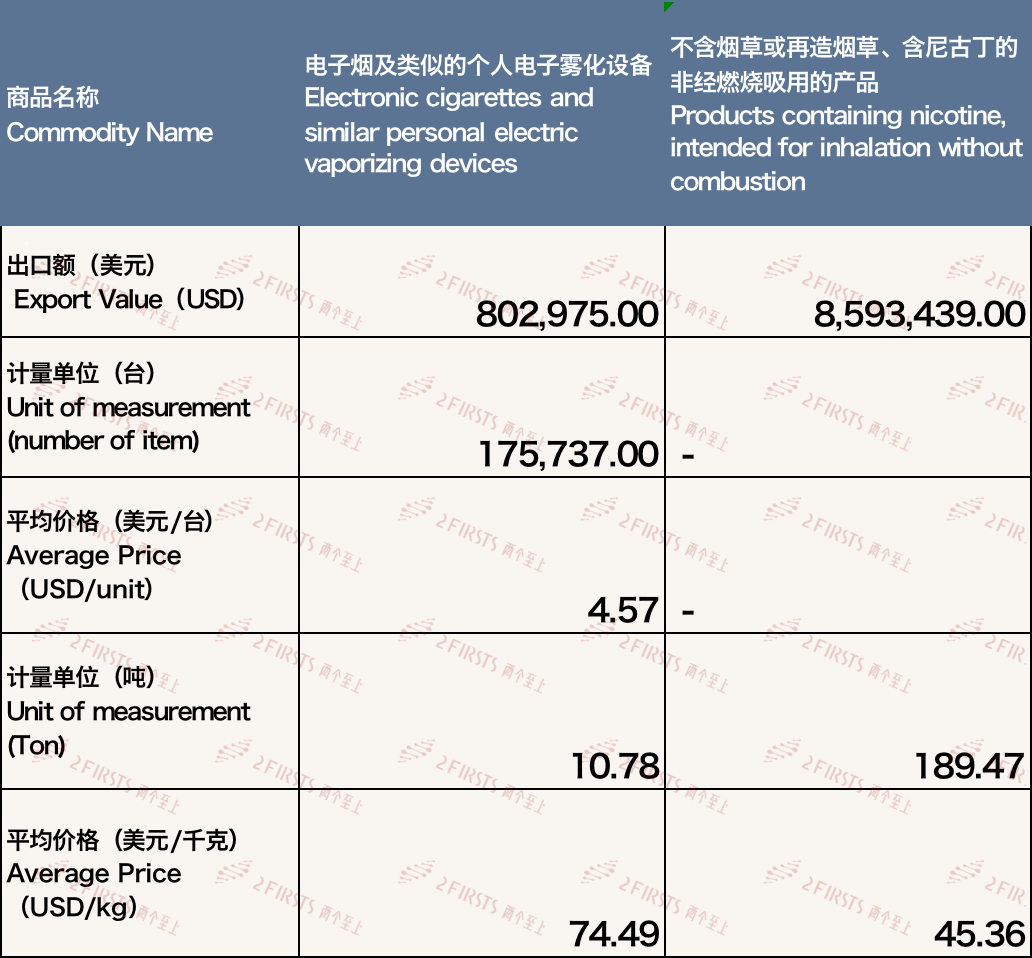
The export value was approximately $9.39 million, a decrease of 13.8% from the previous period, but an increase of 0.17% compared to the same time last year.

Trade Summary: E-cigarette Exports from China to New Zealand (April 2024)
Image source: 2FIRSTS


The export volume is approximately 200 tons, down 7.01% compared to the previous month, but up 15.2% year-on-year.
Trade Summary: E-cigarette Exports from China to New Zealand (April 2024)
Image source: 2FIRSTS


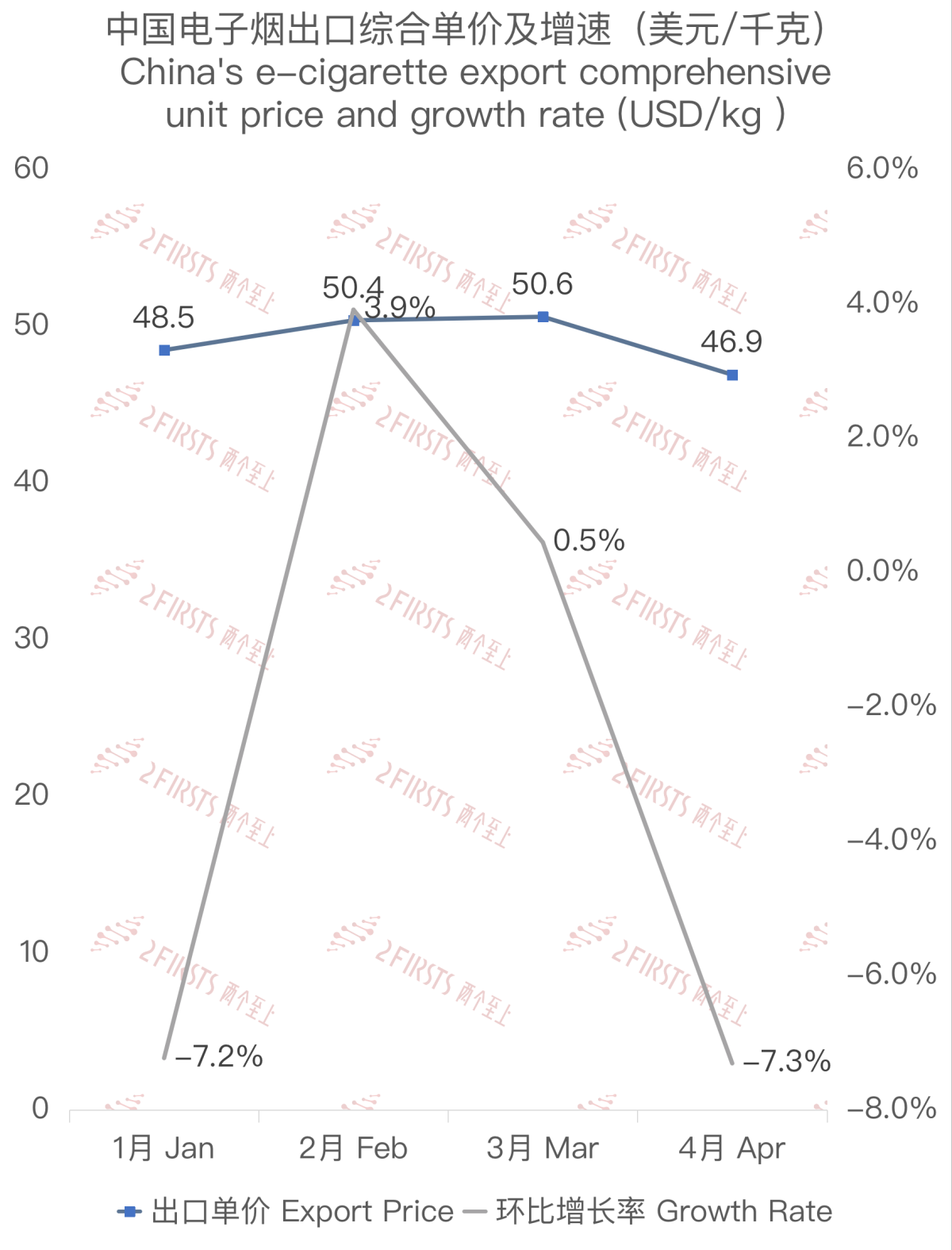
The export unit price is $46.92 per kilogram, a decrease of 7.3% month-on-month and 13% year-on-year; the average price of "e-cigarettes and similar personal electronic vaporization devices" is $4.57 per unit.
Trade Summary: E-cigarette Exports from China to New Zealand (April 2024)
Image source: 2FIRSTS


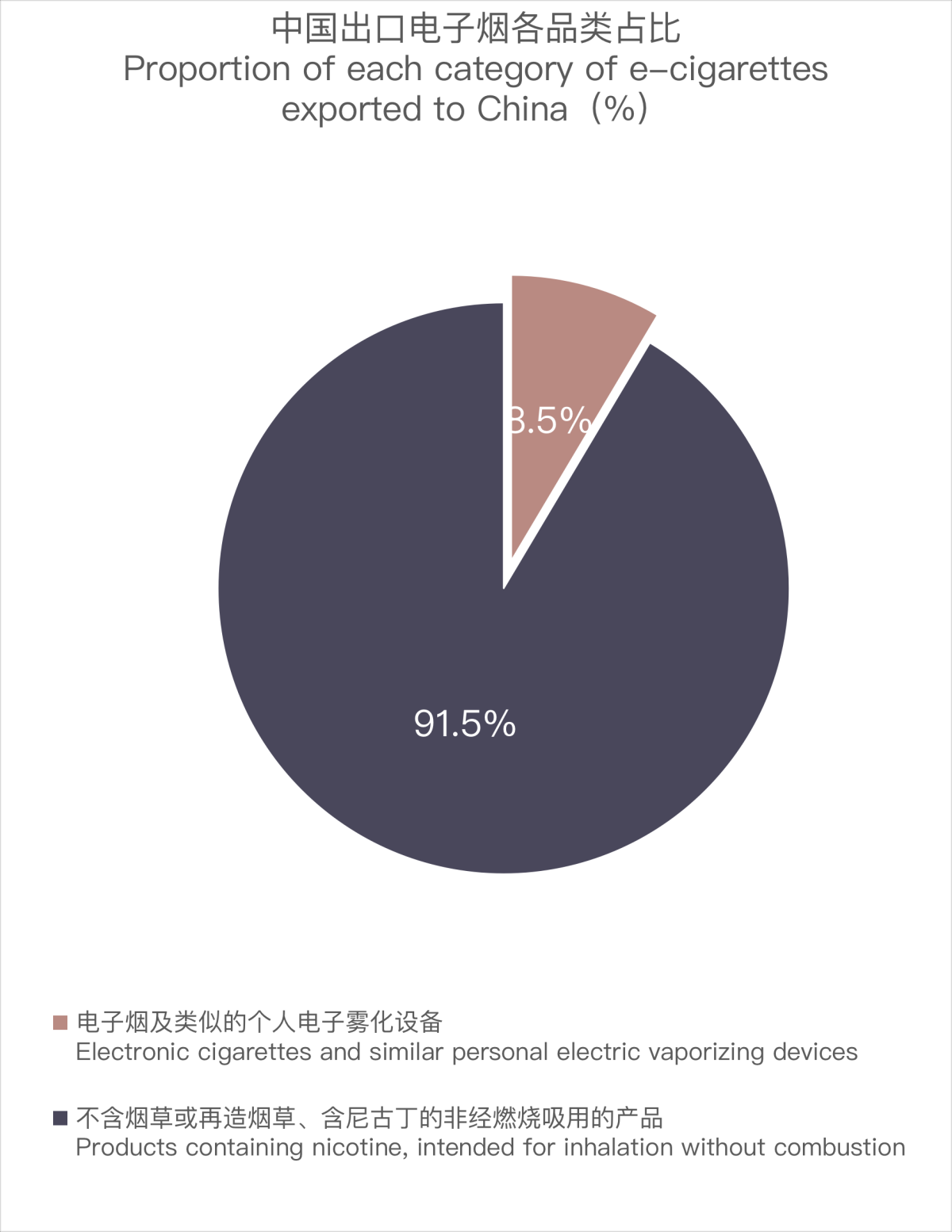
Among them, "e-cigarettes and similar personal electronic vapor devices" account for 8.5% of the export product category, while "products containing nicotine that do not contain tobacco or reconstituted tobacco and are not for combustion use" account for 91.5%.


We welcome news tips, article submissions, interview requests, or comments on this piece.

Please contact us at info@2firsts.com, or reach out to Alan Zhao, CEO of 2Firsts, on LinkedIn


Notice

1.  This article is intended solely for professional research purposes related to industry, technology, and policy. Any references to brands or products are made purely for objective description and do not constitute any form of endorsement, recommendation, or promotion by 2Firsts.

2.  The use of nicotine-containing products — including, but not limited to, cigarettes, e-cigarettes, nicotine pouchand heated tobacco products — carries significant health risks. Users are responsible for complying with all applicable laws and regulations in their respective jurisdictions.

3.  This article is not intended to serve as the basis for any investment decisions or financial advice. 2Firsts assumes no direct or indirect liability for any inaccuracies or errors in the content.

4.  Access to this article is strictly prohibited for individuals below the legal age in their jurisdiction.


Copyright


This article is either an original work created by 2Firsts or a reproduction from third-party sources with proper attribution. All copyrights and usage rights belong to 2Firsts or the original content provider. Unauthorized reproduction, distribution, or any other form of unauthorized use by any individual or organization is strictly prohibited. Violators will be held legally accountable.

For copyright-related inquiries, please contact: info@2firsts.com


AI Assistance Disclaimer


This article may have been enhanced using AI tools to improve translation and editorial efficiency. However, due to technical limitations, inaccuracies may occur. Readers are encouraged to refer to the cited sources for the most accurate information.

We welcome any corrections or feedback. Please contact us at: info@2firsts.com

Malaysia Police Plan Saliva Tests at Roadblocks to Detect Synthetic Drugs Mixed Into Vape Liquids
Malaysian police plan to use saliva test kits at roadblocks to detect drivers using synthetic liquid drugs marketed as “Piu Piu” and “Magic Mushroom,” substances that authorities say are mixed into vape liquids and inhaled through e-cigarette devices, raising road-safety concerns and adding pressure on vape regulation.
Jun.29
South Korea’s New Vape Rules Raise Bar for E-Liquid Makers and China-Linked Supply Chains, Expert Says
South Korea’s new vape regulations are reshaping the e-liquid market, raising compliance requirements for manufacturers, retailers and overseas suppliers. In an interview with 2Firsts, Korean nicotine products specialist Sam Kim discusses licensing barriers, inventory impacts, China-linked supply chains, and emerging regulatory challenges around nicotine analogues, nicotine-free products and DIY mixing. The Korean case may offer broader insights as governments worldwide adapt to rapidly evolving nicotine products.
Jul.16
WIRED Investigation: Chinese-Made Vapes Turn to 6-Methyl-Nicotine and Other Analogs, Challenging U.S. Regulation
U.S. technology and investigative publication WIRED has examined how nicotine analogs are emerging as a new challenge for the country’s vape regulatory framework. The article argues that after the U.S. expanded federal oversight of nicotine products in 2022, some manufacturers began using nicotine-like compounds such as 6-methyl-nicotine that may fall outside existing definitions. Researchers cited by WIRED said some nicotine analogs could be more potent than traditional nicotine, although human health impacts remain unclear. U.S. policymakers are considering broader definitions of nicotine to bring these compounds under federal oversight.
Jul.27
ATF Cancels Webloc Contract, Raising Questions Over Commercial Location Data in Enforcement
The U.S. Bureau of Alcohol, Tobacco, Firearms and Explosives (ATF) has stopped using Webloc, a commercial phone-tracking tool, after lawmakers, a prosecutor and a judge raised legal and privacy concerns over warrantless use of ad-tech location data, a development that may affect data-use boundaries in U.S. enforcement against illicit tobacco, nicotine products and cross-border distribution networks.
Jun.29
Indiana’s Foreign-Made Vape Ban Takes Effect, Forcing Brands and Retailers to Adjust Supply Chains
A new Indiana law restricting the sale of foreign-made vape products has taken effect, requiring retailers to adjust inventory and sourcing practices. According to The Sun, WDRB and other reports, some local vape shops are reviewing product origins and supplier information to comply with the new requirements. The measure represents a broader shift in U.S. vape regulation, with oversight expanding beyond product authorization and sales rules toward manufacturing origin and supply-chain management.
Jul.24
Special Report | Russia, Ukraine and Belarus Launch Fresh Push to Rein in Vaping
Russia, Ukraine and Belarus are tightening vape regulation through different tools, from Ukraine’s stronger enforcement push and Belarus’s proposed advertising restrictions to Russia’s new GOST standard and regional sales-ban mechanism. As black-market concerns persist, some Russian experts argue that China’s tightly controlled but legalised model — built around licensing, traceability and taxation — may offer a more effective alternative to blanket prohibition.
Jul.15