Two arrested in Chennai for selling illegal e-cigarettes

Aug.19.2024
Two arrested in Chennai for selling illegal e-cigarettes
Two men arrested in Chennai for selling 476 ELFBAR e-cigarettes; sourced from Southeast Asia, sold locally. Police crackdown continues.

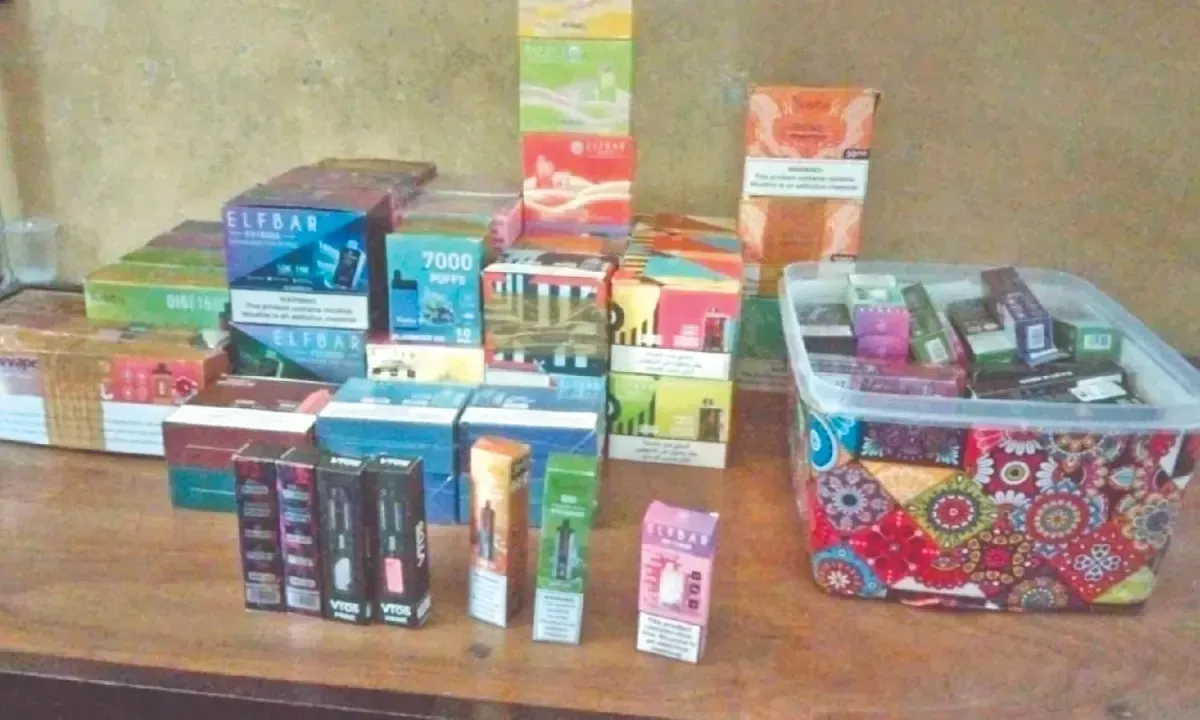
According to a report by Dtnext on August 19th, the Chennai police in India arrested two individuals selling e-cigarettes at a store in the RK Nagar area and seized 476 e-cigarettes. The seized e-cigarettes were of the brand "ELFBAR".


The police received information that a store on the Erukkanchery highway was selling e-cigarettes, and immediately proceeded to the location to conduct a search.


The police discovered a large stock of banned e-cigarettes during a search, leading to the arrest of shop owners Mohammed Jafrullah and Abu Tahir, both from Mannadi.


The investigation reveals that their e-cigarettes come from Southeast Asian countries and are then sold locally.


As of now, the two individuals have been brought before a judge and are being held in custody pending trial.


In March of this year, North Beach police arrested six individuals selling e-cigarettes at the Myanmar Market and seized over 1300 e-cigarettes.


We welcome news tips, article submissions, interview requests, or comments on this piece.

Please contact us at info@2firsts.com, or reach out to Alan Zhao, CEO of 2Firsts, on LinkedIn


Notice

1.  This article is intended solely for professional research purposes related to industry, technology, and policy. Any references to brands or products are made purely for objective description and do not constitute any form of endorsement, recommendation, or promotion by 2Firsts.

2.  The use of nicotine-containing products — including, but not limited to, cigarettes, e-cigarettes, nicotine pouchand heated tobacco products — carries significant health risks. Users are responsible for complying with all applicable laws and regulations in their respective jurisdictions.

3.  This article is not intended to serve as the basis for any investment decisions or financial advice. 2Firsts assumes no direct or indirect liability for any inaccuracies or errors in the content.

4.  Access to this article is strictly prohibited for individuals below the legal age in their jurisdiction.


Copyright


This article is either an original work created by 2Firsts or a reproduction from third-party sources with proper attribution. All copyrights and usage rights belong to 2Firsts or the original content provider. Unauthorized reproduction, distribution, or any other form of unauthorized use by any individual or organization is strictly prohibited. Violators will be held legally accountable.

For copyright-related inquiries, please contact: info@2firsts.com


AI Assistance Disclaimer


This article may have been enhanced using AI tools to improve translation and editorial efficiency. However, due to technical limitations, inaccuracies may occur. Readers are encouraged to refer to the cited sources for the most accurate information.

We welcome any corrections or feedback. Please contact us at: info@2firsts.com

Rethinking Nicotine Harm Reduction: A Neuroscientist’s Perspective on Scientific Gaps and Future Directions — By Dr. Xin-an Liu
After France’s ANSES report on nicotine products and harm reduction, Dr. Xin-an Liu wrote to 2Firsts reassessing the field’s foundations. She argues the debate reveals gaps in evidence on long-term behavioral substitution, addiction pathways and neurobiological impacts, and calls for longitudinal research, integrated behavioral science and neuroimaging, clearer risk assessment and stronger transparency to ensure policy and next-generation product development rest on solid evidence.
Industry Insight
Feb.24
BAT AGM Highlights Smokeless Strategy, AI Capability and Regulatory Engagement
BAT Chair Luc Jobin told shareholders at the company’s 2026 Annual General Meeting that BAT delivered on its plans in 2025 despite a challenging external environment, with the U.S. business returning to growth, smokeless consumers increasing by more than 15%, improved New Categories contribution, and GBP 6.3 billion returned to shareholders.
Apr.16 by 2FIRSTS.ai
IQOS Japan Introduces Multiple Pastel-Style UV-Printed Designs for ILUMA i, Available Until April 20
The official IQOS Japan Instagram account posted that IQOS ILUMA i has introduced multiple exterior designs featuring pastel-style UV prints (a UV-curing printing process), adding spring colors to the regular device lineup, with limited-time sales at IQOS Stores through April 20.
Apr.10 by 2FIRSTS.ai
Alberta Seeks to Add New Vape Restrictions on Top of Existing Tobacco Framework
A new Alberta bill aimed at reducing vaping rates, especially among young people, is moving into the legislative process. Bill 208, the Vaping Reduction Act, was introduced by United Conservative Party MLA Chelsae Petrovic and appears to build on the province’s existing Tobacco, Smoking and Vaping Reduction Act. Early reporting suggests the bill could focus on disposable vapes and impose further limits on youth access to vaping products.
Apr.15 by 2FIRSTS.ai
South Africa health department agrees to exempt smokeless and non-combustible products from tobacco control bill
At a parliamentary committee meeting in South Africa, Health Minister Aaron Motsoaledi said the health department has agreed to exempt non-combustible and smokeless products — including chewing tobacco, snus, nicotine pouches and e-cigarettes — from the Tobacco Products and Electronic Delivery Systems Control Bill. The department is prepared, at this stage, to exempt them from packaging and labelling requirements except for misleading or false claims.
Mar.06 by 2FIRSTS.ai
South Korea Expands Tobacco Harmful Components Testing System to Cover Synthetic Nicotine Liquid Vapes
South Korea’s Ministry of Food and Drug Safety said on April 17 that it has additionally designated the International Characterization Research Institute as a tobacco harmful components testing body under the Act on the Management of Tobacco Harmfulness. The institute has research experience in analyzing harmful components in liquid e-cigarettes and has obtained recognition for tobacco-sector ISO 17025 requirements.
Apr.17 by 2FIRSTS.ai