Unauthorized Sale of E-Cigarettes in Belarusian stores: Violation Investigation

Jul.08.2024
Unauthorized Sale of E-Cigarettes in Belarusian stores: Violation Investigation
Belarusian authorities crack down on illegal e-cigarette sales, suspending operations at two stores for violating regulations.

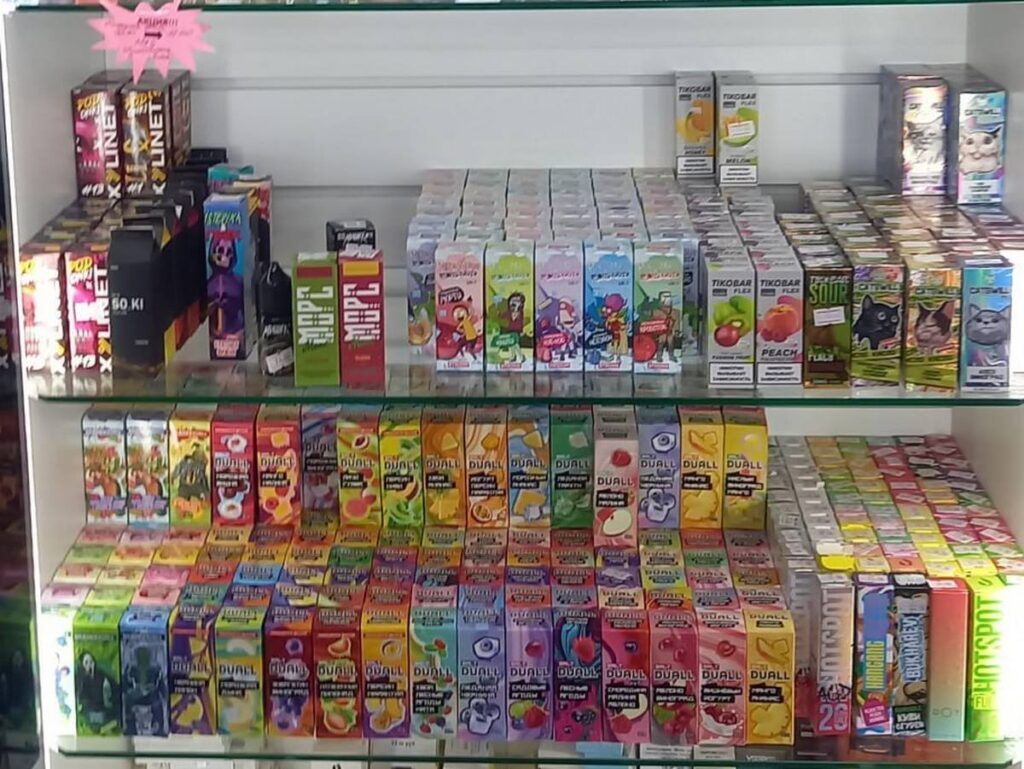
According to Zhodinoews on July 7th, the State Control Committee of Belarus recently conducted inspections and found serious violations of legal and licensing requirements in two shops located in Rokhanov and Borisov while selling e-cigarettes and e-cigarette liquids.


In these shops, there are no documents to prove the purchase records, compliance with standard requirements, and uniform control signs for the products being sold. Goods worth over 35,000 rubles ($10,692.68) are being sold without proper documentation.


Currently, the operation of these stores has been suspended, and the relevant departments are considering imposing administrative penalties on the violators.


It has been reported that the Belarusian State Standardization Authority had previously issued an order to a store to stop selling products that have not been confirmed to be from a reliable source or of good quality. In light of the repeated occurrence of these serious violations, the relevant authorities have proposed revoking the e-cigarette and related products sales license previously granted to the store.


We welcome news tips, article submissions, interview requests, or comments on this piece.

Please contact us at info@2firsts.com, or reach out to Alan Zhao, CEO of 2Firsts, on LinkedIn


Notice

1.  This article is intended solely for professional research purposes related to industry, technology, and policy. Any references to brands or products are made purely for objective description and do not constitute any form of endorsement, recommendation, or promotion by 2Firsts.

2.  The use of nicotine-containing products — including, but not limited to, cigarettes, e-cigarettes, nicotine pouchand heated tobacco products — carries significant health risks. Users are responsible for complying with all applicable laws and regulations in their respective jurisdictions.

3.  This article is not intended to serve as the basis for any investment decisions or financial advice. 2Firsts assumes no direct or indirect liability for any inaccuracies or errors in the content.

4.  Access to this article is strictly prohibited for individuals below the legal age in their jurisdiction.


Copyright


This article is either an original work created by 2Firsts or a reproduction from third-party sources with proper attribution. All copyrights and usage rights belong to 2Firsts or the original content provider. Unauthorized reproduction, distribution, or any other form of unauthorized use by any individual or organization is strictly prohibited. Violators will be held legally accountable.

For copyright-related inquiries, please contact: info@2firsts.com


AI Assistance Disclaimer


This article may have been enhanced using AI tools to improve translation and editorial efficiency. However, due to technical limitations, inaccuracies may occur. Readers are encouraged to refer to the cited sources for the most accurate information.

We welcome any corrections or feedback. Please contact us at: info@2firsts.com

The Volume Illusion: Measuring the Future of Nicotine with the Tools of the Past
As next-generation nicotine products become economically central rather than marginal, traditional volume-based metrics are increasingly unable to explain consumption, risk, and value. Units designed for a cigarette-based economy struggle to describe systems defined by delivery speed, pharmacokinetics, and adaptive user behavior. Drawing on financial reporting, regulation, and nicotine science, a fundamental question: can the future of nicotine still be measured using the tools of its past?
Feb.09 by Alan Zhao | 2Firsts Perspectives
Korea’s MFDS sets 2026 plan to manage and disclose harmful constituents in tobacco products
South Korea’s Ministry of Food and Drug Safety (MFDS) said it has established its 2026 work plan to systematically manage harmful constituents in tobacco products and disclose related information under the Tobacco Harmfulness Management Act, which took effect in November 2025.
Jan.16 by 2FIRSTS.ai
Japan Tobacco Expands Heated Tobacco Customization Strategy with Artist-Led Limited Editions
Japan Tobacco has launched a limited-edition Ploom AURA front panel series in collaboration with musician Ichiro Yamaguchi, featuring five customized designs incorporating brass, Kutani ware, verdigris, kintsugi, and rosewood motifs. Two editions are available through retail channels, while three are distributed via a membership lottery system. The initiative highlights JT’s growing focus on exterior customization and design partnerships as part of its broader heated tobacco brand strategy.
Feb.11 by 2FIRSTS.ai
South Korea’s Seoul Gangnam District Installs “Separated Smoking Booths” , Splitting Cigarettes and Vapes
Seoul's Gangnam district introduces smoking booths on Tehran Road to combat public smoking and secondhand smoke issues.
Jan.23 by 2FIRSTS.ai
Malaysian Sabah GOF seizes e-cigarettes, vapes and e-liquids worth over  USD 156,333 in seven-district operation
Malaysian Sabah GOF seizes e-cigarettes, vapes and e-liquids worth over USD 156,333 in seven-district operation
In Sabah, Malaysia’s General Operations Force (GOF) seized thousands of e-cigarette devices, vapes and e-liquids worth more than RM635,000 and detained 23 people during a simultaneous integrated operation across seven districts.
Jan.19 by 2FIRSTS.ai
Alabama SB9 would treat vaping like smoking under indoor public-space restrictions
Alabama’s Senate Bill 9 would modernize the state’s indoor air quality laws by treating electronic nicotine delivery systems, including e-cigarettes and vape pens, the same as traditional tobacco smoking in indoor public spaces. Sponsored by Sen.
Jan.05 by 2FIRSTS.ai