Vietnam's Efforts and Challenges in Tobacco Control Reported on December 7 by Baovanhoa

Regulations by 2FIRSTS.ai
Dec.09.2024
Vietnam's Efforts and Challenges in Tobacco Control Reported on December 7 by Baovanhoa
Vietnam's Health Ministry addresses challenges in implementing tobacco control law, highlighting slow decrease in smoking rates.

According to a report by Baovanhoa on December 7th, Tran Van Thuan, Deputy Minister of Health in Vietnam, presented the achievements and challenges faced by Vietnam since the implementation of the Tobacco Harm Prevention Law in 2012.


The minister pointed out that although the voluntary smoking rate among Vietnamese adults has decreased to some extent over the past 12 years, the reduction has been slow, with the current rate at 41.1% for male adults, still one of the highest in the world.


Earlier, the Vietnamese National Assembly passed a new regulation banning e-cigarettes and heated tobacco products, which will come into effect in 2025. The National Assembly has requested the government to accelerate the implementation of specific provisions, increase publicity efforts, and enhance public awareness of alcohol, e-cigarettes, and heated tobacco.


During the meeting, representatives discussed the current challenges and proposed a series of solutions. Former Director of Legal Affairs of the Ministry of Health, Nguyễn Huy Quang, emphasized the need for the Ministry of Health to take the lead in coordinating with the Ministry of Industry and Trade, the Ministry of Public Security, the Ministry of Justice, and other departments to effectively implement the tobacco ban resolution passed by the National Assembly.


In addition, the Ministry of Health should continue to collect international experiences, study the impact of e-cigarettes on public health, and propose corresponding policy recommendations. Information technology applications will be upgraded to detect and address violations in the implementation of the smoking ban, and will be promoted nationwide. The Ministry of Health should advise the government to require relevant departments to take appropriate actions based on their responsibilities, such as strengthening market supervision and conducting comprehensive inspections.


In the education sector, the Ministry of Education needs to urge schools to assess the actual situation of students using e-cigarettes and take reasonable measures for intervention. The Ministry of Public Security will strengthen efforts to crack down on illegal trading activities and strictly investigate e-cigarette products containing drugs.


We welcome news tips, article submissions, interview requests, or comments on this piece.

Please contact us at info@2firsts.com, or reach out to Alan Zhao, CEO of 2Firsts, on LinkedIn


Notice

1.  This article is intended solely for professional research purposes related to industry, technology, and policy. Any references to brands or products are made purely for objective description and do not constitute any form of endorsement, recommendation, or promotion by 2Firsts.

2.  The use of nicotine-containing products — including, but not limited to, cigarettes, e-cigarettes, nicotine pouchand heated tobacco products — carries significant health risks. Users are responsible for complying with all applicable laws and regulations in their respective jurisdictions.

3.  This article is not intended to serve as the basis for any investment decisions or financial advice. 2Firsts assumes no direct or indirect liability for any inaccuracies or errors in the content.

4.  Access to this article is strictly prohibited for individuals below the legal age in their jurisdiction.


Copyright


This article is either an original work created by 2Firsts or a reproduction from third-party sources with proper attribution. All copyrights and usage rights belong to 2Firsts or the original content provider. Unauthorized reproduction, distribution, or any other form of unauthorized use by any individual or organization is strictly prohibited. Violators will be held legally accountable.

For copyright-related inquiries, please contact: info@2firsts.com


AI Assistance Disclaimer


This article may have been enhanced using AI tools to improve translation and editorial efficiency. However, due to technical limitations, inaccuracies may occur. Readers are encouraged to refer to the cited sources for the most accurate information.

We welcome any corrections or feedback. Please contact us at: info@2firsts.com

FDA Unifies Tobacco Registration and Product Listing Form Across Product Categories
The U.S. FDA has consolidated two tobacco establishment registration and product listing forms into a redesigned Form FDA 3741 covering all regulated product categories, including e-cigarettes, heated tobacco products and nicotine pouches. The current requirements remain limited to domestic establishments. Separately, the FDA has proposed extending registration and product listing requirements to foreign manufacturers, signaling greater regulatory attention to manufacturing entities and product-level information across the tobacco and nicotine supply chain.
FDA
Sep.30
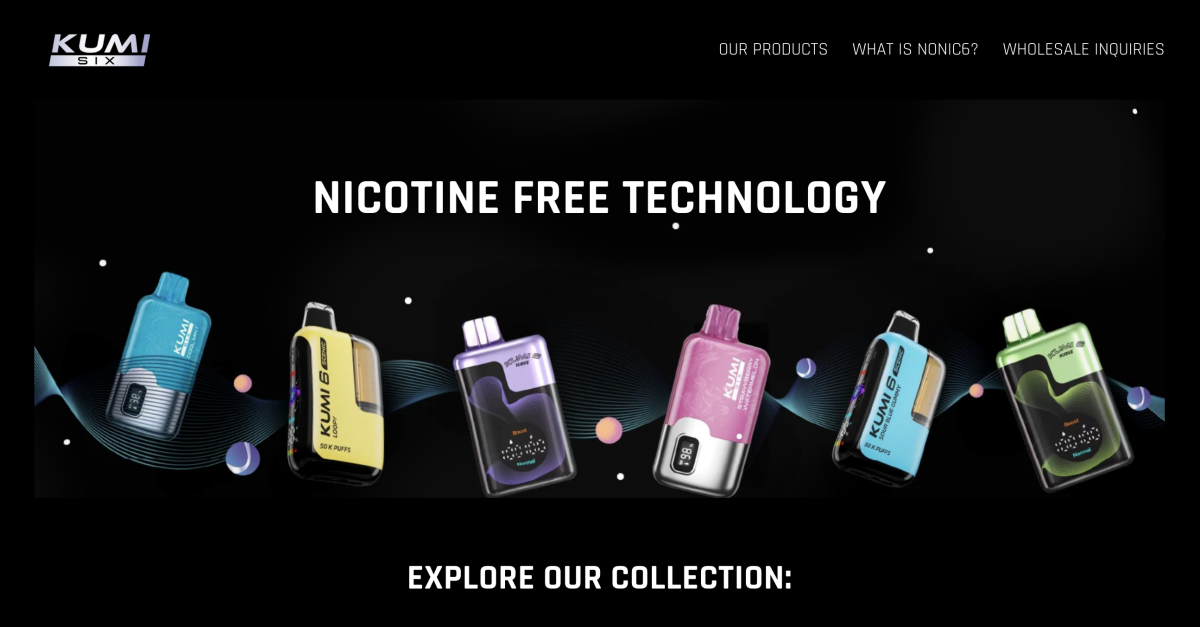
Special Report|From CrossBar 20K to 6-Methyl Nicotine KUMI: Two Routes Into U.S. State Vape Directories?
Several U.S. states have incorporated the September 9, 2020 PMTA filing deadline into eligibility rules for certain vaping products. CrossBar 20K drew attention after appearing on Pennsylvania's 163-entry directory. A broader 2Firsts investigation found that related registration businesses also listed KUMI and CROSSBAR SIX products, with 171 KUMI-related entries across Louisiana, Nebraska and Wisconsin. Corporate records link Scott Silverman to Blue Nine LLC and VR Products I LLC. PMTA compliance expert Mr. K said historical applications and nicotine-analogue products may offer two different approaches to state-directory access.
Regulations
Oct.26
Altria’s USSTC Starts $250 Million Kentucky Expansion, Adding More Than 200 Jobs
U.S. Smokeless Tobacco Company, an Altria Group company, has broken ground on an approximately $250 million manufacturing expansion in Hopkinsville, Kentucky. The roughly 270,000-square-foot facility is expected to create more than 200 jobs and absorb processing, manufacturing and packaging operations currently split between Hopkinsville and Nashville, Tennessee. USSTC previously said production at its Nashville facility is expected to wind down by early 2028. The project forms part of Altria’s broader effort to modernize and consolidate its U.S. smokeless tobacco manufacturing network.
Sep.10
U.S. Customs Plan to Require Foreign Export Declarations Could Deal ‘Devastating’ Blow to China’s Vape Exports, Logistics gl Expert Says
A U.S. Customs and Border Protection proposal to collect foreign export declarations and other overseas customs documents could expose discrepancies in the value, classification and description of China-made vape shipments entering the United States. A veteran Chinese logistics professional told 2Firsts that the measure, if implemented, could undermine the all-inclusive shipping model used by some unauthorized vape exporters and push parts of the trade toward costlier underground channels. The risk extends beyond higher duties: accurately declared products may also be more readily identified as unauthorized e-cigarettes subject to FDA enforcement.
Special Report
Sep.07
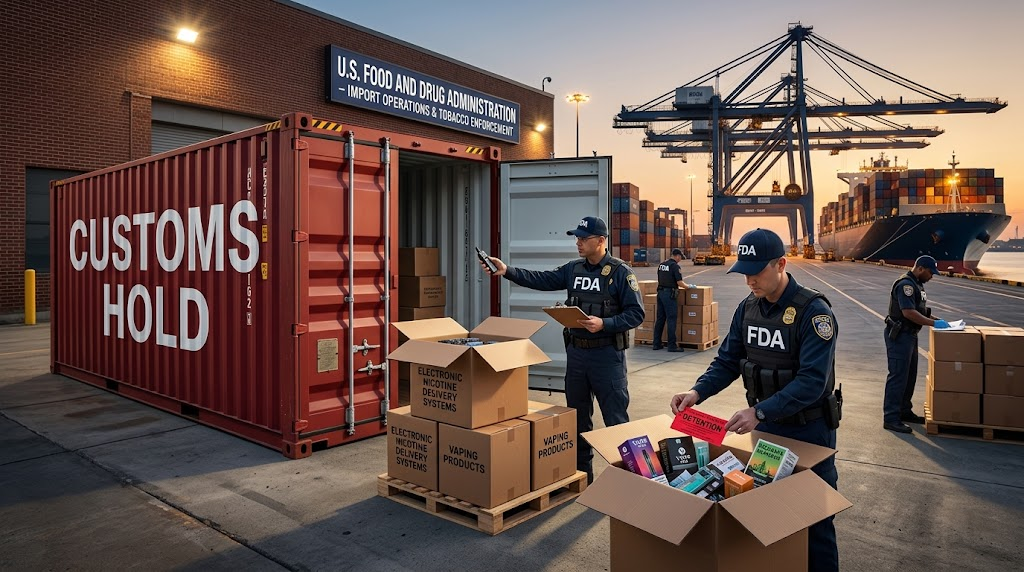
FDA Revises Import Alert 98-07 Rules, Bringing May Enforcement Priorities Into Unauthorized ENDS Detentions
The U.S. Food and Drug Administration has revised the rules under Import Alert 98-07 to incorporate its May 2026 enforcement-priority policy for certain electronic nicotine delivery systems marketed without premarket authorization. The alert continues to allow detention without physical examination, or DWPE, for ENDS lacking required marketing authorization, while directing field divisions to apply the May risk-based framework. When necessary, detention or refusal decisions must also undergo review by the FDA's Center for Tobacco Products. Products including PACHA and Vuse Pro have already emerged as industry examples of the May policy, although enforcement discretion does not constitute FDA marketing authorization.
News
Sep.28 by 2Firsts Perspectives
Smoore Seeks to Toss CCELL Price-Fixing Claim as Court Weighs Vertical Distribution Versus Horizontal Conspiracy
Smoore and four authorized U.S. CCELL distributors are asking a California federal court to permanently dismiss a core antitrust claim brought by direct purchasers. Plaintiffs allege that Smoore coordinated minimum wholesale prices, customer allocation and limits on price competition among distributors, amounting to a per se unlawful horizontal conspiracy. The defendants say the alleged conduct reflects ordinary vertical relationships between a manufacturer and its distributors. The court previously dismissed a similar claim, and the latest dispute centers on whether the second amended complaint adds sufficient facts to establish a horizontal agreement.
Sep.14