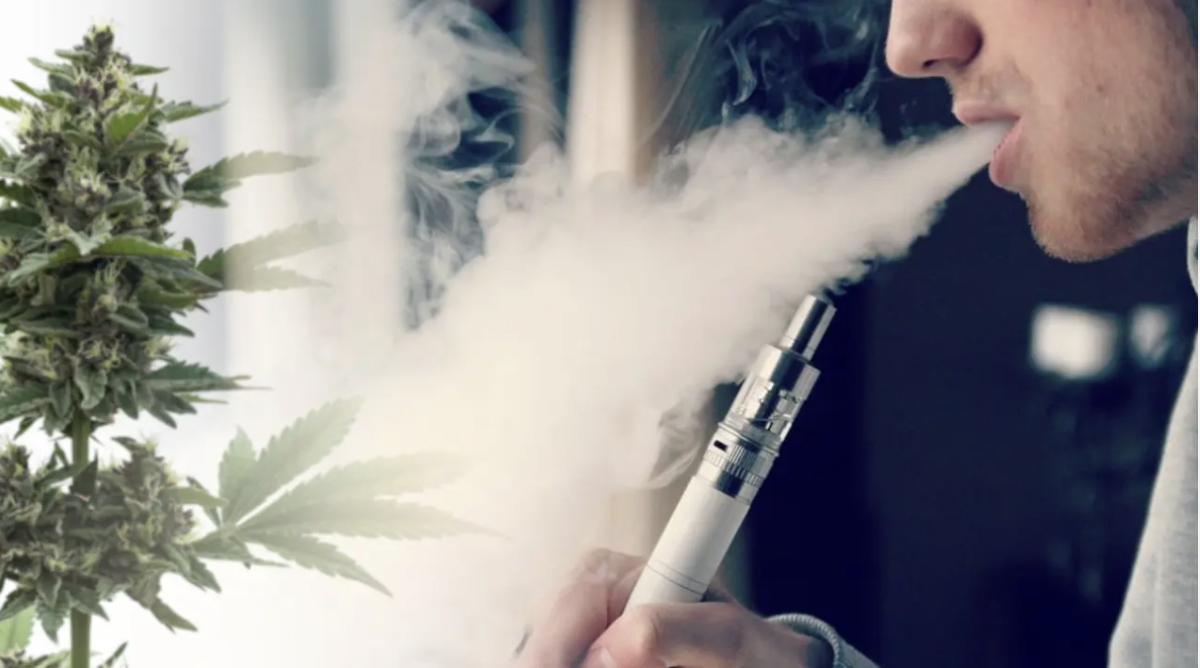
Wisconsin Needs to Address Underage E-Cigarette Use Issue

Regulations by 2FIRSTS.ai
Aug.16.2024
Wisconsin Needs to Address Underage E-Cigarette Use Issue
One in five Wisconsin minors admit to vaping, prompting calls for state lawmakers to address conflicting age restrictions on e-cigarettes.

According to TMJ4 on August 16th, a recent study has shown that one-fifth of minors in the state of Wisconsin in the United States admitted to using e-cigarettes within the past month.


Doctors at the state children's hospital stated that state legislators need to help address this issue.


Since 2019, the minimum age to purchase tobacco and e-cigarettes as mandated by federal law in the United States is 21, but the legal age in Wisconsin remains 18. Despite federal law taking precedence, experts warn that having two different age restrictions could lead to conflicts and confusion.


Dr. Louella Amos, a pulmonologist at the Wisconsin Children's Hospital, stated that...


I think it's somewhat ironic that Wisconsin discovered these cases, yet we are one of the few states that have not raised the legal age to purchase tobacco to 21.


Dr. Michael Meyer added,


I think we are currently at a standstill. I believe the government should make an effort to address this issue, because if 18-year-olds have it, then 16-year-olds will have it, and then it will show up in your high school.


These healthcare workers are frustrated by the government's lack of action so far.


Gina Larsen of the state Health Services Department stated that two different laws have brought about two separate issues.


I believe there is a lot of confusion in the market, and I am not sure if retailers understand their obligation to comply with federal laws.


Besides the confusion on both sides of the transaction, Lassen also stated that due to inconsistent state laws, law enforcement is unable to enforce the federal "Tobacco 21" law.


According to the website Tobacco21.org, Wisconsin is one of only seven states that has not aligned its state laws with the federal "Tobacco21 law" raising the legal age to purchase tobacco products to 21.


State Senator LaTonya Johnson stated that


State legislative bodies do not want to see any child harmed, but they are being harmed by tobacco products.


We must empower law enforcement agencies to enforce the law at the local and statewide levels, but currently the age requirement is 18, the only thing law enforcement agencies can do is transfer cases to the FDA. However, they are already overwhelmed.


We welcome news tips, article submissions, interview requests, or comments on this piece.

Please contact us at info@2firsts.com, or reach out to Alan Zhao, CEO of 2Firsts, on LinkedIn


Notice

1.  This article is intended solely for professional research purposes related to industry, technology, and policy. Any references to brands or products are made purely for objective description and do not constitute any form of endorsement, recommendation, or promotion by 2Firsts.

2.  The use of nicotine-containing products — including, but not limited to, cigarettes, e-cigarettes, nicotine pouchand heated tobacco products — carries significant health risks. Users are responsible for complying with all applicable laws and regulations in their respective jurisdictions.

3.  This article is not intended to serve as the basis for any investment decisions or financial advice. 2Firsts assumes no direct or indirect liability for any inaccuracies or errors in the content.

4.  Access to this article is strictly prohibited for individuals below the legal age in their jurisdiction.


Copyright


This article is either an original work created by 2Firsts or a reproduction from third-party sources with proper attribution. All copyrights and usage rights belong to 2Firsts or the original content provider. Unauthorized reproduction, distribution, or any other form of unauthorized use by any individual or organization is strictly prohibited. Violators will be held legally accountable.

For copyright-related inquiries, please contact: info@2firsts.com


AI Assistance Disclaimer


This article may have been enhanced using AI tools to improve translation and editorial efficiency. However, due to technical limitations, inaccuracies may occur. Readers are encouraged to refer to the cited sources for the most accurate information.

We welcome any corrections or feedback. Please contact us at: info@2firsts.com

Indiana’s Foreign-Made Vape Ban Takes Effect, Forcing Brands and Retailers to Adjust Supply Chains
A new Indiana law restricting the sale of foreign-made vape products has taken effect, requiring retailers to adjust inventory and sourcing practices. According to The Sun, WDRB and other reports, some local vape shops are reviewing product origins and supplier information to comply with the new requirements. The measure represents a broader shift in U.S. vape regulation, with oversight expanding beyond product authorization and sales rules toward manufacturing origin and supply-chain management.
Jul.24
BAT New Categories Revenue Rises 18% in H1 2026 as Broad Portfolio Offers More Ways to Win—and Lose
British American Tobacco’s New Category revenue rose 18% at constant rates in the first half of 2026. Nicotine-pouch brand Velo expanded rapidly, while Vuse recovered as U.S. enforcement against illicit e-vapor products strengthened. Heated-tobacco platform glo remained under pressure, and cigarettes continued to provide most of the group’s profit and cash. Compared with PMI and JT, BAT has more routes to growth—but also greater regulatory, investment and execution risks across its broader portfolio.
BAT
Jul.30
Japan’s Heated Tobacco Tax Changes Reshape Consumer Choices, Survey Reveals Impact of Price and Income
A consumer survey by Japanese heated tobacco information platform RELAZO found that rising tobacco prices and planned heated tobacco tax changes may influence smoking decisions among Japanese consumers. The survey covered 49,879 men and women aged 20 to 69 nationwide. It found that around 40% of respondents cumulatively indicated they may consider quitting when a pack reaches ¥600 (approximately US$4.1), while nearly 90% expressed potential quitting intentions at a ¥1,000 (approximately US$6.8) price level. The survey also found significant differences by income level, with lower-income respondents showing greater sensitivity to price increases.
Jul.24
Nearly Half of Seoul Vape Vending Machines Bypassed by Fake IDs, Raising Youth Access Concerns
Seoul city authorities inspected 339 tobacco vending machines at e-cigarette retailers and found that 168, or 49.5%, allowed purchases using fake IDs, showing that unmanned retail terminals and adult-verification systems remain a major enforcement gap after e-cigarettes were brought under tobacco regulation.
Market
Jul.03 by 2Firsts Perspectives
Spain Plans to Extend Smoking Ban to Terraces and Beaches, Bringing Vapes Under New Restrictions
Spain is advancing a new tobacco-control reform that would expand smoking restrictions to additional public spaces, including restaurant terraces and beaches, while bringing vaping and other nicotine products into the same regulatory framework. The proposed measures aim to reduce secondhand smoke exposure, protect young people and expand smoke-free environments. The proposal remains under legislative development, and final implementation details have not yet been confirmed.
Jul.23
AHA Journal Study: WS-23 Triples Premature Heartbeats, Raising Concerns Over Vape Cooling Agents
A University of Louisville research team published a study in an American Heart Association journal suggesting that synthetic cooling agents used in e-cigarettes, including WS-3 and WS-23, may disrupt cardiac electrical activity and increase arrhythmia risk. In animal experiments, WS-23 tripled premature heartbeats.
Jun.16