Zimbabwe's Tobacco Export Revenue Surges by 138% in 2024

Market by 2FIRSTS.ai
May.17.2024
Zimbabwe's Tobacco Export Revenue Surges by 138% in 2024
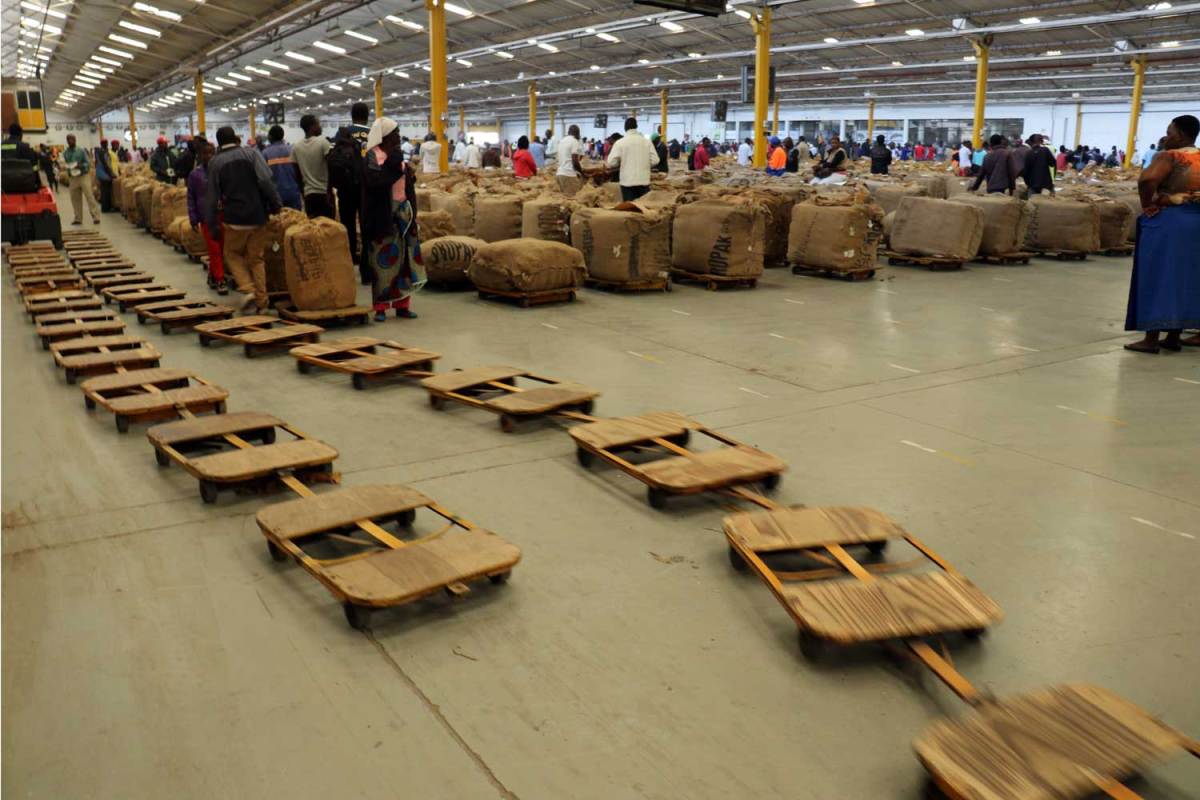
Zimbabwe's tobacco export revenue increased by 138% in the first quarter of 2024, reaching $4.36 billion, driven by high-value market focus.

According to a report by The Pioneer on May 16, as cigarette manufacturers are urged to tap into high-wage markets, Zimbabwe's tobacco export revenue in the first quarter of 2024 increased by 138% year-on-year to reach $4.36 billion.


The country is a major exporter of tobacco, aiming to generate more revenue from its business by shifting towards higher value products such as cigarettes. In 2021, the government passed the Tobacco Value Chain Transformation Plan, striving to establish a $5 billion industry by 2025.


According to statistics from the Tobacco Industry and Marketing Committee, cigarettes are the most profitable export product, priced at $7.44 per kilogram. Partial or fully stemmed tobacco ranks second, with revenue of $7.39 per kilogram, and smoking tobacco ranks third, with revenue of $6.45 per kilogram.


The President of the Zimbabwe Tobacco Growers Association, George Seremwe, attributes these achievements to the hard work of farmers and other stakeholders, as well as favorable weather during the 2022-2023 growing season, resulting in high-quality tobacco. He encourages cigarette manufacturers to continue targeting markets that will ensure high prices for their products.


We welcome news tips, article submissions, interview requests, or comments on this piece.

Please contact us at info@2firsts.com, or reach out to Alan Zhao, CEO of 2Firsts, on LinkedIn


Notice

1.  This article is intended solely for professional research purposes related to industry, technology, and policy. Any references to brands or products are made purely for objective description and do not constitute any form of endorsement, recommendation, or promotion by 2Firsts.

2.  The use of nicotine-containing products — including, but not limited to, cigarettes, e-cigarettes, nicotine pouchand heated tobacco products — carries significant health risks. Users are responsible for complying with all applicable laws and regulations in their respective jurisdictions.

3.  This article is not intended to serve as the basis for any investment decisions or financial advice. 2Firsts assumes no direct or indirect liability for any inaccuracies or errors in the content.

4.  Access to this article is strictly prohibited for individuals below the legal age in their jurisdiction.


Copyright


This article is either an original work created by 2Firsts or a reproduction from third-party sources with proper attribution. All copyrights and usage rights belong to 2Firsts or the original content provider. Unauthorized reproduction, distribution, or any other form of unauthorized use by any individual or organization is strictly prohibited. Violators will be held legally accountable.

For copyright-related inquiries, please contact: info@2firsts.com


AI Assistance Disclaimer


This article may have been enhanced using AI tools to improve translation and editorial efficiency. However, due to technical limitations, inaccuracies may occur. Readers are encouraged to refer to the cited sources for the most accurate information.

We welcome any corrections or feedback. Please contact us at: info@2firsts.com

China Caps E-Cigarette Capacity and Requires Export Compliance Proof to Curb “Involution”
China’s top tobacco regulator has issued a directive aimed at preventing excess capacity and curbing “involution-style” competition in the e-cigarette sector. The notice tightens investment controls, formalizes verified capacity management and requires exporters to submit compliance proof for destination markets, signaling a push toward higher industry concentration and stricter cross-border oversight.
Special Report
Feb.13
PMI Faces Setback in India: Global Regulatory Fragmentation Complicates Its Smoke-Free Transition
India has reaffirmed its 2019 ban on e-cigarettes and heated tobacco devices, effectively blocking Philip Morris International (PMI) from launching IQOS in the country despite years of lobbying. Together with Taiwan, China’s conditional opening of heated tobacco products, and Japan’s planned 2026 excise tax hikes, these moves highlight increasingly divergent national regulatory pathways—an external uncertainty shaping PMI’s smoke-free growth trajectory.
Feb.12
Six Years of Data Show FDA Clearing PMTA Backlog
FDA data from FY2020 to FY2025 show how the PMTA system for e-cigarette products evolved after an early surge of submissions created prolonged front-end delays. Millions of applications accumulated at the Acceptance stage before entering substantive review. Since 2023, the number of applications pending acceptance has declined sharply, and industry participants report shorter initial decision timelines in late 2025.
Feb.06
Thai Health Authorities: Nicotine Pouches Classified as Tobacco; Sales Must Comply with 2017 Act
Thailand’s Disease Control Department has warned that nicotine pouches (“Snus”) are classified as tobacco products and must comply with the Tobacco Products Control Act B.E. 2560 (2017). Officials said they have received complaints about sales and promotional activities, and stressed that these products must not be displayed or promoted at points of sale.
Feb.02 by 2FIRSTS.ai
U.S. Washington State to Bring Synthetic Nicotine Under the Tobacco Tax System, Applying a Unified Tax Starting January 2026
Washington State will subject all nicotine-containing products to the Tobacco Products Tax starting January 1, 2026, taxing them at 95% of the selling price. The change covers both tobacco-derived and synthetic nicotine products and requires businesses to report their inventory when the new tax system takes effect.
Dec.29 by 2FIRSTS.ai
Tajikistan Weighs a Total Vape Ban as Upper House Chair Orders Draft Bill
Tajikistan is preparing legislation that could impose a nationwide ban on e-cigarettes. Upper house chair Rustami Emomali (Рустами Эмомали) has ordered the drafting of a bill, which is still under development. Retailers have begun scaling back sales amid tightening signals, while existing tobacco-control rules already restrict smoking in many public places and set fines.
Jan.26 by 2FIRSTS.ai