Benjamin Magalong expresses full support for DTI e-cigarette ban

Aug.06.2024
Benjamin Magalong expresses full support for DTI e-cigarette ban
Benjamin Magalong, Mayor of Baguio City, supports nationwide ban on online sales of e-cigarette products by DTI.

According to a recent report by Manila Times, Mayor Benjamin Magalong of Baguio City, Philippines, expressed full support for the Department of Trade and Industry's (DTI) nationwide ban on the online sale of e-cigarette products.


The mayor stated, "We fully support the DTI's decision to ban the online sale of e-cigarettes. This is part of our efforts to protect children from the harmful and addictive effects of e-cigarettes and other tobacco products.


In fact, this ban should be maintained until online sales platforms and distributors can implement strong age verification measures to ensure that sales are restricted to adults.


The mayor expressed appreciation for the ban on DTI, stating that the ban is based on protecting youth and prioritizing public health.


On July 20, 2024, DTI Minister Fred Pascual signed Department Administrative Order No. 24-03 for the year 2024, immediately suspending the online sale of e-cigarette products, devices, and systems on the market. This directive is based on Republic Act 11900, also known as the "Regulation of Vaporized Nicotine and Non-Nicotine Products Act," which requires measures to be taken to prevent minors, especially through online channels, from accessing e-cigarette products.


Minister of Trade and Industry stated that.


Protecting our youth is non-negotiable. The proliferation of e-cigarette products on online markets allows minors easy access to these harmful substances, posing a significant threat to their health and wellbeing. This ban is a necessary step to curtail this concerning trend.


Magalang mentioned that although the smoking rate in Baguio City is declining, the issue of e-cigarettes is becoming increasingly serious, especially in attracting more young people. The city government has been implementing City Ordinance No. 34 of 2017, also known as the "Smoke-Free Baguio Ordinance," through its smoke-free task force. This ordinance also includes regulations on the use and sale of electronic nicotine delivery products (e-cigarettes).


According to city regulations, stores found selling unauthorized e-cigarette products will be fined.


We welcome news tips, article submissions, interview requests, or comments on this piece.

Please contact us at info@2firsts.com, or reach out to Alan Zhao, CEO of 2Firsts, on LinkedIn


Notice

1.  This article is intended solely for professional research purposes related to industry, technology, and policy. Any references to brands or products are made purely for objective description and do not constitute any form of endorsement, recommendation, or promotion by 2Firsts.

2.  The use of nicotine-containing products — including, but not limited to, cigarettes, e-cigarettes, nicotine pouchand heated tobacco products — carries significant health risks. Users are responsible for complying with all applicable laws and regulations in their respective jurisdictions.

3.  This article is not intended to serve as the basis for any investment decisions or financial advice. 2Firsts assumes no direct or indirect liability for any inaccuracies or errors in the content.

4.  Access to this article is strictly prohibited for individuals below the legal age in their jurisdiction.


Copyright


This article is either an original work created by 2Firsts or a reproduction from third-party sources with proper attribution. All copyrights and usage rights belong to 2Firsts or the original content provider. Unauthorized reproduction, distribution, or any other form of unauthorized use by any individual or organization is strictly prohibited. Violators will be held legally accountable.

For copyright-related inquiries, please contact: info@2firsts.com


AI Assistance Disclaimer


This article may have been enhanced using AI tools to improve translation and editorial efficiency. However, due to technical limitations, inaccuracies may occur. Readers are encouraged to refer to the cited sources for the most accurate information.

We welcome any corrections or feedback. Please contact us at: info@2firsts.com

Product | Philip Morris Korea Launches Two TEREA ONYX Capsule Tobacco Sticks, Expanding Portfolio to Five Lines
Philip Morris Korea launched TEREA ONYX, a new tobacco stick line for IQOS ILUMA devices, on October 15, 2026. The initial products, AMANG PEARL and CALI PEARL, feature tropical-inspired flavors, Fresh Filters and capsules designed to deliver different flavor experiences before and after activation. Both are priced at KRW 4,800 per pack and are available at convenience stores nationwide and IQOS-operated stores in South Korea. The launch expands the Korean TEREA portfolio from four product lines to five, following earlier capsule tobacco stick additions in 2026.
product
Oct.23
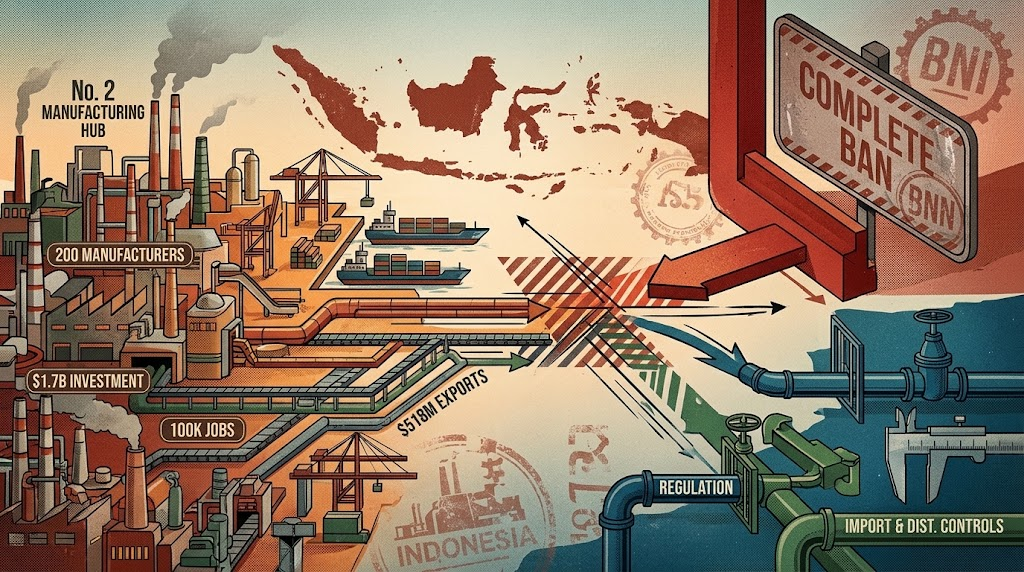
Special report|Indonesia's Vape Industry Has 200 Manufacturers and $1.7 Billion in Investment. Could a Regulatory Divide Derail Its Rise as the World's No. 2 Manufacturing Hub After Shenzhen?
Indonesia's Ministry of Industry said at a November 3, 2026, policy forum that the country has about 200 electronic cigarette companies, Rp31 trillion (approximately $1.71 billion) in cumulative industry investment and around 100,000 jobs across the supply chain. The National Narcotics Agency is seeking a comprehensive ban on vape use and circulation, while the industry ministry favors tighter import, product-standard and distribution controls. Indonesia exported approximately $518 million in vaping products in 2025, and Chinese manufacturers including Smoore, GEEKVAPE and Jinjia Group have established local operations. An international logistics specialist interviewed by 2Firsts said more Chinese vape companies began production in Indonesia from the second half of 2025, accompanied by increased shipments of manufacturing equipment and investment in logistics facilities. The regulatory debate comes as Indonesia expands its role in international vaping manufacturing.
Special Report
Nov.05
North Carolina Tightens Vape Product Directory Enforcement, Expands State and Local Powers as Violators Face Fines, Product Seizures and License Suspension or Revocation
North Carolina has expanded enforcement of its vapor product directory rules, authorizing more state and local law enforcement participation and establishing a task force led by the State Bureau of Investigation. The legislation requires at least one unannounced compliance inspection annually for retailers, distributors and wholesalers handling covered products. Penalties effective October 1, 2026, include civil fines of $500–$750 for a first violation and $1,000–$1,500 for repeated violations within 12 months, along with potential license suspension or revocation. Manufacturers may face penalties of $10,000 per unlisted product. The measures strengthen the product directory system established in 2024.
Regulations
Oct.28
Smoke-Free Business Hits 42% of Q2 Net Revenue as PMI’s First TNFD Report Covers Single-Use Electronics, Critical Raw Materials and IQOS Repairs
Philip Morris International has published its first report aligned with the Taskforce on Nature-related Financial Disclosures, bringing its electronics supply chain and the use and end-of-life stages of smoke-free devices and consumables into its nature-related assessment. PMI said its smoke-free business accounted for about 42% of total net revenues in the second quarter of 2026. The report says non-circular electronic products, particularly single-use items, can increase consumption of limited natural resources and also details an IQOS repair pilot. A 2040 circularity scenario tests assumptions including a 50% reduction in product waste-related costs, 10% raw-material savings and a 25% substitution rate for refurbished products versus new products.
Sep.23
Special Report|CrossBar's High-Puff Vapes Draw Attention on Pennsylvania's 163-Product Directory as Link Between Earlier 1.3mL PMTA Filings and New 13mL Products Remains Unclear
Pennsylvania began enforcing its electronic nicotine delivery system directory restrictions on October 19, 2026. Among 163 product listings recorded before enforcement, four CrossBar 20K disposables stood out with 13mL capacity, advertised puff counts of up to 20,000 and a flattened design distinct from conventional pod systems and compact disposables. Historical records identify earlier 1.3mL CrossBar products associated with Romo LLC, while newer 13mL products appeared in several state directories beginning in 2025 under entities including Blue Nine LLC. PMTA compliance expert Mr. K identified amendments and application ownership transfers as possible regulatory mechanisms, although neither has been confirmed in this case. Separately, Reynolds' $7.5 million acquisition of 16 PACHA products and related assets illustrates the commercial value of products linked to historic PMTA submissions.
Special Report
Oct.22
Special Report | From Oversupply to Supply Gaps: Global Tobacco Leaf Markets Diverge Ahead of 2027
Global tobacco leaf markets diverged sharply in 2026, with India cutting authorised FCV production amid oversupply while Malawi faced a supply shortfall. U.S. demand improved in some leaf categories, but growers in Brazil, Colombia, Tanzania and Zimbabwe faced pressure from prices, buyer access, costs and weather. With nicotine consumption patterns also shifting, 2027 will test whether supply, demand and grower profitability can move back toward balance.
Oct.26