Brazilian Authorities Crack down on Irregular Tobacco and E-cigarette Sales

Regulations by 2FIRSTS.ai
May.11.2024
Brazilian Authorities Crack down on Irregular Tobacco and E-cigarette Sales
Brazil's Ponta Grossa city government cracked down on tobacco and e-cigarette sales violations, resulting in arrests and fines.

According to a report by local Brazilian media Ared on May 10th, the municipal government of Ponta Grossa in the state of Parana, Brazil (PMPG), conducted a joint operation with the Department of Public Safety (SMCSP), Health Supervision Department, Licensing Department, Civil Defense, and Consumer Protection Bureau on the afternoon of May 9th. The operation aimed to uncover irregularities in the sale of tobacco products and e-cigarettes.


The city government of Potagrosa, in conjunction with the public safety department, health supervision department, licensing department, civil defense bureau, and consumer protection agency, carried out a joint operation aimed at investigating violations in the sale of tobacco and e-cigarettes. The operation took place on the afternoon of May 9th, targeting a convenience store and tobacco shop in the city. The outcome is expected to be handled in accordance with Resolution No. 855/2024 of the National Health Surveillance Agency (Anvisa).


The inspection took place at a convenience tobacco shop in the loop area. Officials discovered 93 boxes of 50g water pipe tobacco, with 63 boxes being expired. Additionally, 13 boxes of imported tobacco had product information written in a foreign language, making it difficult to correctly identify the products.


During this inspection, it was also found that 17 boxes of 40g pipe tobacco were completely unidentifiable in terms of manufacturer. In addition, the Consumer Protection Bureau discovered that all of these items were openly available for sale on shelves. The Health Supervision Department also found 1859 boxes of 50g shisha tobacco, either expired or unregistered with relevant agencies, and seized 6 boxes of e-cigarette fillers.


Finally, all of the illegally sold items were confiscated by inspectors from the Health Supervision Department and handed over to the Federal Tax Bureau. The store owner was also arrested on the spot. The former city convenience tobacco shop failed to comply with the Consumer Protection Act, obstructing consumers' right to know. As a result, the Consumer Protection Bureau fined the shop for six violations and one violation from the Health Inspection Department.


According to a report by the head of the consumer protection agency, Mr. Naim Nasihgil Filho, the store did not comply with consumer protection laws, depriving its customers of their right to access information. Furthermore, the store owner was fined for violating Article 7 of Federal Law No. 8137.


Simone Patrícia, the head of the Department of Health Supervision, stated that any violations of health regulations in the process of selling and storing products can be punished according to Article 63 of Paraína State Health Law No. 13331/2001. Penalties may include warnings, confiscation or destruction of products, closure of shops, revocation of health permits, and/or fines.


We welcome news tips, article submissions, interview requests, or comments on this piece.

Please contact us at info@2firsts.com, or reach out to Alan Zhao, CEO of 2Firsts, on LinkedIn


Notice

1.  This article is intended solely for professional research purposes related to industry, technology, and policy. Any references to brands or products are made purely for objective description and do not constitute any form of endorsement, recommendation, or promotion by 2Firsts.

2.  The use of nicotine-containing products — including, but not limited to, cigarettes, e-cigarettes, nicotine pouchand heated tobacco products — carries significant health risks. Users are responsible for complying with all applicable laws and regulations in their respective jurisdictions.

3.  This article is not intended to serve as the basis for any investment decisions or financial advice. 2Firsts assumes no direct or indirect liability for any inaccuracies or errors in the content.

4.  Access to this article is strictly prohibited for individuals below the legal age in their jurisdiction.


Copyright


This article is either an original work created by 2Firsts or a reproduction from third-party sources with proper attribution. All copyrights and usage rights belong to 2Firsts or the original content provider. Unauthorized reproduction, distribution, or any other form of unauthorized use by any individual or organization is strictly prohibited. Violators will be held legally accountable.

For copyright-related inquiries, please contact: info@2firsts.com


AI Assistance Disclaimer


This article may have been enhanced using AI tools to improve translation and editorial efficiency. However, due to technical limitations, inaccuracies may occur. Readers are encouraged to refer to the cited sources for the most accurate information.

We welcome any corrections or feedback. Please contact us at: info@2firsts.com

Australia Brings in Deloitte to Support Illicit Tobacco and Vape Enforcement Across Data, Processes and Project Delivery
Australia’s Department of Home Affairs has hired Deloitte to provide data analytics, business-process, communications and project-delivery support to the Office of the Illicit Tobacco and E-Cigarette Commissioner. The government says Deloitte personnel do not provide policy advice to the Commissioner or the Australian government, with policy development and decision-making remaining with public officials. The arrangement has nevertheless drawn scrutiny because Deloitte has previously provided professional services to several tobacco and vaping companies.
Sep.03
South Korea Constitutional Court Upholds Volume-Based E-Liquid Tax, With Challenged Rates at KRW 370 and KRW 628 per Milliliter
South Korea's Constitutional Court has upheld fixed taxes on nicotine-containing e-cigarette liquids based on solution volume, ruling that challenged provisions imposing KRW 370 per milliliter in individual consumption tax and KRW 628 per milliliter in tobacco consumption tax do not violate the Constitution. The cases stemmed from historical disputes involving importers that reported nicotine as being extracted from tobacco stems rather than leaves. South Korea has since broadened its tobacco definition to include synthetic nicotine, while current tax laws provide reduced rates for certain products not derived from tobacco.
Sep.18
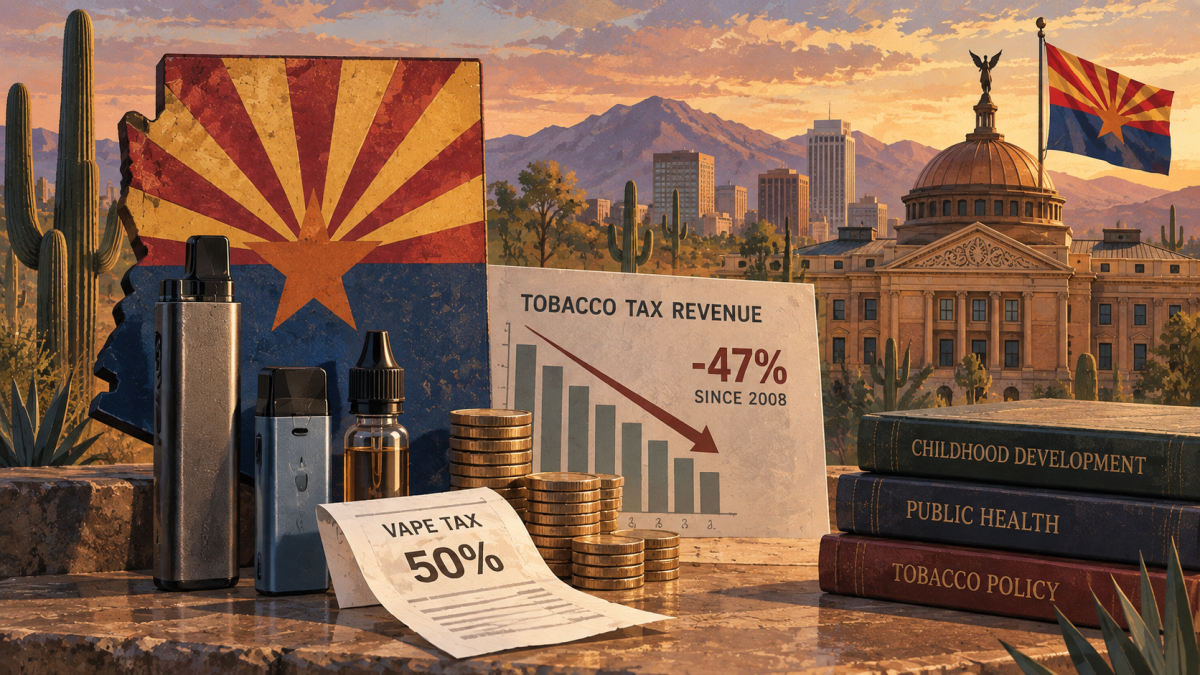
Arizona Turns to a 50% Retail Vape Tax as Tobacco Tax Revenue Falls 47% From 2008
Arizona's First Things First is pushing for an excise tax equal to 50% of the retail price of vaping products, estimating that the measure could generate about $100 million annually. The agency says its tobacco-tax revenue has fallen 47% from 2008 levels. Arizona has attempted to broaden its nicotine tax base in each of the past two years: a 2025 bill proposed a 50% wholesale-price tax, while a 2026 measure shifted to a 50% retail-price tax covering alternative nicotine products and vapor products. Separately, the state enacted HB 4001 this year to establish a new licensing and sales framework for alternative nicotine products.
Sep.21
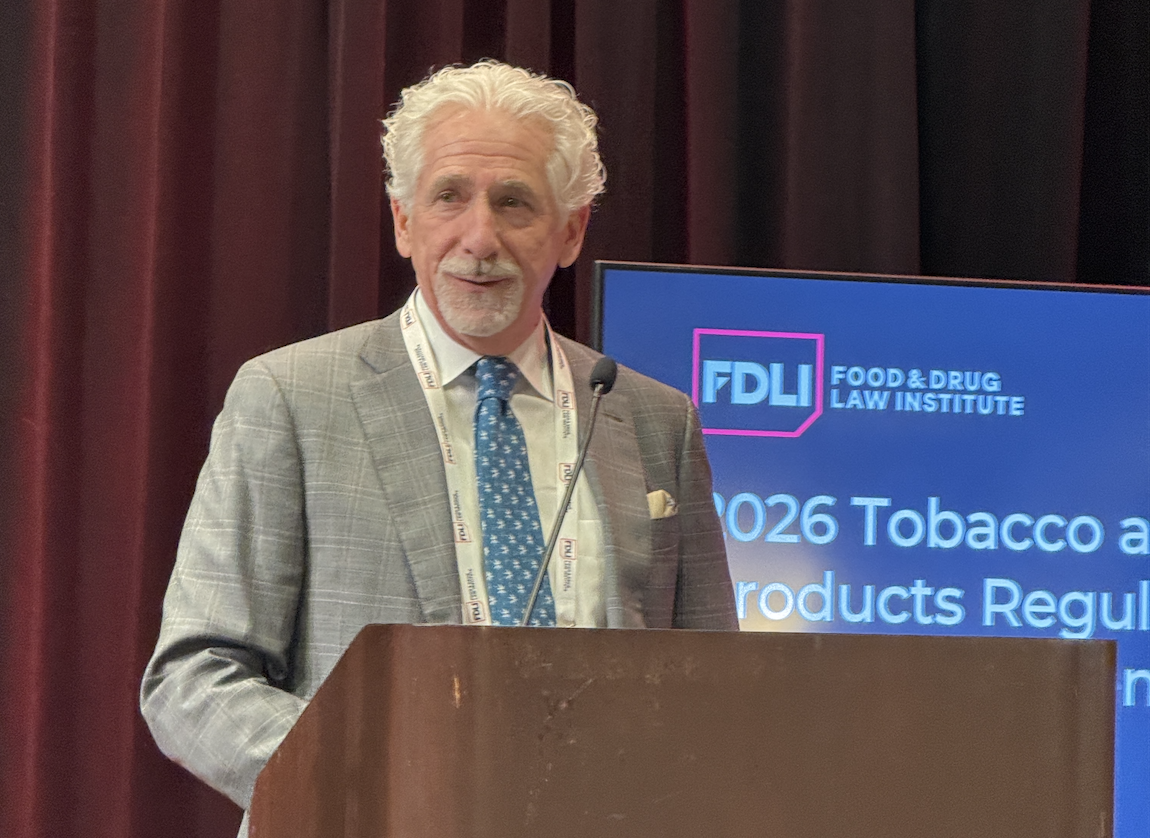
On-Site Report | After FDA Announces Review of PMTA Framework, CTP Director Details Reform Priorities
FDA CTP Director Bret Koplow used his FDLI keynote in Washington to outline how the agency is rethinking the PMTA framework. He discussed category-specific review, nicotine pouch and sPMTA pilots, AI-assisted review, a 70% reduction in pending applications, and a major staffing constraint: CTP currently has only nine scientific review teams. He also reaffirmed tobacco harm reduction while stressing youth protection, flavored products, risk communication, and the challenge of unauthorized e-cigarettes.
Regulations
Oct.06
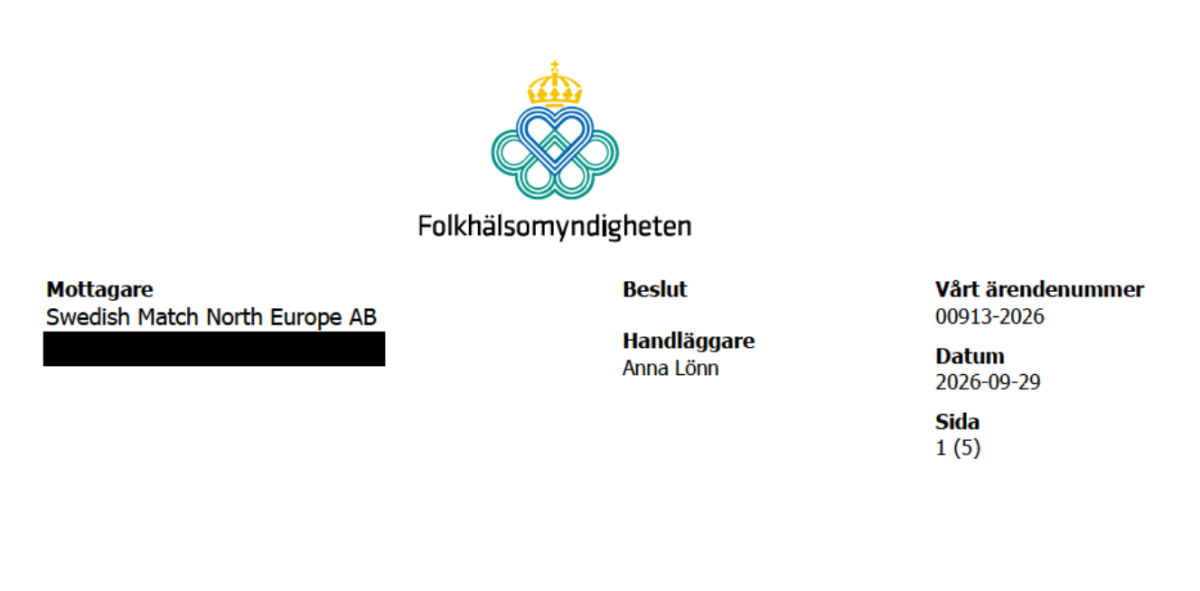
Swedish Match Faces Broader Labeling Order After ZYN Inspection, Documents Obtained by 2Firsts Show
Documents obtained by 2Firsts show that Sweden's Public Health Agency ordered Swedish Match to revise ingredient labels beyond the five ZYN products inspected. The dispute centers on whether flavoring ingredients must be individually disclosed, with Swedish Match citing trade-secret protection and the regulator insisting on full ingredient disclosure. The company faces a conditional penalty of SEK 2 million per month for noncompliance. As of October 22, the agency had received no appeal, despite the company's stated intention to challenge the decision.
Oct.22
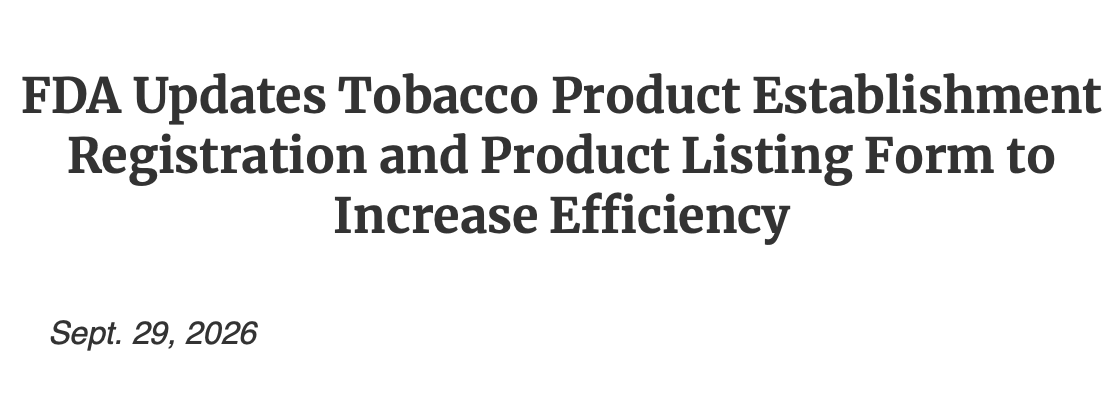
FDA Unifies Tobacco Registration and Product Listing Form Across Product Categories
The U.S. FDA has consolidated two tobacco establishment registration and product listing forms into a redesigned Form FDA 3741 covering all regulated product categories, including e-cigarettes, heated tobacco products and nicotine pouches. The current requirements remain limited to domestic establishments. Separately, the FDA has proposed extending registration and product listing requirements to foreign manufacturers, signaling greater regulatory attention to manufacturing entities and product-level information across the tobacco and nicotine supply chain.
FDA
Sep.30