Brazilian Police Raid Illegal Tobacco Shops and Arrest Two People

Regulations by 2FIRSTS.ai
Dec.01.2023
Brazilian Police Raid Illegal Tobacco Shops and Arrest Two People
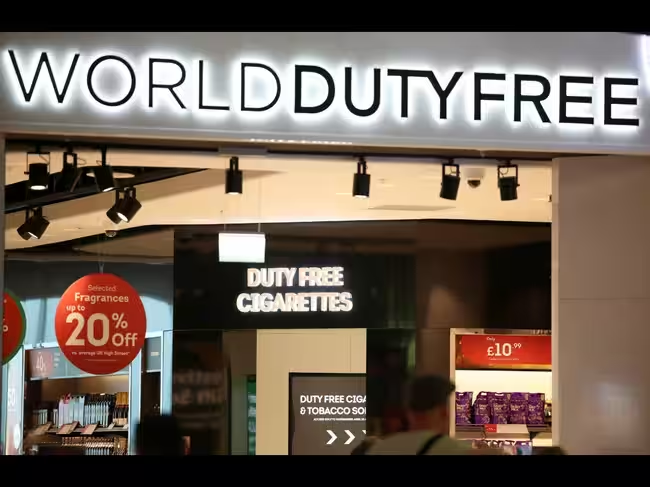
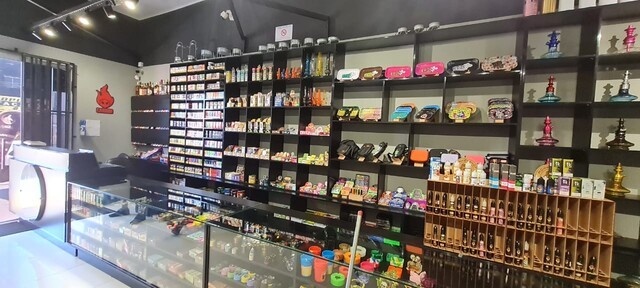
Two illegal tobacco stores selling fake alcohol and e-cigarettes in Brazil were shut down, resulting in two arrests.

According to a report from Diariodigital on November 29th, the police in Campogrande, Brazil, in collaboration with the Consumer Rights Protection Agency, have shut down two tobacco shops illegally selling e-cigarettes and counterfeit alcoholic beverages, and have arrested two individuals involved in the case.


During the operation, the police confiscated 650 counterfeit cigarettes, fake alcohol, and e-cigarette accessories.


We welcome news tips, article submissions, interview requests, or comments on this piece.

Please contact us at info@2firsts.com, or reach out to Alan Zhao, CEO of 2Firsts, on LinkedIn


Notice

1.  This article is intended solely for professional research purposes related to industry, technology, and policy. Any references to brands or products are made purely for objective description and do not constitute any form of endorsement, recommendation, or promotion by 2Firsts.

2.  The use of nicotine-containing products — including, but not limited to, cigarettes, e-cigarettes, nicotine pouchand heated tobacco products — carries significant health risks. Users are responsible for complying with all applicable laws and regulations in their respective jurisdictions.

3.  This article is not intended to serve as the basis for any investment decisions or financial advice. 2Firsts assumes no direct or indirect liability for any inaccuracies or errors in the content.

4.  Access to this article is strictly prohibited for individuals below the legal age in their jurisdiction.


Copyright


This article is either an original work created by 2Firsts or a reproduction from third-party sources with proper attribution. All copyrights and usage rights belong to 2Firsts or the original content provider. Unauthorized reproduction, distribution, or any other form of unauthorized use by any individual or organization is strictly prohibited. Violators will be held legally accountable.

For copyright-related inquiries, please contact: info@2firsts.com


AI Assistance Disclaimer


This article may have been enhanced using AI tools to improve translation and editorial efficiency. However, due to technical limitations, inaccuracies may occur. Readers are encouraged to refer to the cited sources for the most accurate information.

We welcome any corrections or feedback. Please contact us at: info@2firsts.com

2Firsts Flash|PMI Reports 2025 Results as Smoke-Free Products Account for 41.5% of Net Revenues
Philip Morris International reported full-year 2025 results on February 6, with smoke-free products accounting for 41.5% of adjusted net revenues, up from 38.7% a year earlier. Total net revenues rose 7.3% to $40.65 billion, while shipment volumes increased 1.4%, widening the gap between revenue and volume growth. Cigarette shipments declined as smoke-free volumes rose 12.8%, driven by heated tobacco, oral nicotine and e-vapor products. Results were released alongside a 9:00 a.m. EST webcast.
Feb.06
NJOY and Altria ask federal court to halt ITC proceeding, alleging multiple constitutional defects
A filing in the U.S. District Court for the Eastern District of Virginia (Richmond Division) shows NJOY and Altria entities submitted a plaintiffs’ reply supporting their motion for summary judgment, arguing the challenged ITC proceeding is unconstitutional on multiple grounds, including ALJ appointment authority, removal protections, and Article III limits under the Jarkesy framework. The plaintiffs seek summary judgment and a permanent injunction barring continuation of the ITC proceeding.
Jan.08 by 2FIRSTS.ai
France drops a vaping clause from the 2026 finance bill after use of Article 49.3
A provision in France’s 2026 finance bill intended to regulate vaping products was abandoned after Sébastien Lecornu used Article 49.3 on January 20 to commit the government’s responsibility on the “revenue” section of the state budget.
Jan.21 by 2FIRSTS.ai
Moldova adopts new sanitary rules for tobacco products, e-cigarettes and related goods
Moldova is introducing new sanitary standards for tobacco products, e-cigarettes and related goods, with regulations adopted on January 14 aimed at protecting public health and tightening control over tobacco sales. The rules include measures to limit minors’ access to tobacco products, including via online shops, and establish procedures for notifications, reporting and market monitoring.
Jan.16 by 2FIRSTS.ai
Kumulus Vape launches Labster production unit for e-liquids and DIY concentrates
Kumulus Vape has launched Labster, a 700 sq m production unit in the Lyon Metropolis near the group’s headquarters, for e-liquids and DIY concentrates. The site is equipped with automated lines supplied by CDA (Constructions d’Automatismes) to carry out bottling and labeling. Its theoretical capacity is described as several million bottles per year in 10–100 ml formats, and it is already operational.
Feb.06 by 2FIRSTS.ai
FDA Commissioner Stresses “Predictability” as Science Chief Addresses Industry Uncertainty
FDA Commissioner Marty Makary briefly appeared at the February 10 PMTA roundtable, underscoring the importance of regulatory predictability. At the close of the session, Office of Science Director Matthew Farrelly responded to industry concerns over review uncertainty, stating the agency will issue a written summary of feedback, while reiterating that no fixed quantitative risk benchmark governs authorization decisions.
Feb.11