Brazil's E-cigarette Regulation Project Excluded from CAE Meeting Agenda

Sep.04.2024
Brazil's E-cigarette Regulation Project Excluded from CAE Meeting Agenda
Brazil's e-cigarette regulation project delayed in Senate committee, potentially generating $4 billion in tax revenue.

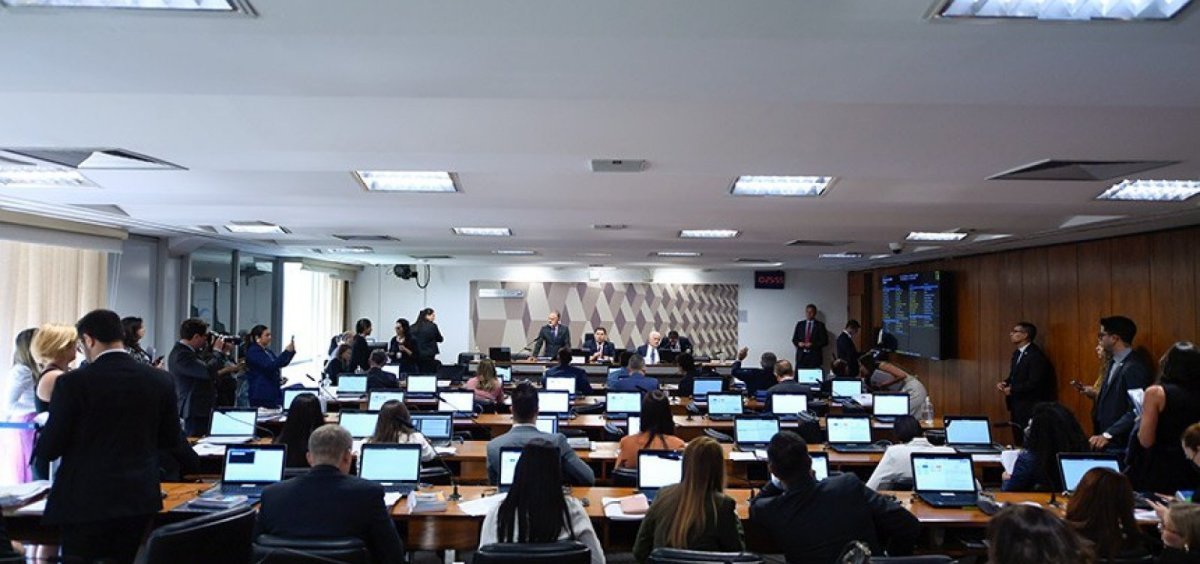
According to a report from Metro on September 4th, the discussion of the regulation of e-cigarette production and sales in Brazil, which was scheduled to take place on Tuesday (the 3rd), was not included in the agenda of the Economic Affairs Committee (CAE) meeting. The project was also not mentioned during the deliberations on the agenda for the coming days.


The vote on the matter was originally scheduled for August 20, but was removed from the agenda at the request of the reporter, Senator Eduardo Gomes (PL-TO). This senator has expressed support for the proposer, Soraya Thronicke.


Since 2009, e-cigarettes have been banned in Brazil by the National Health Surveillance Agency (Anvisa). Solonick's proposal aims to regulate the production, sale, export, import, and consumption of e-cigarettes. One of the reasons for approving the proposal is that it could bring in 22 billion reais (approximately 4 billion U.S. dollars) in tax revenue for the country.


We welcome news tips, article submissions, interview requests, or comments on this piece.

Please contact us at info@2firsts.com, or reach out to Alan Zhao, CEO of 2Firsts, on LinkedIn


Notice

1.  This article is intended solely for professional research purposes related to industry, technology, and policy. Any references to brands or products are made purely for objective description and do not constitute any form of endorsement, recommendation, or promotion by 2Firsts.

2.  The use of nicotine-containing products — including, but not limited to, cigarettes, e-cigarettes, nicotine pouchand heated tobacco products — carries significant health risks. Users are responsible for complying with all applicable laws and regulations in their respective jurisdictions.

3.  This article is not intended to serve as the basis for any investment decisions or financial advice. 2Firsts assumes no direct or indirect liability for any inaccuracies or errors in the content.

4.  Access to this article is strictly prohibited for individuals below the legal age in their jurisdiction.


Copyright


This article is either an original work created by 2Firsts or a reproduction from third-party sources with proper attribution. All copyrights and usage rights belong to 2Firsts or the original content provider. Unauthorized reproduction, distribution, or any other form of unauthorized use by any individual or organization is strictly prohibited. Violators will be held legally accountable.

For copyright-related inquiries, please contact: info@2firsts.com


AI Assistance Disclaimer


This article may have been enhanced using AI tools to improve translation and editorial efficiency. However, due to technical limitations, inaccuracies may occur. Readers are encouraged to refer to the cited sources for the most accurate information.

We welcome any corrections or feedback. Please contact us at: info@2firsts.com

PMI Launches VEEV E-Cigarette in South Africa, Expanding Access to Smoke-Free Alternatives
Philip Morris International's South Africa branch launches e-cigarette product Veev, making South Africa one of 20 countries with PMI's smoke-free products.
Oct.13 by 2FIRSTS.ai
PMI Q3 2025 Earnings: Net Revenues Reach $10.85 Billion, Smoke-Free Products Account for 41% of Sales
PMI reported strong third-quarter 2025 results, underscoring the continued success of its smoke-free transformation. Net revenues rose 9.4% year-over-year to $10.85 billion, driven by robust growth in the smoke-free segment, which now accounts for 41% of total net revenues and over 42% of gross profit.Despite a 3.2% decline in cigarette shipments, combustible revenues climbed 4.3% thanks to strong pricing.
Oct.21
China Customs Seizes Over 265K Oral Nicotine Pouches; ‘ZYN’ and Unbranded Products Flagged for IP Violations
China Customs seized 265,140 oral nicotine pouches, including “ZYN”-branded and unbranded products, over suspected IP infringement and breaches of tobacco export rules.
Oct.10 by 2FIRSTS.ai
Ireland Considering Ban on Nicotine Pouches to Protect Youth, Says Chief Medical Officer
Ireland’s Department of Health is examining a ban on nicotine pouches to curb nicotine use among young people. Chief Medical Officer Prof. Mary Horgan said the ban could be included in amendments to the current tobacco bill.
Nov.10 by 2FIRSTS.ai
South Korea’s National Assembly Passes Law Classifying E-Cigarettes as Tobacco Products with Full Equivalent Regulation
South Korea’s National Assembly recently passed a comprehensive package of 79 bills that, among other measures, formally classifies liquid vapes — e-cigarette products using nicotine-containing e-liquids — as tobacco products. These products will now be subject to the same taxation, sales restrictions and advertising controls as traditional cigarettes, and the vaping industry in South Korea is expected to face significant adjustments in compliance costs, market access and business strategy.
Dec.03
AG Miyares Argues Vape Ban Consistent with Federal Law, Seeks Dismissal
Virginia Attorney General Jason Miyares and Tax Commissioner James J. Alex have asked a federal court to dismiss a lawsuit challenging the state’s ban on flavored e-cigarettes. They argue plaintiffs lack standing because the products are already illegal under federal law. The state denies claims of federal preemption and asserts sovereign immunity, maintaining that its ban aligns with its authority to protect public health.
Nov.24 by 2FIRSTS.ai