Brazil's Former Health Official Urges Reform of E-Cigarette Ban

Regulations by 2FIRSTS.ai
May.22.2024
Brazil's Former Health Official Urges Reform of E-Cigarette Ban
Former director of Brazil's National Health Surveillance Agency, Dirceu Barbano, announces that the e-cigarette ban is now ineffective.

According to reports from Brazilian mainstream media on May 21, former director of Brazil's National Health Surveillance Agency (Anvisa) Dirceu Barbano stated that the ban on e-cigarettes in Brazil is now invalid, as the initial barriers that were set up have disappeared.


Baba Nuo stated, "The ban was once seen as an effective public health measure because people believed it was a barrier to e-cigarettes. However, today, this idea is no longer valid as it is more likely to hinder the consumption of e-cigarettes.


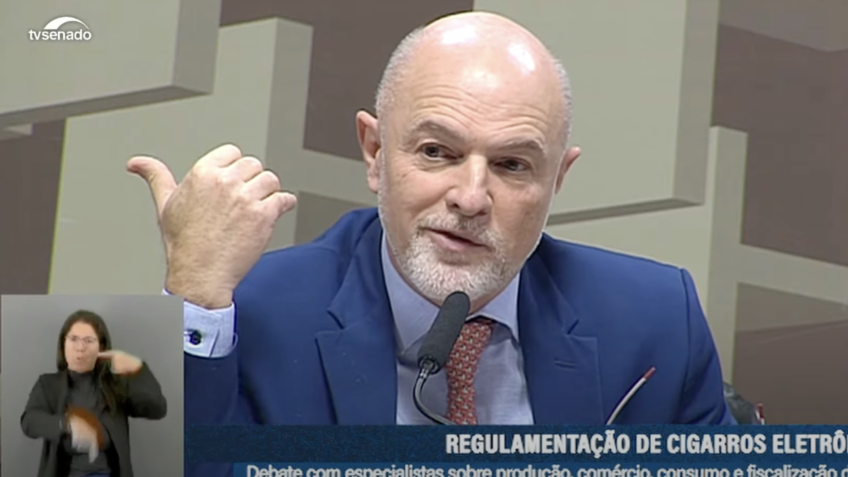
On the 21st, Babano issued this statement at a joint public hearing of the Senate Committees on Economic Affairs, Social Affairs, and Transparency, Governance, Regulation, and Consumer Protection. The hearing focused on the regulation of e-cigarettes.


In this discussion, Law Project 5.008 shows that the proposing party of the project is Senator Soraya Thronicke. Babano was a signatory of the 2009 RDC Resolution 49, which prohibits the sale, import, and promotion of any e-cigarette devices.


For the former director, what is needed now is a regulation to effectively control the use of e-cigarettes. A hearing will be held approximately a month after Anvisa decided to maintain the ban on e-cigarette devices, a decision signed by current president Antonio Barra Torres on April 19th.


We welcome news tips, article submissions, interview requests, or comments on this piece.

Please contact us at info@2firsts.com, or reach out to Alan Zhao, CEO of 2Firsts, on LinkedIn


Notice

1.  This article is intended solely for professional research purposes related to industry, technology, and policy. Any references to brands or products are made purely for objective description and do not constitute any form of endorsement, recommendation, or promotion by 2Firsts.

2.  The use of nicotine-containing products — including, but not limited to, cigarettes, e-cigarettes, nicotine pouchand heated tobacco products — carries significant health risks. Users are responsible for complying with all applicable laws and regulations in their respective jurisdictions.

3.  This article is not intended to serve as the basis for any investment decisions or financial advice. 2Firsts assumes no direct or indirect liability for any inaccuracies or errors in the content.

4.  Access to this article is strictly prohibited for individuals below the legal age in their jurisdiction.


Copyright


This article is either an original work created by 2Firsts or a reproduction from third-party sources with proper attribution. All copyrights and usage rights belong to 2Firsts or the original content provider. Unauthorized reproduction, distribution, or any other form of unauthorized use by any individual or organization is strictly prohibited. Violators will be held legally accountable.

For copyright-related inquiries, please contact: info@2firsts.com


AI Assistance Disclaimer


This article may have been enhanced using AI tools to improve translation and editorial efficiency. However, due to technical limitations, inaccuracies may occur. Readers are encouraged to refer to the cited sources for the most accurate information.

We welcome any corrections or feedback. Please contact us at: info@2firsts.com

Canada Studies UK-Style “Smoke-Free Generation” Tobacco Ban
Canada’s federal health minister, Majorie Michel, said she is looking into legislation that would permanently ban the sale of tobacco products to anyone born after 2008. She said Canada has seen the approach recently proposed in the United Kingdom and is reviewing it with partners. Health Canada previously said the Government of Canada has invested C$66 million annually since 2018 to help Canadians quit smoking and reduce the harms of nicotine addiction.
Apr.29 by 2FIRSTS.ai
Imperial Brands Pulls myblu Vape Business From U.S., Citing Prolonged FDA Approval Process
Imperial Brands said it will phase out its myblu vaping business in the United States, citing prolonged FDA approval timelines for new vape products. The company said it will instead focus on modern oral nicotine products in the U.S., including the expansion of its Zone brand and new flavors. While overall next-generation product revenue continued to grow, revenue from the category in the Americas declined sharply.
May.12
BAT Rothmans Upgrades neo™ Boost for glo™ HYPER Series
BAT Rothmans said on April 13 that its heated tobacco brand glo™ will launch an upgraded version of neo™ Boost, the dedicated stick for the HYPER series. The company said the refresh focuses on strengthening freshness and cooling sensations to improve the overall user experience.
Apr.14 by 2FIRSTS.ai
WHO’s First Global Report on Nicotine Pouches: Harm Reduction Questions Remain Amid Global Regulatory Warning
Ahead of World No Tobacco Day 2026, WHO released its first global report on nicotine pouches, warning that rapid market growth, youth-oriented marketing and weak regulation are converging. 2Firsts views the report as an important warning, but not a complete risk assessment, with harm-reduction questions still unresolved.
Special Report
May.17
Australia Quantifies Black Market for First Time, Illicit Nicotine Products Account for About 80% of Consumption
The Australian Bureau of Statistics (ABS) has released its first estimate of the illicit nicotine market, finding that about 80% of cigarettes, vapes and other nicotine products consumed in 2025 came from illegal sources, reigniting debate over tobacco taxation and enforcement policies.
Jun.03
Nicotine Beyond Tobacco? Cell Study Signals Emerging Shift in Production Systems
Researchers at the Chinese Academy of Sciences reconstructed nicotine biosynthesis in non-tobacco plants and yeast systems, highlighting how advances in synthetic biology could gradually reshape future nicotine production technologies and challenge regulatory frameworks built around tobacco-derived definitions.
Special Report
May.07