China's E-cigarette Exports to Switzerland in February 2024

Industry Insight by 2FIRSTS
Apr.18.2024
China's E-cigarette Exports to Switzerland in February 2024
China's e-cigarette exports to Switzerland in February 2024 saw a 60.47% monthly and 39.9% yearly decline.

According to the updated trade data from the General Administration of Customs of the People's Republic of China, 2FIRSTS has compiled the e-cigarette export data to Switzerland for February 2024 as follows:
China's E-cigarette Exports to Switzerland in February 2024
Image source: 2FIRSTS (Created by Mincy)


The export volume totaled approximately $2.08 million, a decrease of 60.47% compared to the previous period, and a 39.9% decrease year-on-year.

China's E-cigarette Exports to Switzerland in February 2024
Image source: 2FIRSTS (Mincy diagram)


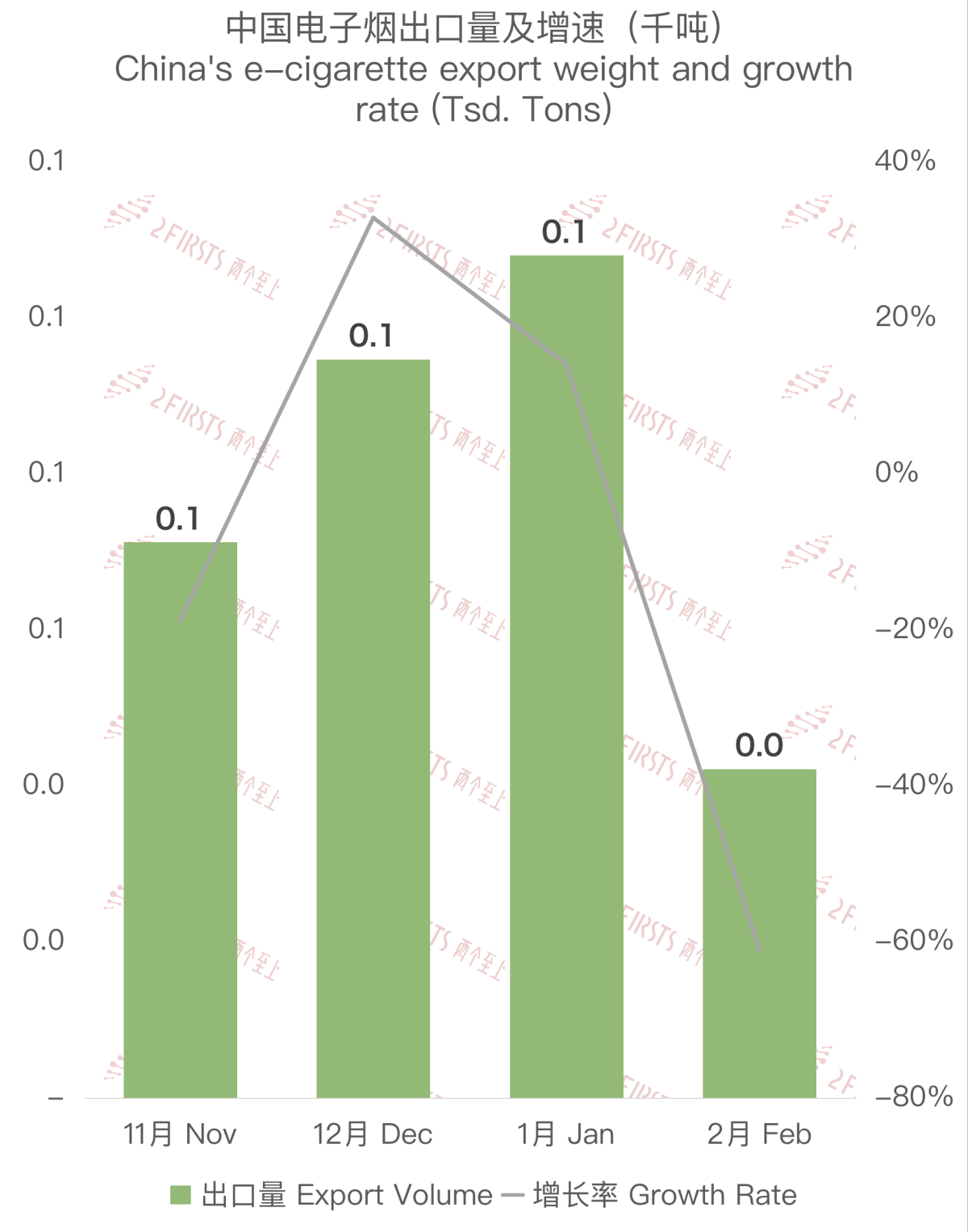
Export volume decreased by 60.95% to approximately 42 tons, but increased by 25.03% compared to the previous year.
China's E-cigarette Exports to Switzerland in February 2024
Image source: 2FIRSTS (Mapped by Mincy)


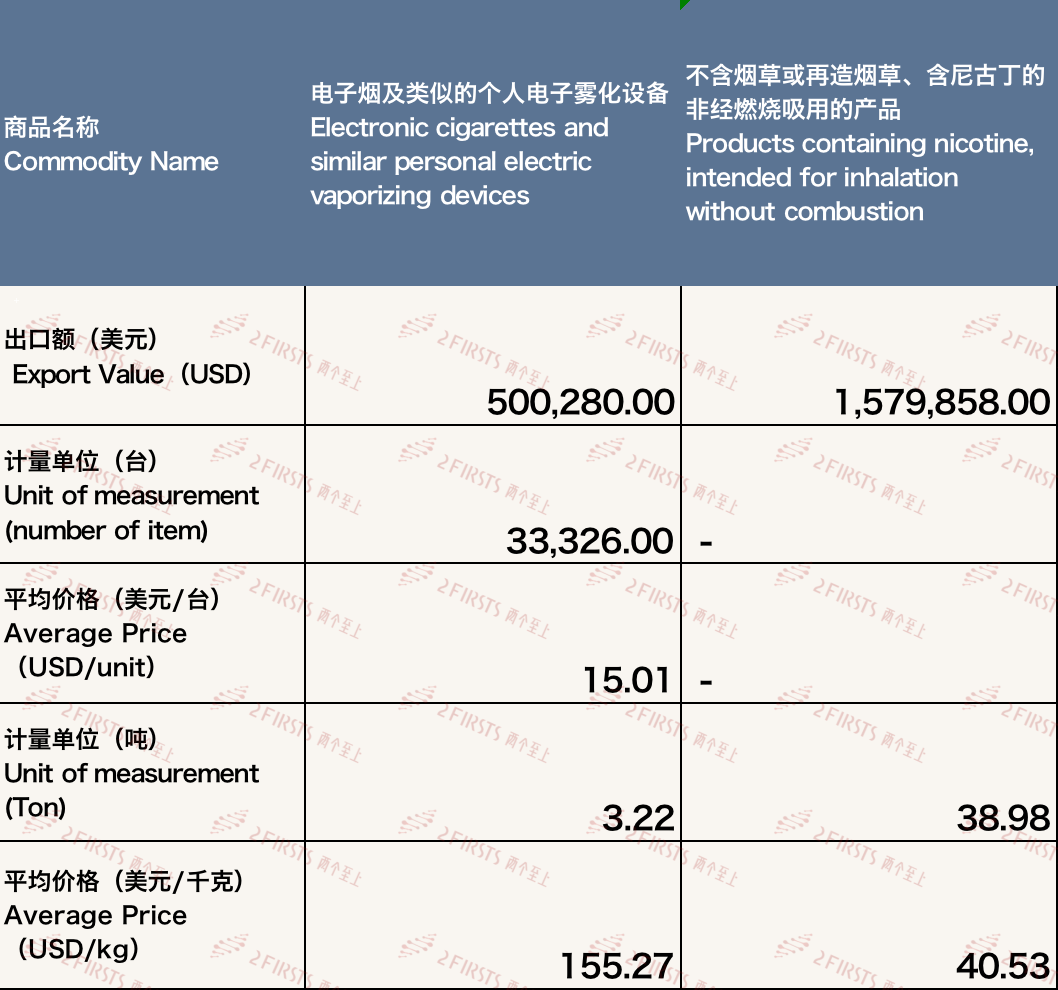
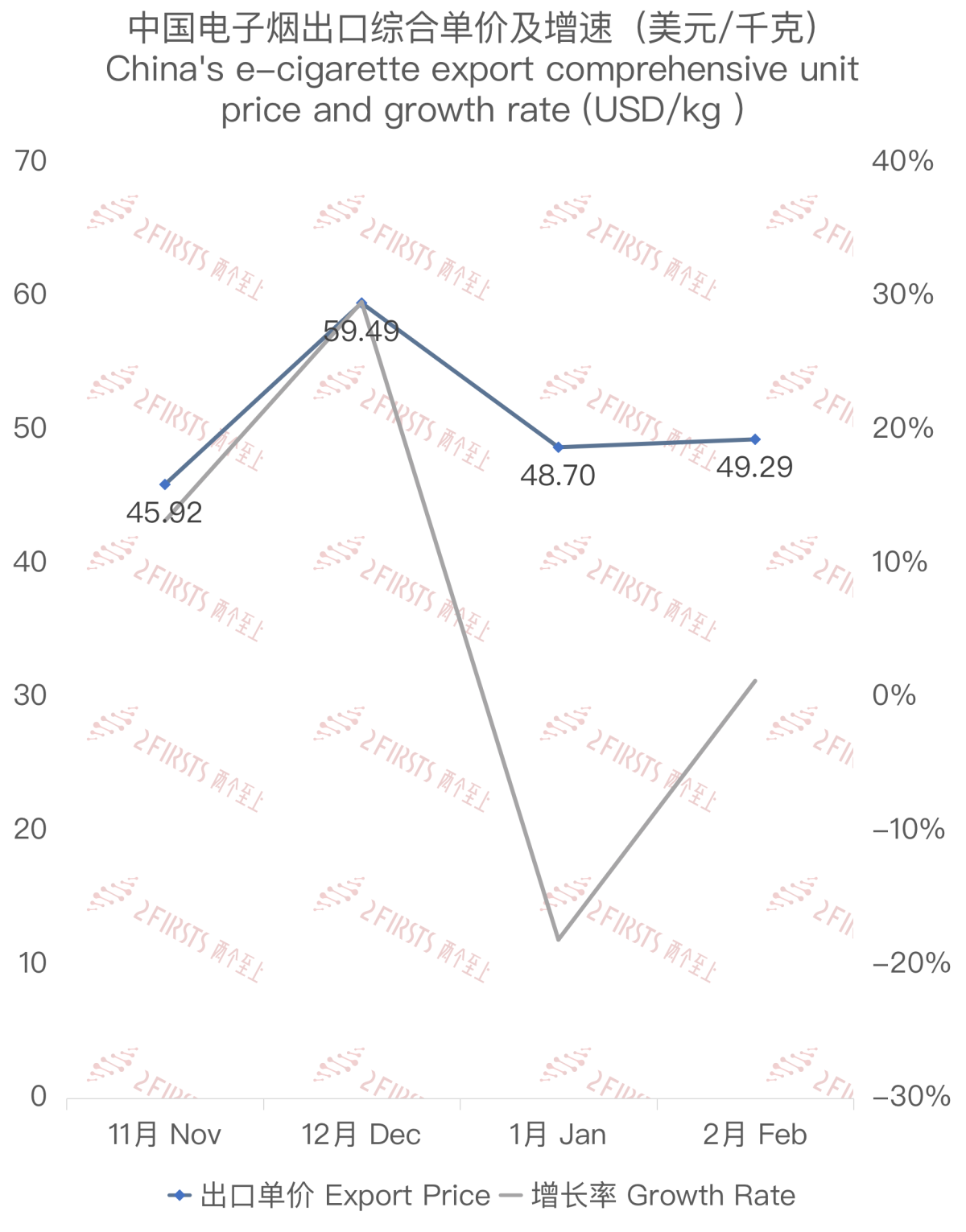
The export unit price is $49.29 per kilogram, showing a month-on-month increase of 1.22% and a year-on-year decrease of 51.93%; the average price of "e-cigarettes and similar personal electronic vaporizing devices" is $15.01 per unit.
China's E-cigarette Exports to Switzerland in February 2024
Image source: 2FIRSTS (created by Mincy)


Among them, "e-cigarettes and similar personal electronic vaporization devices" account for 24.05% of the export category, while "non-tobacco or reconstituted tobacco products containing nicotine for non-combustible use" account for 75.95%.
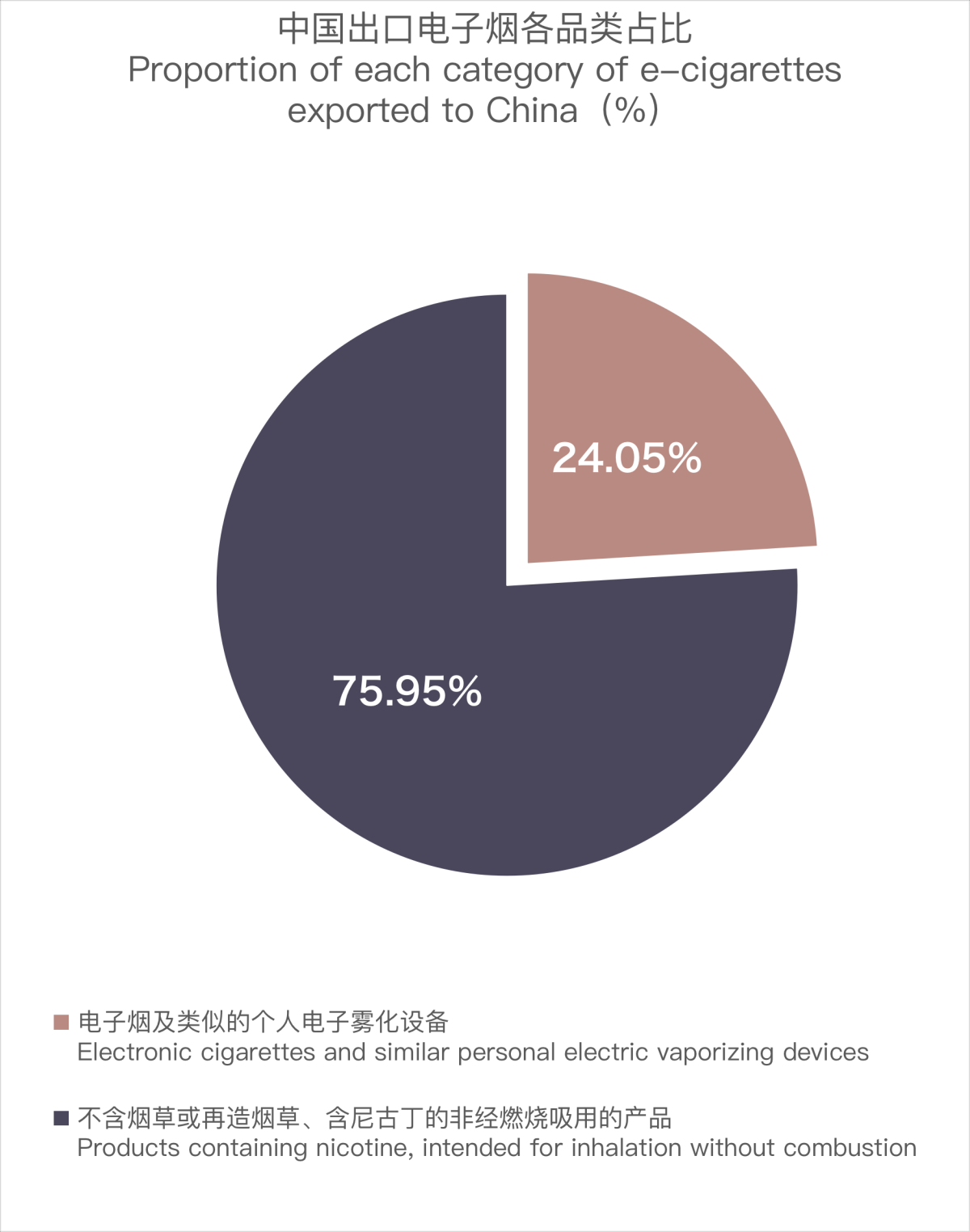
China's E-cigarette Exports to Switzerland in February 2024
Source of image: 2FIRSTS (created by Mincy)


We welcome news tips, article submissions, interview requests, or comments on this piece.

Please contact us at info@2firsts.com, or reach out to Alan Zhao, CEO of 2Firsts, on LinkedIn


Notice

1.  This article is intended solely for professional research purposes related to industry, technology, and policy. Any references to brands or products are made purely for objective description and do not constitute any form of endorsement, recommendation, or promotion by 2Firsts.

2.  The use of nicotine-containing products — including, but not limited to, cigarettes, e-cigarettes, nicotine pouchand heated tobacco products — carries significant health risks. Users are responsible for complying with all applicable laws and regulations in their respective jurisdictions.

3.  This article is not intended to serve as the basis for any investment decisions or financial advice. 2Firsts assumes no direct or indirect liability for any inaccuracies or errors in the content.

4.  Access to this article is strictly prohibited for individuals below the legal age in their jurisdiction.


Copyright


This article is either an original work created by 2Firsts or a reproduction from third-party sources with proper attribution. All copyrights and usage rights belong to 2Firsts or the original content provider. Unauthorized reproduction, distribution, or any other form of unauthorized use by any individual or organization is strictly prohibited. Violators will be held legally accountable.

For copyright-related inquiries, please contact: info@2firsts.com


AI Assistance Disclaimer


This article may have been enhanced using AI tools to improve translation and editorial efficiency. However, due to technical limitations, inaccuracies may occur. Readers are encouraged to refer to the cited sources for the most accurate information.

We welcome any corrections or feedback. Please contact us at: info@2firsts.com

STG UK refreshes XQS nicotine pouch packaging: new flavour indicators, hitting retail from March
Scandinavian Tobacco Group UK (STG UK) has announced a rebrand across its XQS nicotine pouch range. The updated packaging will be visible at retail from March, with the recommended retail price remaining £5.50. The new packs feature a bolder logo and glossy textures, retain nicotine strength indicators, and add a side flavour profile indicator to show the flavour type.
Feb.28 by 2FIRSTS.ai
Nearly 35.00% of Surveyed Retailers Shifted to Online Sales After Tighter Controls in Vietnam
A study of nearly 2,500 university students in Hanoi, Da Nang, Hue, and Ho Chi Minh City found that the average age of first use of e-cigarettes and heated tobacco products was 16.90. The findings were presented on April 9 in Hanoi. The study also found that 14.00% of students had tried e-cigarettes and 3.00% were current users, while the figures for heated tobacco were 6.00% and 0.80%. % of surveyed retail outlets moving to online sales.
Apr.10 by 2FIRSTS.ai
Bangladesh May Remove E-Cigarette Production and Sales Ban in Tobacco Law Amendment
Bangladesh is preparing amendments to its anti-tobacco ordinance that would remove the ban on the production and sale of e-cigarettes and also delete provisions prohibiting the display of tobacco products at points of sale.
Mar.31 by 2FIRSTS.ai
Mexico’s Coahuila State Passes Vape Ban Covering Non-Nicotine Devices and Heated Tobacco Products
The Congress of Coahuila in Mexico has approved a ban on the sale, use and promotion of vapes and similar devices, citing their harmful effects on health and the environment.
Mar.31 by 2FIRSTS.ai
Imperial Brands Forms Global AI Partnership with Capgemini, Reinforcing Artificial Intelligence as Core Infrastructure in the Nicotine Industry
Industry Insight
Feb.19
IMF Article Sets Out Three Principles: Cover All Harmful Products, Match Tax Rates to Harm, Improve Cross-Border Coordination
A March 2026 article in Finance & Development, “Taxing Harmful Habits,” argues that taxes on harmful products such as tobacco, alcohol and sugary drinks should better reflect the health harm they cause. The authors propose three principles: capture all harmful products, align tax rates with health harm, and strengthen cross-border coordination to reduce evasion and smuggling.
Mar.24 by 2FIRSTS.ai