Denver’s Flavored Tobacco Ban Faces Constitutional Challenge From Vape Trade Group

Jan.27
Denver’s Flavored Tobacco Ban Faces Constitutional Challenge From Vape Trade Group
A Colorado vape industry trade group says Denver’s voter-approved flavored tobacco sales ban is unconstitutional and too vague to enforce. The group is asking a state court for a permanent injunction blocking enforcement of Ordinance 24-1765 and for a declaration allowing flavored tobacco and vape sales, citing state constitutional vagueness concerns and multiple U.S. constitutional issues.

Key points


• Plaintiff: Rocky Mountain Smoke Free Alliance (represents ~125 small business owners and manufacturers in Colorado’s vaping industry)

• Defendants: City of Denver and Denver Department of Public Health and Environment (DDPHE)

• Ordinance: Denver Ordinance 24-1765; approved by voters in Nov. 2025; effective Jan. 1, 2026

• Main claim: terms like “cooling or numbing sensation” are subjective and lack generally accepted meanings

• Additional claims: Equal Protection (hookah exemption), Dormant Commerce Clause (packaging changes for Denver), First Amendment (flavor statements/images as commercial speech)


2First, January 27, 2026.


According to Law360, the Rocky Mountain Smoke Free Alliance (RMSFA), a trade group representing about 125 small business owners and manufacturers in Colorado’s vaping industry, has asked a Colorado state court to issue a permanent injunction blocking enforcement of Denver’s flavored tobacco sales ban (Ordinance 24-1765) and a declaration permitting the sale of flavored tobacco and vape products. Voters approved the ordinance in November and it took effect on Jan. 1, 2026.


RMSFA argues the ordinance is unconstitutionally vague under the Colorado Constitution, contending that key terms—such as whether a product imparts a “cooling or numbing sensation”—describe highly subjective experiences without generally accepted meanings. The complaint also raises concerns that the city and DDPHE contemplated relying on sources like online customer reviews to make enforcement determinations, potentially exposing products and retailers to misleading or manipulated information.


The lawsuit also asserts violations of the U.S. Constitution, including:


  • Equal Protection, because the ordinance exempts hookah tobacco despite allegedly containing flavorings and posing greater health risks than e-cigarettes;
  • Dormant Commerce Clause, because out-of-city retailers would have to modify packaging for Denver; and
  • First Amendment, because flavor-related statements and imagery on packaging constitute commercial speech promoting a product.


RMSFA alleges the ordinance harms approximately 575 tobacco retailers in Denver, could cost the city roughly $13 million in annual tax revenue, and may spur increased unregulated sales of flavored products.


Image Source: Law360


We welcome news tips, article submissions, interview requests, or comments on this piece.

Please contact us at info@2firsts.com, or reach out to Alan Zhao, CEO of 2Firsts, on LinkedIn


Notice

1.  This article is intended solely for professional research purposes related to industry, technology, and policy. Any references to brands or products are made purely for objective description and do not constitute any form of endorsement, recommendation, or promotion by 2Firsts.

2.  The use of nicotine-containing products — including, but not limited to, cigarettes, e-cigarettes, nicotine pouchand heated tobacco products — carries significant health risks. Users are responsible for complying with all applicable laws and regulations in their respective jurisdictions.

3.  This article is not intended to serve as the basis for any investment decisions or financial advice. 2Firsts assumes no direct or indirect liability for any inaccuracies or errors in the content.

4.  Access to this article is strictly prohibited for individuals below the legal age in their jurisdiction.


Copyright


This article is either an original work created by 2Firsts or a reproduction from third-party sources with proper attribution. All copyrights and usage rights belong to 2Firsts or the original content provider. Unauthorized reproduction, distribution, or any other form of unauthorized use by any individual or organization is strictly prohibited. Violators will be held legally accountable.

For copyright-related inquiries, please contact: info@2firsts.com


AI Assistance Disclaimer


This article may have been enhanced using AI tools to improve translation and editorial efficiency. However, due to technical limitations, inaccuracies may occur. Readers are encouraged to refer to the cited sources for the most accurate information.

We welcome any corrections or feedback. Please contact us at: info@2firsts.com

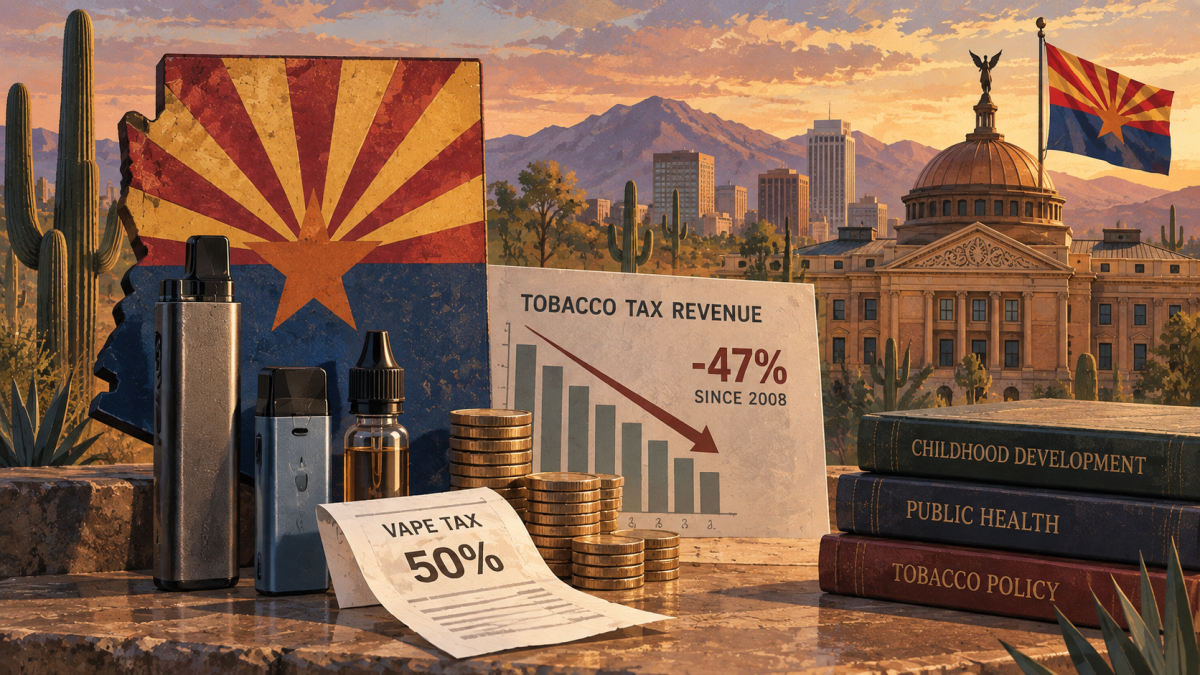
Arizona Turns to a 50% Retail Vape Tax as Tobacco Tax Revenue Falls 47% From 2008
Arizona's First Things First is pushing for an excise tax equal to 50% of the retail price of vaping products, estimating that the measure could generate about $100 million annually. The agency says its tobacco-tax revenue has fallen 47% from 2008 levels. Arizona has attempted to broaden its nicotine tax base in each of the past two years: a 2025 bill proposed a 50% wholesale-price tax, while a 2026 measure shifted to a 50% retail-price tax covering alternative nicotine products and vapor products. Separately, the state enacted HB 4001 this year to establish a new licensing and sales framework for alternative nicotine products.
Sep.21
F1 Faces Renewed Pressure Over Tobacco and Nicotine Sponsorships as 67 Groups Target ZYN and VELO Ahead of Madrid Race
Ahead of the Formula 1 race in Madrid, 67 Spanish and international public-health, medical and consumer organizations have sent an open letter to F1 President and CEO Stefano Domenicali calling for an end to sponsorships linked to the tobacco and nicotine industry, including nicotine pouches, vaping products and heated tobacco. The letter focuses on Philip Morris International’s ZYN partnership with Ferrari and British American Tobacco’s long-running partnership with McLaren and exposure for VELO. The campaign follows a March letter in which more than 160 organizations worldwide made a similar request to Formula 1.
Sep.10
U.S. Judge Stays Helix, NJOY Challenge to FDA PMTA Rule Pending New Rulemaking Court Stays Altria's Helix, NJOY Challenge to PMTA Rule as FDA Prepares New Rulemaking
A federal judge in Texas on Oct. 8 granted a joint request by the FDA and plaintiffs including Altria subsidiaries Helix Innovations and NJOY to stay litigation challenging the agency's 2021 PMTA rule. The court cited FDA's anticipated rulemaking concerning the regulation at issue. FDA announced on Sept. 28 that it intends to reassess the PMTA framework and could initiate new rulemaking to replace it. The parties must file a joint status report within 45 days and every 45 days thereafter. A motion by three Reynolds American companies to intervene remains pending.
Regulations
Oct.10
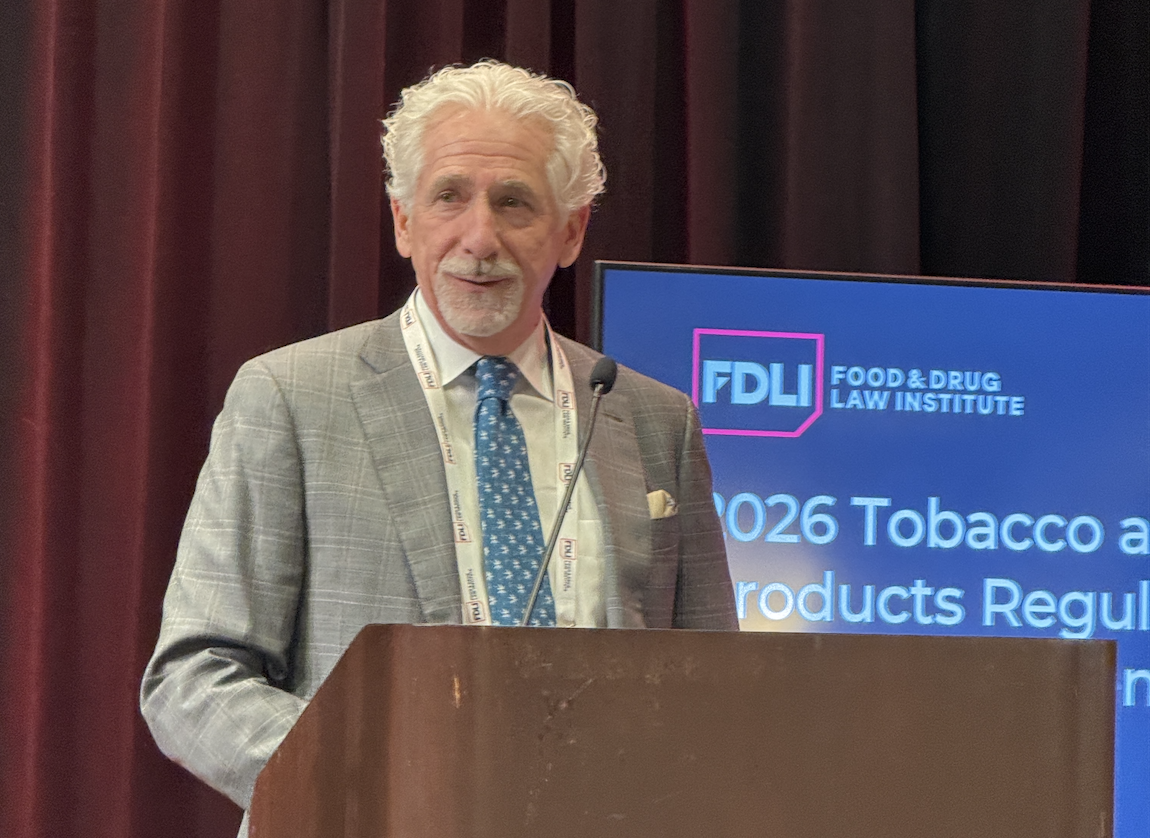
On-Site Report | After FDA Announces Review of PMTA Framework, CTP Director Details Reform Priorities
FDA CTP Director Bret Koplow used his FDLI keynote in Washington to outline how the agency is rethinking the PMTA framework. He discussed category-specific review, nicotine pouch and sPMTA pilots, AI-assisted review, a 70% reduction in pending applications, and a major staffing constraint: CTP currently has only nine scientific review teams. He also reaffirmed tobacco harm reduction while stressing youth protection, flavored products, risk communication, and the challenge of unauthorized e-cigarettes.
Regulations
Oct.06
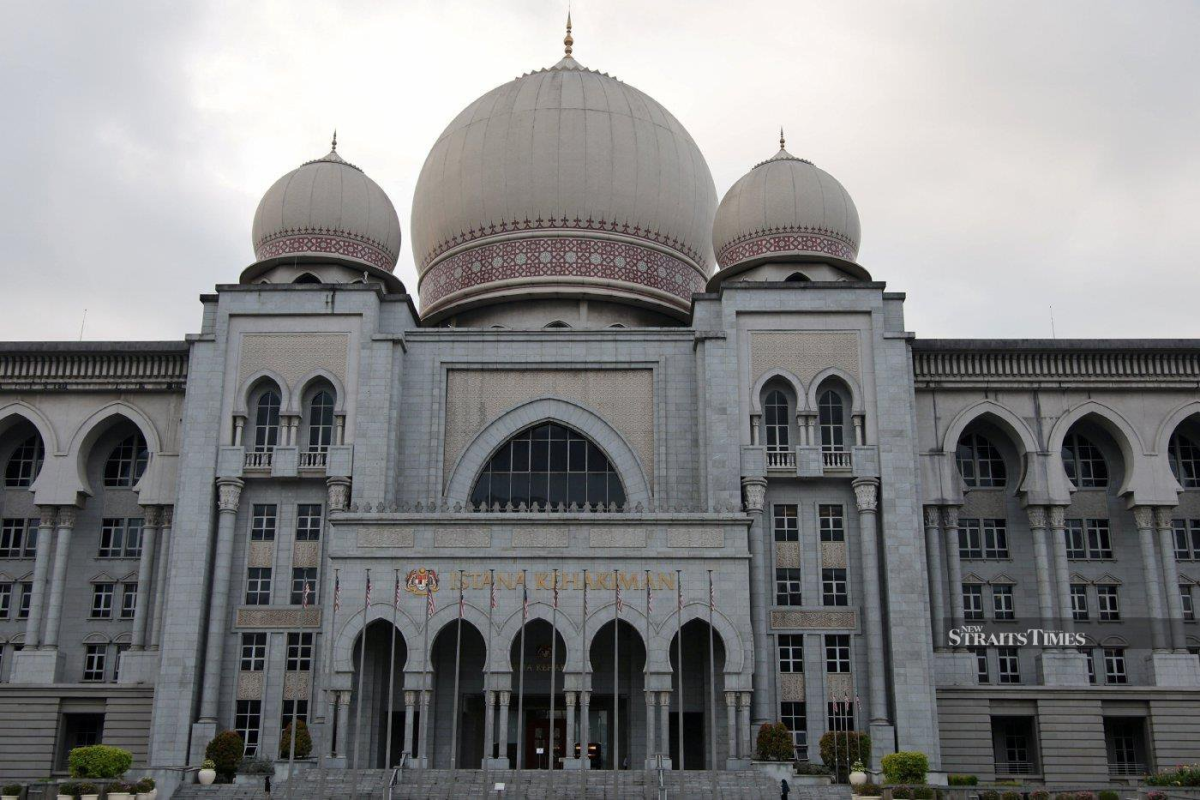
Malaysia Withdraws Appeal Against Liquid Nicotine Ruling as Vape Regulation Framework Enters New Phase
Malaysia’s government has withdrawn its appeal against a High Court ruling concerning the regulatory status of liquid nicotine used in vape and e-cigarette products, according to reports by New Straits Times, Free Malaysia Today and CodeBlue on August 18, 2026. The Kuala Lumpur High Court ruled on May 15 that the government’s decision to remove liquid nicotine from the scheduled poisons list under the Poisons Act 1952 was irrational and made without proper consultation with the Poisons Board. The withdrawal ends the government’s appeal process, while the future regulatory framework for nicotine vape products remains under discussion.
Aug.21
How Many Nicotine Pouch Factories Does Europe Need? 2Firsts Interviews AIRSCREAM on the OEM Market
At InterTabac 2026, nicotine pouch growth was visible not only in brands but across equipment, raw materials and OEM manufacturing. 2Firsts interviewed AIRSCREAM commercial head Steve Moore on how many pouch factories Europe may ultimately need and where manufacturers can differentiate, from formulation and flavour to pouch materials, production consistency and customer service. The category continues to expand, but questions remain over future capacity, consolidation and the long-term structure of the supply chain.
Sep.18