E-cigarette Trade Data from China to Kuwait in December 2023

Industry Insight by 2FIRSTS Mincy
Mar.14.2024
E-cigarette Trade Data from China to Kuwait in December 2023
According to new trade data from Chinese customs, e-cigarette exports to Kuwait in December 2023 saw growth.

According to updated trade data from the General Administration of Customs of the People's Republic of China, 2FIRSTS has compiled the e-cigarette export data from China to Kuwait in December 2023. The specifics are as follows:
E-cigarette Trade Data from China to Kuwait in December 2023
Image source: 2FIRSTS (created by Mincy)


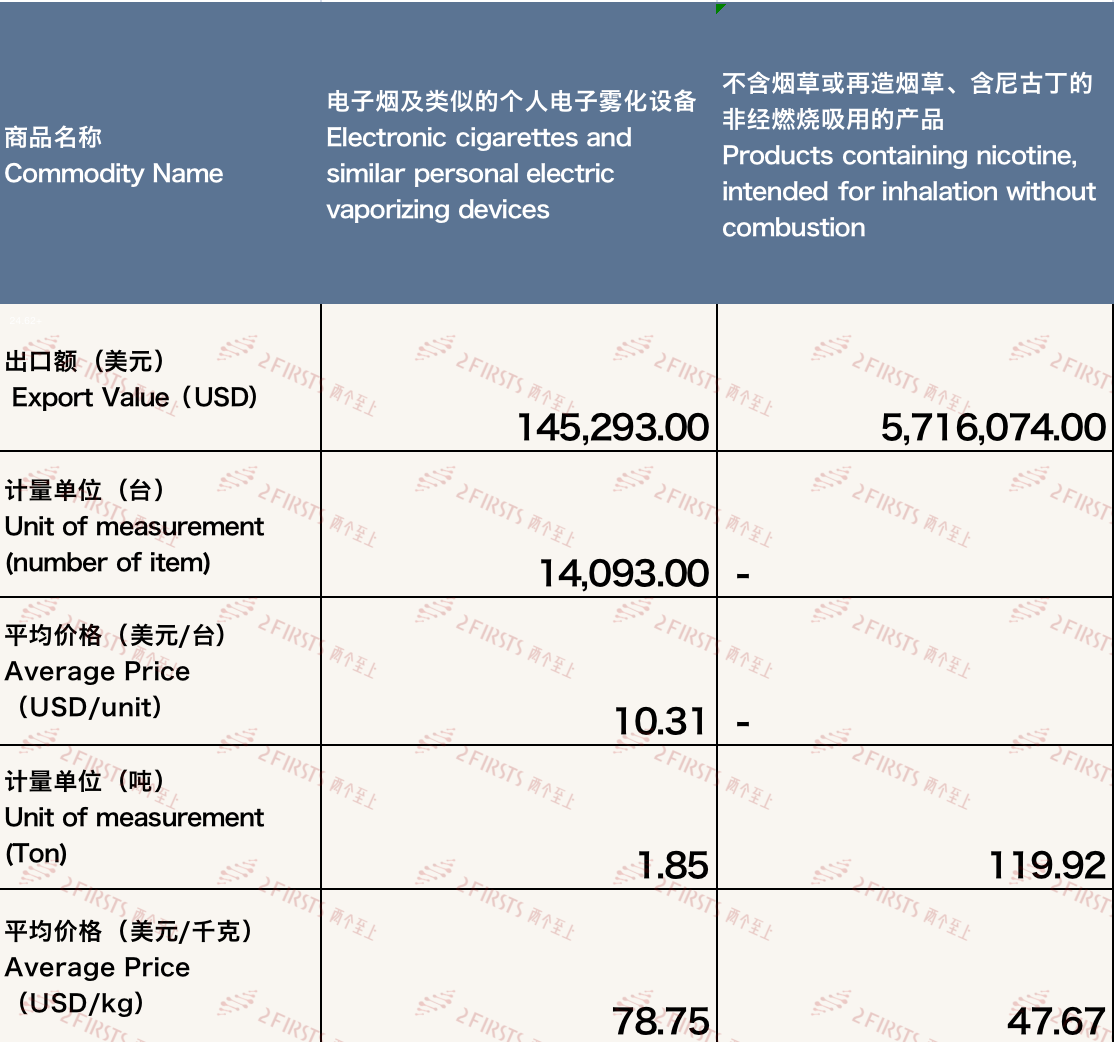
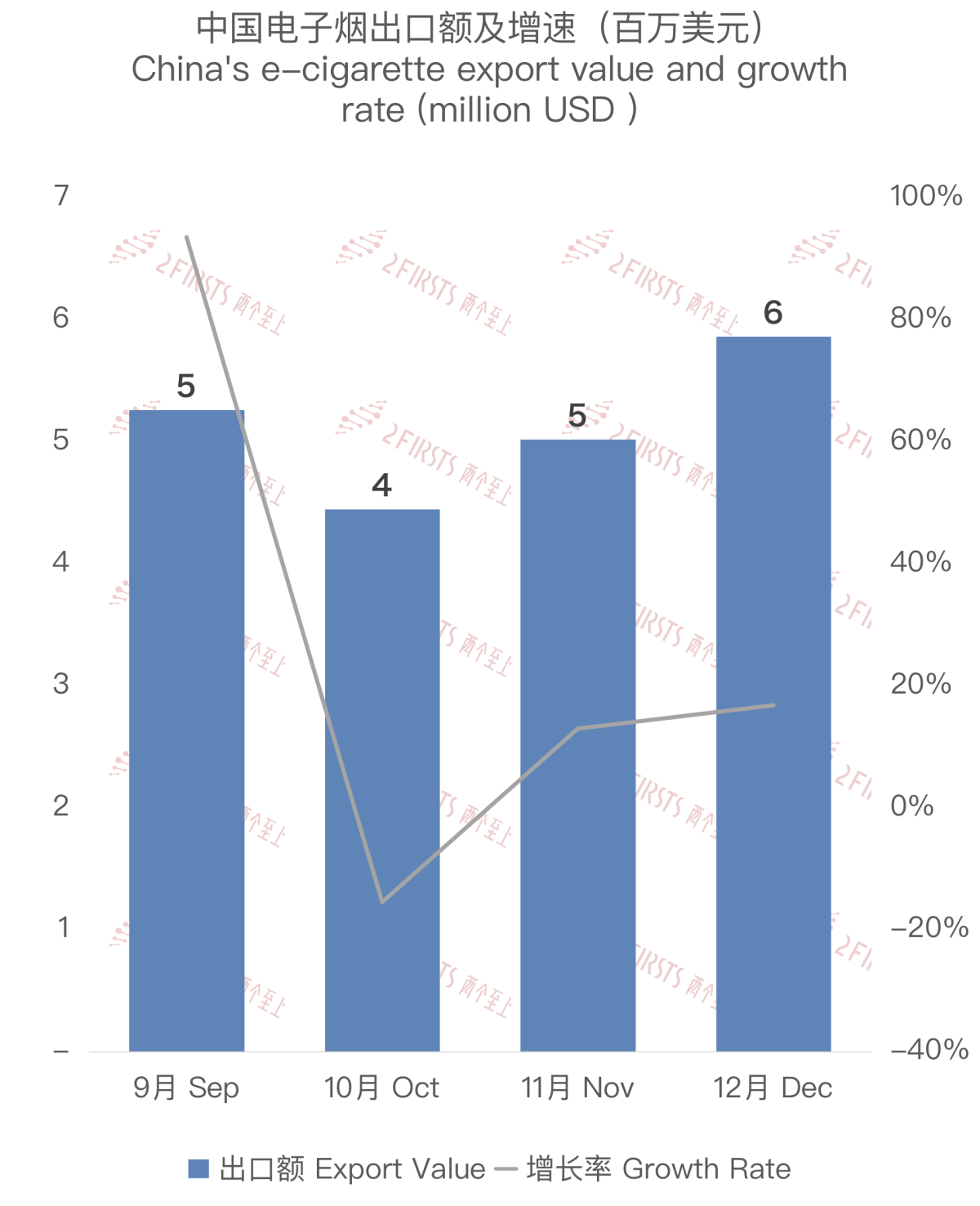
The export volume reached approximately $5.86 million, increasing by 16.76% compared to the previous period, and decreasing by 0.96% compared to the same period last year.
E-cigarette Trade Data from China to Kuwait in December 2023
Image source: 2FIRSTS (Mapped by Mincy)


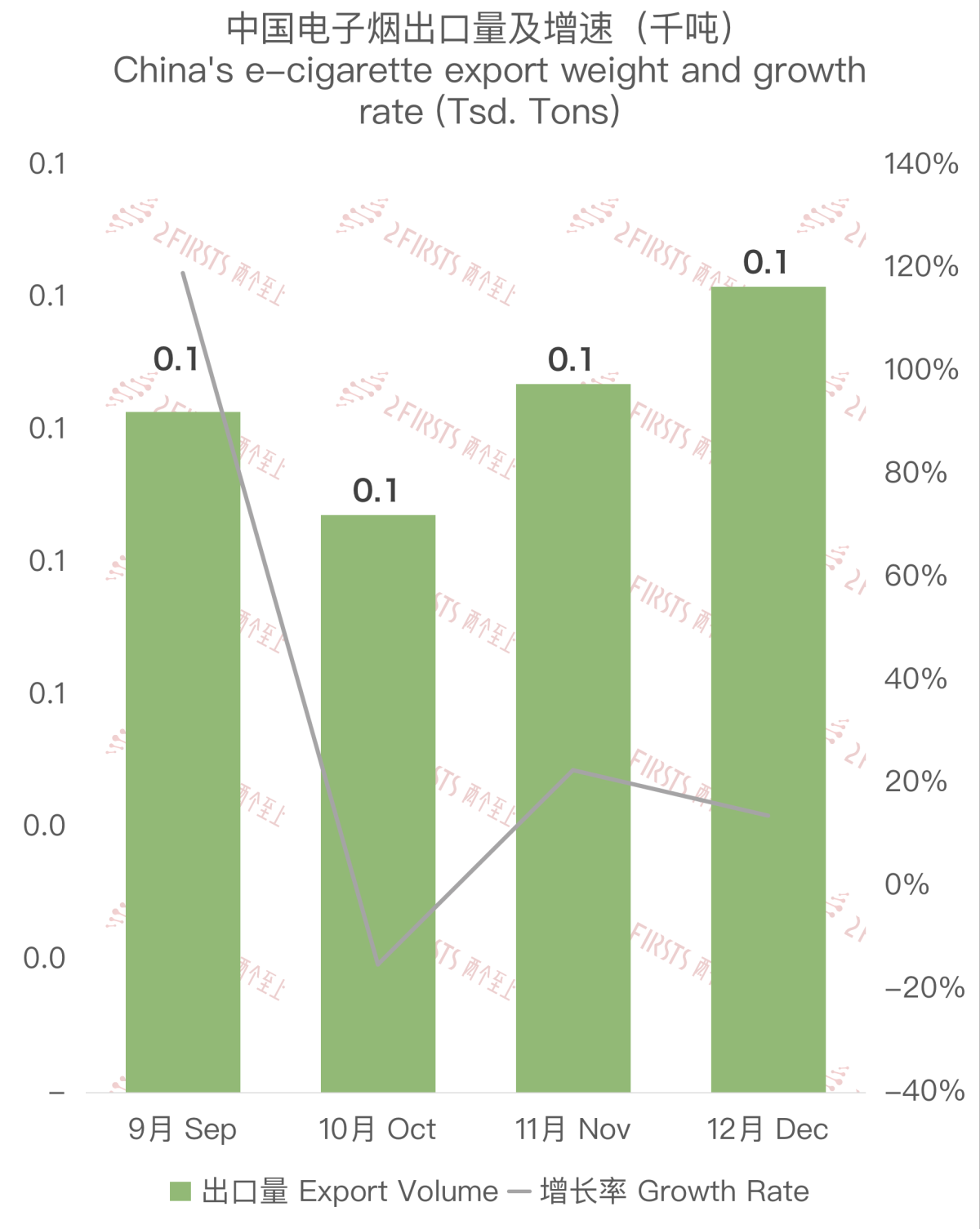
The export volume is approximately 122 tons, an increase of 13.77% compared to the previous period and an increase of 12.06% compared to the same period last year.
E-cigarette Trade Data from China to Kuwait in December 2023
Image source: 2FIRSTS (Mincy drawing)


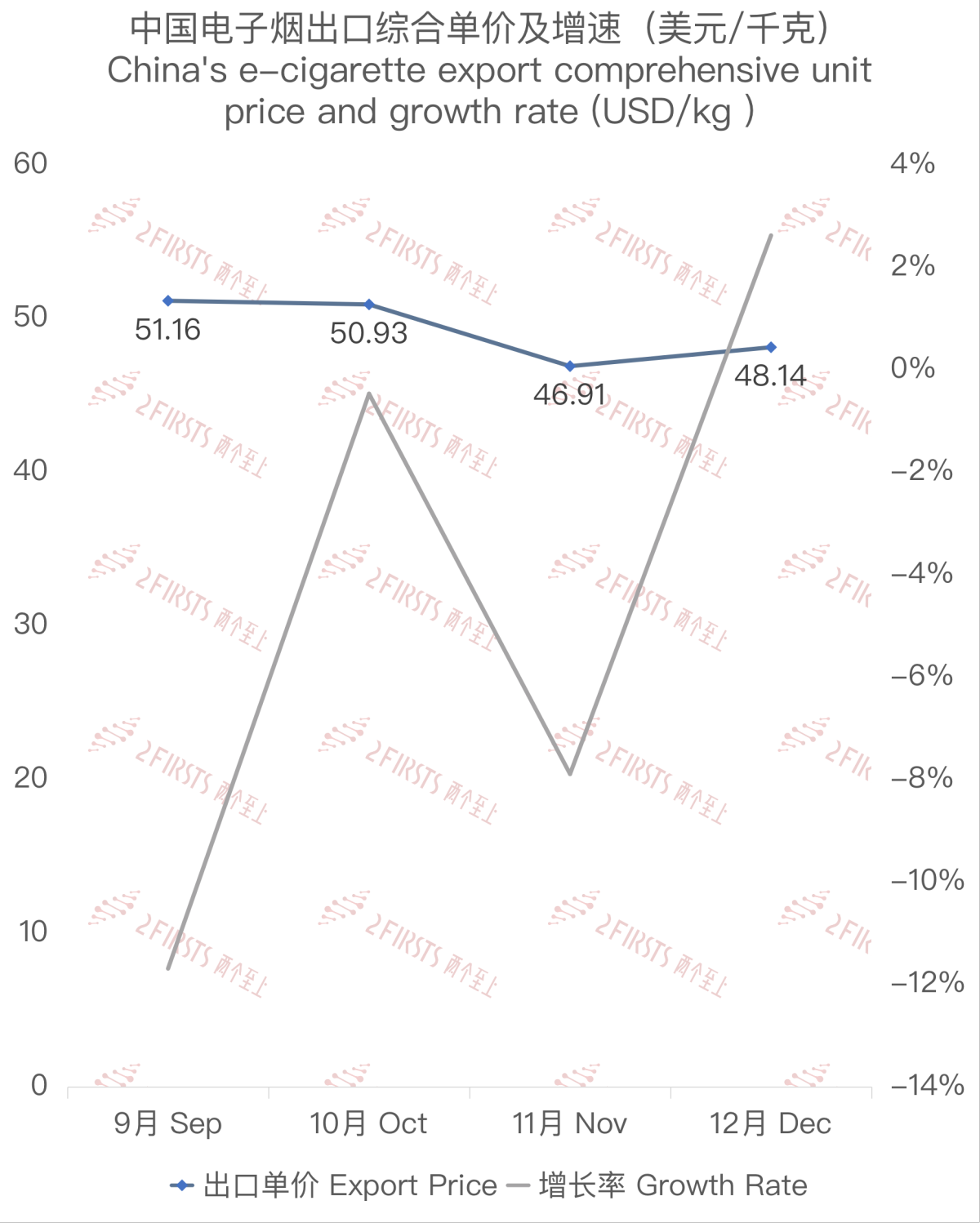
The export unit price is $48.14 per kilogram, with a month-on-month increase of 2.63% and a year-on-year decrease of 11.62%; the average price of "e-cigarettes and similar personal electronic vaporization devices" is $10.31 per unit.
E-cigarette Trade Data from China to Kuwait in December 2023
Image source: 2FIRSTS (created by Mincy)


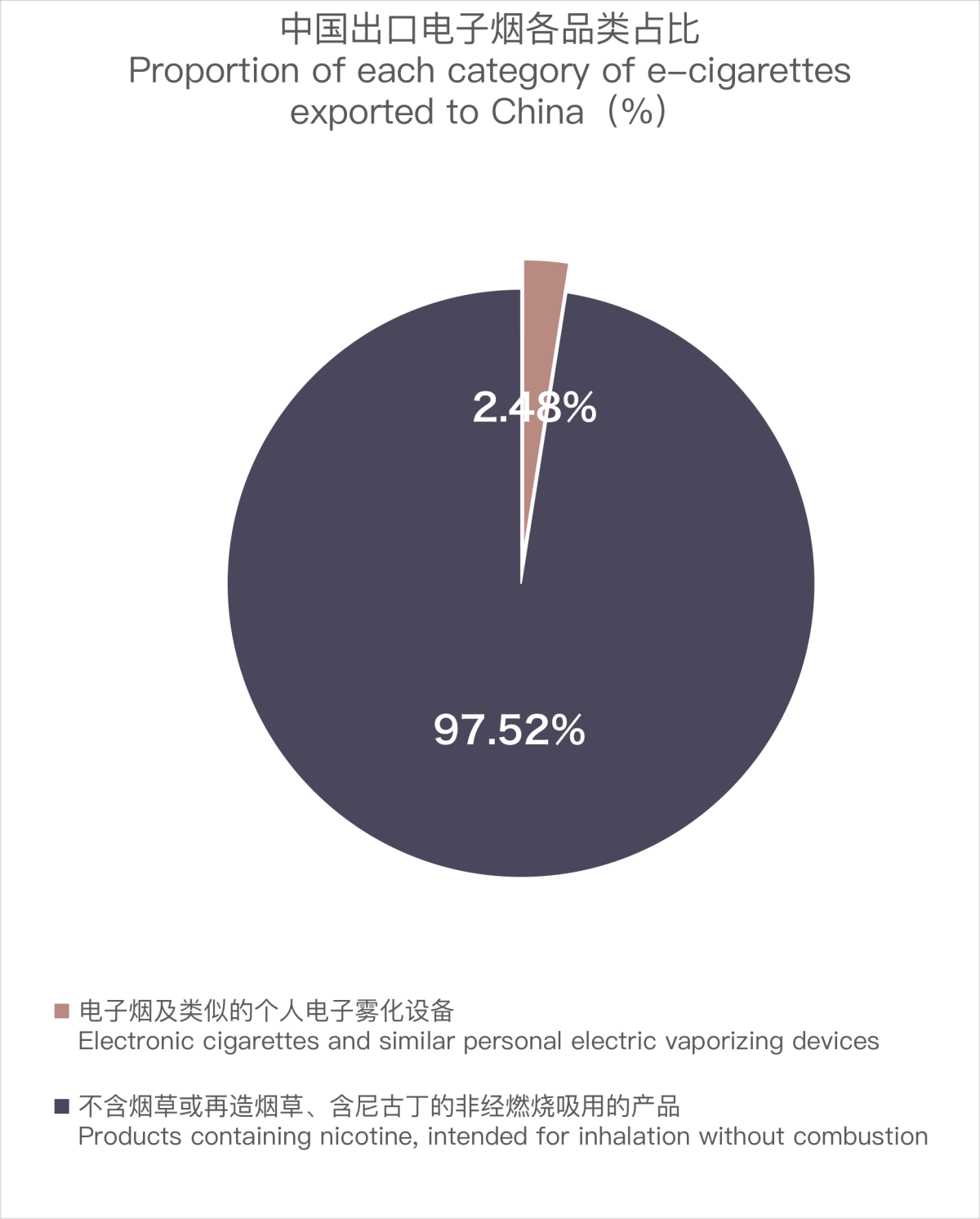
Among them, "e-cigarettes and similar personal electronic vaporization devices" account for 2.48% of the export category, while "non-combustible products containing nicotine without tobacco or reconstituted tobacco" account for 97.52%.
E-cigarette Trade Data from China to Kuwait in December 2023
Image source: 2FIRSTS (Mincy mapping)


We welcome news tips, article submissions, interview requests, or comments on this piece.

Please contact us at info@2firsts.com, or reach out to Alan Zhao, CEO of 2Firsts, on LinkedIn


Notice

1.  This article is intended solely for professional research purposes related to industry, technology, and policy. Any references to brands or products are made purely for objective description and do not constitute any form of endorsement, recommendation, or promotion by 2Firsts.

2.  The use of nicotine-containing products — including, but not limited to, cigarettes, e-cigarettes, nicotine pouchand heated tobacco products — carries significant health risks. Users are responsible for complying with all applicable laws and regulations in their respective jurisdictions.

3.  This article is not intended to serve as the basis for any investment decisions or financial advice. 2Firsts assumes no direct or indirect liability for any inaccuracies or errors in the content.

4.  Access to this article is strictly prohibited for individuals below the legal age in their jurisdiction.


Copyright


This article is either an original work created by 2Firsts or a reproduction from third-party sources with proper attribution. All copyrights and usage rights belong to 2Firsts or the original content provider. Unauthorized reproduction, distribution, or any other form of unauthorized use by any individual or organization is strictly prohibited. Violators will be held legally accountable.

For copyright-related inquiries, please contact: info@2firsts.com


AI Assistance Disclaimer


This article may have been enhanced using AI tools to improve translation and editorial efficiency. However, due to technical limitations, inaccuracies may occur. Readers are encouraged to refer to the cited sources for the most accurate information.

We welcome any corrections or feedback. Please contact us at: info@2firsts.com

HB337 Moves Forward: Cigarette and Nicotine Taxes Set to Rise in Utah
Utah lawmakers are advancing HB337, a bill that would raise the state cigarette tax by $2 per pack and restructure taxes on other nicotine products. The proposal replaces weight-based taxes with percentage-based rates and removes reduced rates for certain modified risk products. Supporters say it will curb youth tobacco use, while opponents warn of cross-border shopping and harm to consumers seeking alternatives.
Feb.17
Haypp Voluntarily Sets a 20 mg Nicotine-Strength Cap for Nicotine Pouches and Urges the UK to Establish a Regulatory Limit
Online nicotine pouch retailer Haypp said it has voluntarily adopted a 20 mg per pouch nicotine-strength cap across its e-commerce platforms and is urging the UK government to formalize that cap as the limit as it develops a regulatory framework. Haypp said proportionate limits would protect consumers while preserving nicotine pouches as a viable reduced-risk alternative to cigarettes.
Feb.26 by 2FIRSTS.ai
ACT Health Minister Vows Continued Crackdown on E-Cigarettes and Illicit Tobacco
ACT Health Minister Rachel Stephen-Smith said the government would not ease its action against e-cigarettes and illicit tobacco and would continue strengthening regulation, legislation, and enforcement. Speaking at the launch of a new program to help young people quit vaping, she said reducing tobacco excise would not materially reduce profits in the illicit tobacco market.
Mar.10 by 2FIRSTS.ai
Canadian Conservative MP’s Promotion of Zyn Draws Opposition From Local Nicotine Pouch Brand
Conservative MP Jamil Jivani’s public support for nicotine pouch brand Zyn has drawn attention on Canadian university campuses, but Imperial Tobacco, which makes the only similar Canadian product, Zonnic, said it does not support the promotion of an unauthorized competitor.
Mar.18 by 2FIRSTS.ai
FDA Details Carcinogenicity Tiering and ELCR Framework as Small Manufacturers Press for Predictability
During the “Toxicological Profile” session at FDA’s Feb 10 PMTA roundtable, officials outlined the carcinogenicity tiering system and Excess Lifetime Cancer Risk (ELCR) framework used in ENDS reviews under the APPH standard. Small manufacturers questioned database transparency, exposure assumptions, and the existence of clear compliance benchmarks. FDA reiterated toxicological risk is assessed case by case within a broader population-level determination.
Feb.11
FDA Outlines Manufacturing Requirements as Critical to ENDS PMTA Success
FDA officials said manufacturing consistency is a core prerequisite for ENDS PMTA reviews, not a procedural formality. During its February 10, 2026 roundtable, the agency outlined expectations for quality management systems, manufacturing documentation, nicotine control, stability studies, and risk mitigation, emphasizing that robust manufacturing evidence underpins determinations of whether products are appropriate for the protection of public health.
Feb.11