Eastern Company's Shares Purchased in EGX for 2.05 billion EGP

Business by 2FIRSTS.ai
Dec.29.2023
Eastern Company's Shares Purchased in EGX for 2.05 billion EGP
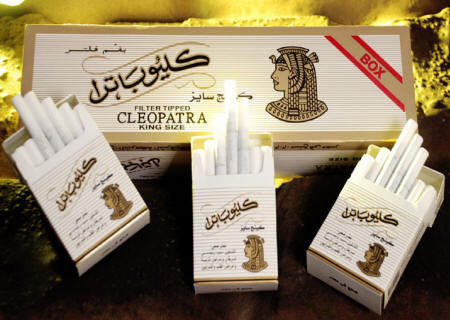
Egypt's main state-owned tobacco producer, Eastern Company, sold 734,600 shares for EGP 2.05 billion to investors on December 28th.

The Egyptian Exchange (EGX) announced on December 28th that investors have purchased 734,600 shares from Eastern Company, the leading state-owned tobacco manufacturer in Egypt. The total purchase amount reached EGP 2.05 billion (approximately $66.55 million). This share purchase represents 3.3% of the company's total capital, as Eastern Company currently possesses a total of 2.23 billion shares.


The Oriental Company has always been an important target for foreign investors in Egypt. Currently, it is listed as one of the 35 companies scheduled for partial or full privatization by the government. In November of last year, the UAE-based International Holding Company (Global Holding) acquired a 30% stake in the Oriental Company for 16.4 billion Egyptian pounds (approximately $53.086 million).


After this transaction is completed, the remaining shareholders of the company will include the state-owned chemical industry holding company (accounting for 20.9%), Allan Gray Equity Fund (accounting for 7.2%), the shareholders meeting of Oriental Tobacco Company (accounting for 6%), and free float shares (accounting for 36%).


We welcome news tips, article submissions, interview requests, or comments on this piece.

Please contact us at info@2firsts.com, or reach out to Alan Zhao, CEO of 2Firsts, on LinkedIn


Notice

1.  This article is intended solely for professional research purposes related to industry, technology, and policy. Any references to brands or products are made purely for objective description and do not constitute any form of endorsement, recommendation, or promotion by 2Firsts.

2.  The use of nicotine-containing products — including, but not limited to, cigarettes, e-cigarettes, nicotine pouchand heated tobacco products — carries significant health risks. Users are responsible for complying with all applicable laws and regulations in their respective jurisdictions.

3.  This article is not intended to serve as the basis for any investment decisions or financial advice. 2Firsts assumes no direct or indirect liability for any inaccuracies or errors in the content.

4.  Access to this article is strictly prohibited for individuals below the legal age in their jurisdiction.


Copyright


This article is either an original work created by 2Firsts or a reproduction from third-party sources with proper attribution. All copyrights and usage rights belong to 2Firsts or the original content provider. Unauthorized reproduction, distribution, or any other form of unauthorized use by any individual or organization is strictly prohibited. Violators will be held legally accountable.

For copyright-related inquiries, please contact: info@2firsts.com


AI Assistance Disclaimer


This article may have been enhanced using AI tools to improve translation and editorial efficiency. However, due to technical limitations, inaccuracies may occur. Readers are encouraged to refer to the cited sources for the most accurate information.

We welcome any corrections or feedback. Please contact us at: info@2firsts.com

Can hookah go institutional? A hookah company seeking to go public makes its case with capital, technology and regulation
2Firsts explored whether hookah can evolve into a more mature and governable category by interviewing Dubai-based hookah company AIR. AIR argues that strong margins, OOKA’s closed-system model and the prospect of differentiated regulation could support that shift. The larger question is whether this is simply AIR’s capital-markets narrative, or an early sign that competition, regulation and category boundaries in hookah are beginning to change.
Apr.02
Qnovia’s Heat-Free Inhalable Nicotine Replacement Therapy Posts Positive First-in-Human Data, Advances FDA and MHRA Filings as Funding Expands
U.S.-based medical startup Qnovia Inc. reported positive results from its first-in-human clinical trial of RespiRx, an inhalable nicotine replacement therapy (NRT) device designed to support smoking cessation.
Innovation
Feb.24
PMI Faces Setback in India: Global Regulatory Fragmentation Complicates Its Smoke-Free Transition
India has reaffirmed its 2019 ban on e-cigarettes and heated tobacco devices, effectively blocking Philip Morris International (PMI) from launching IQOS in the country despite years of lobbying. Together with Taiwan, China’s conditional opening of heated tobacco products, and Japan’s planned 2026 excise tax hikes, these moves highlight increasingly divergent national regulatory pathways—an external uncertainty shaping PMI’s smoke-free growth trajectory.
Feb.12
Fifth Circuit Upholds FDA’s 2021 PMTA Rule, Citing Statutory Health-Study Requirements
A Fifth Circuit panel upheld the U.S. Food and Drug Administration’s 2021 final rule requiring companies seeking premarket authorization for new tobacco products to include information on health-risk investigations. In a published opinion, the court found FDA satisfied the Regulatory Flexibility Act’s procedural requirements and reasonably relied on the economic analysis from the 2016 “deeming rule” as a factual basis to certify limited impact on small businesses.
Feb.27 by 2FIRSTS.ai
Philippine Tobacco Control Coalition Backs Raising Legal Age for Vape and Tobacco Products to 25
A coalition of health and child rights advocates in the Philippines said it supports Health Secretary Teodoro Herbosa’s call to raise the legal age restriction for vape and tobacco products from 18 to 25. The group said scientific evidence shows that the brain of a young person continues to develop until the mid-20s, and that nicotine exposure during that period can cause lasting impairment in impulse control, learning, and mood regulation.
Mar.11 by 2FIRSTS.ai
BAT FY2025 Results Review Series by 2Firsts
Feb.12