Excessive Nicotine Levels of Most Swiss Disposables Revealed

Regulations by 2FIRSTS.ai
Mar.18.2024
Excessive Nicotine Levels of Most Swiss Disposables Revealed
Swiss anti-smoking association reveals majority of disposable e-cigarettes in Switzerland don't meet legal standards, with excessive nicotine levels.

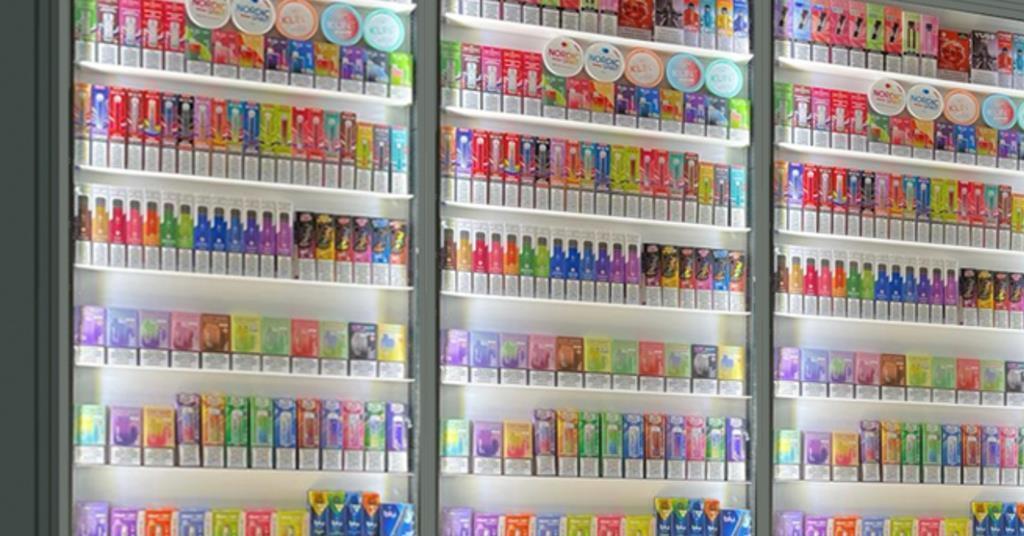
According to a report by swissinfo on March 16th, the Swiss Anti-Smoking Association stated that the majority of disposable e-cigarettes sold in Switzerland do not meet legal requirements. The e-liquid and nicotine content in these products exceed standard thresholds.


This standard is based on the 2014 European directive which states that the e-liquid capacity of each closed system e-cigarette must not exceed 2 milliliters, approximately equivalent to 600 puffs.


However, according to a study by the Swiss Smoking Control Association, more than half of the products sold on the Swiss market exceed this value. Online sales sites or stores make it easy to buy e-cigarettes that can deliver up to 1500 puffs or 2500 puffs. There are even products available containing 30 milliliters, equivalent to 16000 puffs, which is 15 times the legal limit.


The organization also exposed the issue of disposable e-cigarettes having excessively high nicotine levels. The law dictates that the nicotine content in disposable e-cigarettes must not exceed 20 milligrams per milliliter. Despite some states forcing certain stores to remove these products based on a study released in March 2022, people can still easily purchase them from foreign websites.


According to data from the Swiss tobacco control agency AT Suisse, their inspections found that nearly all websites (totaling over 100) are selling products that exceed legal standards.


The Swiss Anti-Smoking Association expressed regret over this, stating, "We originally thought that only small marginalized businesses might behave in this way, but the reality is far from it."


We welcome news tips, article submissions, interview requests, or comments on this piece.

Please contact us at info@2firsts.com, or reach out to Alan Zhao, CEO of 2Firsts, on LinkedIn


Notice

1.  This article is intended solely for professional research purposes related to industry, technology, and policy. Any references to brands or products are made purely for objective description and do not constitute any form of endorsement, recommendation, or promotion by 2Firsts.

2.  The use of nicotine-containing products — including, but not limited to, cigarettes, e-cigarettes, nicotine pouchand heated tobacco products — carries significant health risks. Users are responsible for complying with all applicable laws and regulations in their respective jurisdictions.

3.  This article is not intended to serve as the basis for any investment decisions or financial advice. 2Firsts assumes no direct or indirect liability for any inaccuracies or errors in the content.

4.  Access to this article is strictly prohibited for individuals below the legal age in their jurisdiction.


Copyright


This article is either an original work created by 2Firsts or a reproduction from third-party sources with proper attribution. All copyrights and usage rights belong to 2Firsts or the original content provider. Unauthorized reproduction, distribution, or any other form of unauthorized use by any individual or organization is strictly prohibited. Violators will be held legally accountable.

For copyright-related inquiries, please contact: info@2firsts.com


AI Assistance Disclaimer


This article may have been enhanced using AI tools to improve translation and editorial efficiency. However, due to technical limitations, inaccuracies may occur. Readers are encouraged to refer to the cited sources for the most accurate information.

We welcome any corrections or feedback. Please contact us at: info@2firsts.com

Jordan Reduces HTP and Vape Tax Burden as National Smoking Rate Hits 51.6%
Jordan has published amendments to its special tax system reducing taxes on heated tobacco products, electronic cigarettes and e-liquids, with some reductions reaching 50%. Under the revised rules, taxes on devices and liquids have been lowered, prompting concern among medical and parliamentary circles. The government has not issued an official explanation for the move.
Dec.24 by 2FIRSTS.ai
South Korea’s National Assembly Passes Law Classifying E-Cigarettes as Tobacco Products with Full Equivalent Regulation
South Korea’s National Assembly recently passed a comprehensive package of 79 bills that, among other measures, formally classifies liquid vapes — e-cigarette products using nicotine-containing e-liquids — as tobacco products. These products will now be subject to the same taxation, sales restrictions and advertising controls as traditional cigarettes, and the vaping industry in South Korea is expected to face significant adjustments in compliance costs, market access and business strategy.
Dec.03
Russia’s Rostov Region Eyes Full Vape Sales Ban, Signals Tighter Tobacco Retail Rules
Russia’s Rostov region is preparing to pursue a region-wide ban on vape sales and is also signaling support for broader regional powers to tighten tobacco retail rules. A regional lawmaker said the initiative aligns with a State Duma bill that would allow regions to impose vape sales bans—an initiative he said has presidential backing.
Jan.28 by 2FIRSTS.ai
Philippine FDA Requires Licenses for Vape Products with Medical Claims
The Philippine Food and Drug Administration has announced that establishments selling vaporized nicotine and non-nicotine products and novel tobacco products with medicinal or therapeutic claims must secure Licenses to Operate. Such products are also required to be registered as pharmaceutical products through the Center for Drug Regulation and Research. The FDA urged stakeholders to comply with the new requirements to ensure product safety, efficacy and quality.
Dec.22 by 2FIRSTS.ai
UK Disposable Vape Ban Fallout: Convenience Vape Units Down 20.8%, Retailers Hit by a “Triple Whammy,” Talysis Says
UK convenience insight agency Talysis says vape unit sales in convenience stores have fallen 20.8% and value sales 12.7% nearly eight months after the disposable vape ban took effect.
Jan.28 by 2FIRSTS.ai
TGA Sets 2026–2027 Compliance Principles, Flags Vaping Goods as a 2026 Priority
The Therapeutic Goods Administration (TGA) has released its Compliance Principles for 2026 and 2027.Among 12 therapeutic goods categories identified for priority compliance and enforcement activity, TGA includes vaping goods, and it plans a further review of these priorities in March 2026.
Jan.23 by 2FIRSTS.ai