FDA Proposed Rule Requires Importers to Submit STN for ENDS

Regulations by 2FIRSTS.ai
Aug.16.2024
FDA Proposed Rule Requires Importers to Submit STN for ENDS
FDA and Treasury propose rule requiring importers to submit FDA-issued STN for ENDS products in US Customs electronic system.

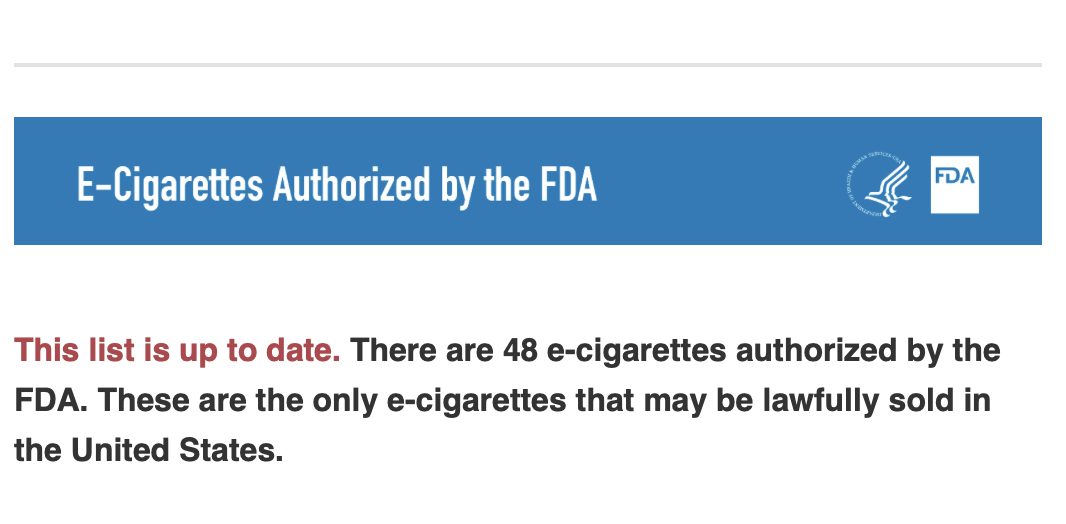
On August 15th, the United States FDA (FDA) and the Department of the Treasury announced a proposed rule that would require importers to submit a Submission Tracking Number (STN) issued by the FDA for electronic nicotine delivery systems (ENDS) products through the electronic import system operated by U.S. Customs and Border Protection (CBP). This new requirement aims to streamline the process for ENDS products entering the United States for regulatory review.


After an applicant submits a marketing application for a new tobacco product, the FDA will assign a unique identifier called an STN. If the proposed rule is ultimately adopted, any ENDS product (e-cigarette) that has not submitted an STN may be denied entry into the United States.


The FDA-issued STN is one of the key data elements that the FDA can accept for review and determination of eligibility. The FDA also reviews other information about the product and may conduct sampling and inspections of the product.


By requiring STN input into the electronic import system and automating its review, the FDA expects to save limited resources used for reviewing ENDS products to determine their compliance with FDA laws and regulations.


Furthermore, the FDA announced that starting on the 16th, a public comment period for the proposed rule titled "Submission of FDA Import Data for Certain Tobacco Products in an Automated Commercial Environment" will be open to the public, with a deadline of October 15, 2024.


We welcome news tips, article submissions, interview requests, or comments on this piece.

Please contact us at info@2firsts.com, or reach out to Alan Zhao, CEO of 2Firsts, on LinkedIn


Notice

1.  This article is intended solely for professional research purposes related to industry, technology, and policy. Any references to brands or products are made purely for objective description and do not constitute any form of endorsement, recommendation, or promotion by 2Firsts.

2.  The use of nicotine-containing products — including, but not limited to, cigarettes, e-cigarettes, nicotine pouchand heated tobacco products — carries significant health risks. Users are responsible for complying with all applicable laws and regulations in their respective jurisdictions.

3.  This article is not intended to serve as the basis for any investment decisions or financial advice. 2Firsts assumes no direct or indirect liability for any inaccuracies or errors in the content.

4.  Access to this article is strictly prohibited for individuals below the legal age in their jurisdiction.


Copyright


This article is either an original work created by 2Firsts or a reproduction from third-party sources with proper attribution. All copyrights and usage rights belong to 2Firsts or the original content provider. Unauthorized reproduction, distribution, or any other form of unauthorized use by any individual or organization is strictly prohibited. Violators will be held legally accountable.

For copyright-related inquiries, please contact: info@2firsts.com


AI Assistance Disclaimer


This article may have been enhanced using AI tools to improve translation and editorial efficiency. However, due to technical limitations, inaccuracies may occur. Readers are encouraged to refer to the cited sources for the most accurate information.

We welcome any corrections or feedback. Please contact us at: info@2firsts.com

WIRED Investigation: Chinese-Made Vapes Turn to 6-Methyl-Nicotine and Other Analogs, Challenging U.S. Regulation
U.S. technology and investigative publication WIRED has examined how nicotine analogs are emerging as a new challenge for the country’s vape regulatory framework. The article argues that after the U.S. expanded federal oversight of nicotine products in 2022, some manufacturers began using nicotine-like compounds such as 6-methyl-nicotine that may fall outside existing definitions. Researchers cited by WIRED said some nicotine analogs could be more potent than traditional nicotine, although human health impacts remain unclear. U.S. policymakers are considering broader definitions of nicotine to bring these compounds under federal oversight.
Jul.27
U.S. Convenience Stores Rebalance Backbar as Nicotine Pouches Outpace Cigarettes
As cigarette volumes continue to decline, U.S. convenience-store operators are reconfiguring backbar space to accommodate modern oral nicotine products such as nicotine pouches. Industry data show nicotine pouches have become one of the fastest-growing nicotine categories while generating higher margins for retailers.
Jun.12
FDA Sued Over Allowing Some Unauthorized Vapes and Nicotine Pouches to Stay on Market
Public health groups, pediatricians and parents sued the U.S. Food and Drug Administration on July 14, 2026, challenging a May enforcement guidance that they say allows unauthorized e-cigarettes and nicotine pouches to remain on the market while applications are under review.
Jul.15
Reuters: India Seeks to Dismiss Adani Nicotine Pouch Challenge as Mumbai Airport Dispute Moves to Court
Reuters reported on July 13, 2026, that India is seeking to dismiss Adani Airports’ legal challenge over nicotine pouch sales at Mumbai International Airport’s duty-free shops. Adani denies wrongdoing and argues that existing drug and cosmetics regulations do not apply to duty-free sales or nicotine pouches.
Innovation
Jul.14 by 2Firsts Perspectives
UK Councils Seize More Than 1.3 Million Non-Compliant Vapes One Year After Disposable Ban
One year after the UK disposable vape ban came into force, local authorities continue to seize illegal and non-compliant vaping products. FOI data compiled by nicotine retailer Northerner shows more than 1.3 million products were seized between June 2025 and May 2026, with Bolton recording the highest number of seizures and Swansea reporting the highest estimated value.
Jul.21
Data|China’s January-May Vape Exports: U.S. Shipments Fall 13.8% as Japan Posts Fastest Growth
According to China Customs export data analyzed by 2Firsts, the United States remained China’s largest destination for vape-related exports during January-May 2026 despite a 13.82% year-on-year decline in export value. Meanwhile, exports to Japan, Russia, Indonesia and the United Arab Emirates recorded strong growth, highlighting continued diversification across China’s export markets.
Special Report
Jun.29