German Environment Minister Backs Ban on Disposable E-Cigarettes, Citing Safety Risks

Dec.30.2025
German Environment Minister Backs Ban on Disposable E-Cigarettes, Citing Safety Risks
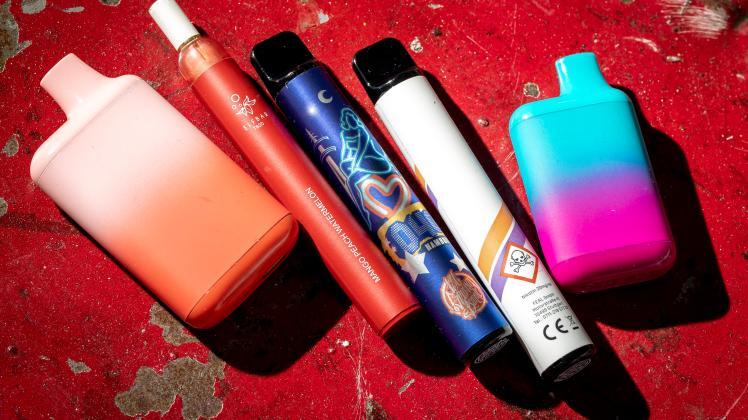
Germany’s Environment Minister Carsten Schneider has expressed clear support for banning disposable e-cigarettes, citing safety hazards, environmental damage, and waste management risks. While the ban has not yet been finalized, Germany’s parliament has instructed the government to examine the proposal. Several European countries, including Belgium, France, and the UK, have already implemented similar bans.

Key Points


  • Germany’s environment minister supports banning disposable e-cigarettes.
  • Safety risks include explosions at waste processing facilities.
  • The Bundestag has asked the government to assess a ban.
  • From July 2025, e-cigarettes can be returned to retail outlets in Germany.
  • Belgium, France, and the UK have already banned disposable vapes.


2Firsts, December 30, 2025 – According to dpa,German Federal Environment Minister Carsten Schneider has voiced strong support for banning disposable e-cigarettes, describing it as his “very clear preference.”


Schneider cited concerns related to health, environmental protection, and disposal safety. He warned that disposable e-cigarettes can explode when entering waste processing facilities, posing risks to workers and causing environmental damage.


In November, the Bundestag requested that the federal government assess the feasibility of banning disposable e-cigarettes, following a motion introduced by the CDU/CSU and SPD parliamentary groups. The Bundesrat has previously supported a ban, though the federal government raised legal concerns.


Several European countries, including Belgium, France, and the United Kingdom, have already enacted bans on disposable e-cigarettes.


From July 2025, consumers in Germany will be able to return e-cigarettes at all retail locations where they are sold. However, no deposit system is planned. Environmental organizations argue that the lack of incentives limits the effectiveness of returns and continue to advocate for a ban.


According to estimates from industry association BfTG, German consumers are expected to spend approximately €2.4 billion on e-cigarettes in 2025, with about one-tenth attributed to disposable products and the remainder to rechargeable and refillable devices.


Consumer and environmental groups have also highlighted the loss of valuable raw materials, such as lithium-cobalt oxide from built-in lithium-ion batteries, used in disposable e-cigarettes.


Image source: dpa 


We welcome news tips, article submissions, interview requests, or comments on this piece.

Please contact us at info@2firsts.com, or reach out to Alan Zhao, CEO of 2Firsts, on LinkedIn


Notice

1.  This article is intended solely for professional research purposes related to industry, technology, and policy. Any references to brands or products are made purely for objective description and do not constitute any form of endorsement, recommendation, or promotion by 2Firsts.

2.  The use of nicotine-containing products — including, but not limited to, cigarettes, e-cigarettes, nicotine pouchand heated tobacco products — carries significant health risks. Users are responsible for complying with all applicable laws and regulations in their respective jurisdictions.

3.  This article is not intended to serve as the basis for any investment decisions or financial advice. 2Firsts assumes no direct or indirect liability for any inaccuracies or errors in the content.

4.  Access to this article is strictly prohibited for individuals below the legal age in their jurisdiction.


Copyright


This article is either an original work created by 2Firsts or a reproduction from third-party sources with proper attribution. All copyrights and usage rights belong to 2Firsts or the original content provider. Unauthorized reproduction, distribution, or any other form of unauthorized use by any individual or organization is strictly prohibited. Violators will be held legally accountable.

For copyright-related inquiries, please contact: info@2firsts.com


AI Assistance Disclaimer


This article may have been enhanced using AI tools to improve translation and editorial efficiency. However, due to technical limitations, inaccuracies may occur. Readers are encouraged to refer to the cited sources for the most accurate information.

We welcome any corrections or feedback. Please contact us at: info@2firsts.com

Alabama House Health Committee advances SB9 to restrict vaping in public spaces under Clean Indoor Air Act
The Alabama House Health Committee passed Senate Bill 9 on Wednesday to restrict vaping in public areas under the state’s Clean Indoor Air Act. Introduced by Sen. Gerald Allen, SB9 would add vapes—defined as “electronic nicotine delivery systems”—to the forms of “smoking” currently prohibited in enclosed public places.
Feb.13 by 2FIRSTS.ai
PMTA Manufacturing Panel Sees Small Firms Warn “Unknown Is Death” as FDA Defends Review Boundaries
During FDA’s Feb 10 PMTA roundtable (manufacturing controls panel), small ENDS manufacturers warned that uncertainty in manufacturing expectations creates existential financial risk. FDA officials reiterated review flexibility is constrained by statutory and scientific boundaries. The panel debated testing standards, documentation requirements, open-system responsibility, supply chain changes, and software updates—highlighting unresolved PMTA challenges for small manufacturers.
Feb.11
Thailand’s National Health Commission Office Reviews Two Years of E-Cigarette Control Efforts and Plans Further Recommendations
Thailand’s National Health Commission Office and partner agencies held a public policy forum on March 13 to review results from the past two years of efforts to protect children and youth from e-cigarettes and to prepare recommendations for submission to the National Health Commission.
Mar.17 by 2FIRSTS.ai
Shanghai releases 2025 smoke-free white paper: smoking incidence at designated smoke-free venues falls to 12.6%
Shanghai released its 2025 White Paper on Smoking Control in Public Places at a city tobacco control meeting on March 5. The paper reports a 12.6% smoking incidence in legally designated smoke-free venues, down 0.4 percentage points from 2024, and says 98.2% of residents support a full indoor smoking ban.
Mar.05
South Korea Postal Service Launches Heated Tobacco Device Recycling Program Through Nationwide Post Offices and Mailboxes
Korean postal system launches nationwide heated tobacco device recycling through post offices and mailboxes, aiming to increase recycling rates.
Feb.10 by 2FIRSTS.ai
Special Report|Disposable Heated Tobacco? A China Tobacco Patent Reimagines the Heated-Tobacco Stick as a Self-Contained Product
A newly published China Tobacco patent proposes a holder-free heat-not-burn stick that integrates the filter, tobacco substrate, heating element, controller and power source into one cigarette-shaped product. It stands out not just for eliminating the external heating device, but for explicitly highlighting two less common goals in heated tobacco: restoring cigarette-like social sharing and enabling post-use recovery through a recoverable component group.
Innovation
Mar.18