Ho Chi Minh City Cracks Down on Illegal E-cigarette Cases

Regulations by 2FIRSTS.ai
May.23.2024
Ho Chi Minh City Cracks Down on Illegal E-cigarette Cases
Ho Chi Minh City authorities have discovered and seized 15,541 illegal e-cigarette products, worth over $20,000, in the past 5 months.

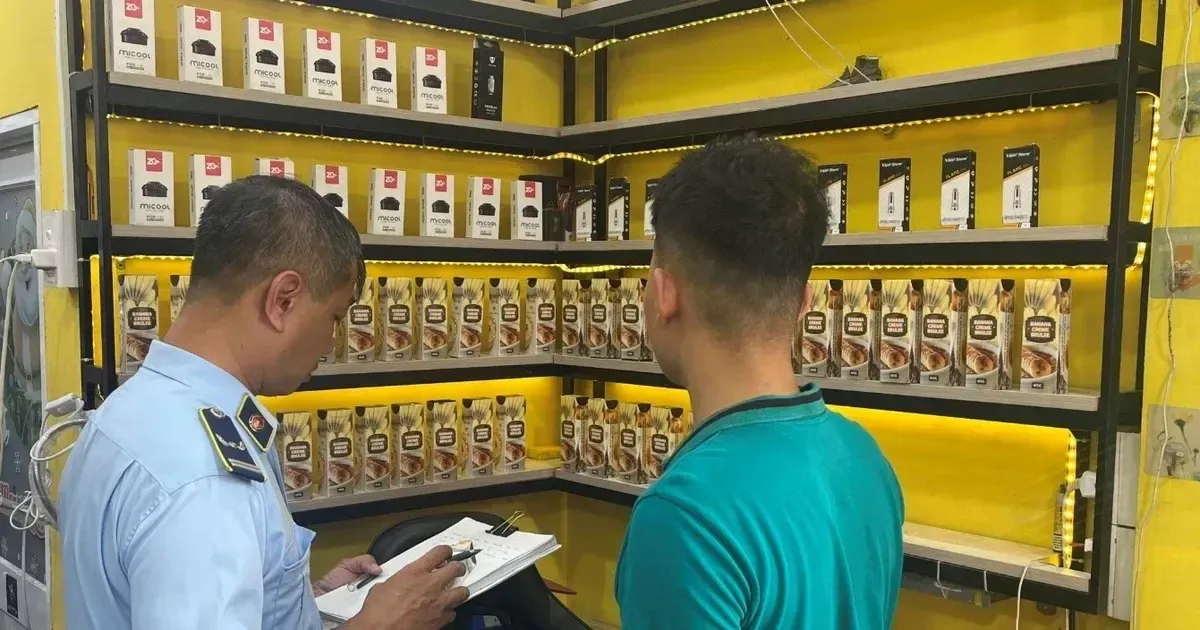
According to a report by Vietnamplus on May 23rd, authorities in Ho Chi Minh City, Vietnam have discovered and addressed 19 cases of violations related to e-cigarettes in the past 5 months, temporarily confiscating 15,541 illegal products.


In the first five months of 2024, the city's Market Management Bureau discovered, inspected, and dealt with 19 cases of e-cigarette violations, temporarily seizing 15,541 illegal products including e-cigarettes, essential oils, and accessories, with a total value exceeding 5.2 billion Vietnamese dong (approximately $20,400 USD), and imposing fines totaling 347 million Vietnamese dong (approximately $13,000 USD).


On May 16th, the 16th team of the Ho Chi Minh City Market Management Bureau inspected a warehouse in Bình Tân district of Ho Chi Minh City and temporarily seized dozens of Vapmode e-cigarettes. These e-cigarettes were equipped with essential oils produced by the brand, but did not have any invoices or proof of documentation.


The relevant official of the department stated:


In the near future, we will strengthen regional management work, specifically reviewing and strictly handling organizations and individuals engaged in illegal operation, storage, and transportation of e-cigarettes and heated tobacco products. We will also increase publicity on the harmful effects of e-cigarettes and heated tobacco use, especially targeting adolescents.


We welcome news tips, article submissions, interview requests, or comments on this piece.

Please contact us at info@2firsts.com, or reach out to Alan Zhao, CEO of 2Firsts, on LinkedIn


Notice

1.  This article is intended solely for professional research purposes related to industry, technology, and policy. Any references to brands or products are made purely for objective description and do not constitute any form of endorsement, recommendation, or promotion by 2Firsts.

2.  The use of nicotine-containing products — including, but not limited to, cigarettes, e-cigarettes, nicotine pouchand heated tobacco products — carries significant health risks. Users are responsible for complying with all applicable laws and regulations in their respective jurisdictions.

3.  This article is not intended to serve as the basis for any investment decisions or financial advice. 2Firsts assumes no direct or indirect liability for any inaccuracies or errors in the content.

4.  Access to this article is strictly prohibited for individuals below the legal age in their jurisdiction.


Copyright


This article is either an original work created by 2Firsts or a reproduction from third-party sources with proper attribution. All copyrights and usage rights belong to 2Firsts or the original content provider. Unauthorized reproduction, distribution, or any other form of unauthorized use by any individual or organization is strictly prohibited. Violators will be held legally accountable.

For copyright-related inquiries, please contact: info@2firsts.com


AI Assistance Disclaimer


This article may have been enhanced using AI tools to improve translation and editorial efficiency. However, due to technical limitations, inaccuracies may occur. Readers are encouraged to refer to the cited sources for the most accurate information.

We welcome any corrections or feedback. Please contact us at: info@2firsts.com

Philippines Weighs Unified Vape Tax as Lawmakers Back Risk-Based Rates and Government Seeks to Fill ₱66 Billion Revenue Gap
Philippine lawmakers are considering an overhaul of the country's vape excise-tax regime to eliminate the wide gap between taxes on nicotine salt and freebase nicotine liquids and reduce incentives for misdeclaration. House Bill 5364, filed by Rep. Rufus Rodriguez and Rep. Maximo Rodriguez Jr., would impose a unified ₱10-per-milliliter tax on vapor products, with 5% annual increases beginning in 2027. Rodriguez says the proposal could generate an average ₱6 billion in annual collections from 2027 through 2030. The debate comes as the Philippine government considers tobacco, vape and other health-tax reforms to help offset around ₱66 billion in revenue expected to be forgone under a proposed tax-relief package.
Aug.18
Charlie’s Says 30 PACHA Vape SKUs Tentatively Identified for FDA’s Non-Priority Enforcement Public List
Charlie’s Holdings said the U.S. Food and Drug Administration notified the company on June 23, 2026, that 30 PACHA vape SKUs with submitted PMTAs had been tentatively identified for inclusion on a planned public-facing FDA webpage. Under enforcement guidance issued by FDA in May, the webpage is intended to identify certain unauthorized products for which the agency generally does not intend to prioritize enforcement of premarket authorization requirements. Charlie’s disclosed the development alongside second-quarter revenue of $3.8 million, up 116% year over year.
Aug.25
China’s Zhengzhou Tobacco Research Institute develops end-to-end heated tobacco analysis to trace aerosol compound origins
The Zhengzhou Tobacco Research Institute of China National Tobacco Corporation has filed a patent application for an end-to-end method to analyze the migration and transformation of chemical compounds in heated tobacco products. Using GC-Orbitrap/MS non-targeted analysis, the method compares tobacco substrate and aerosol samples to distinguish compounds transferred directly from the substrate from those newly formed during heating, while also calculating transfer rates. In an example involving nine heated tobacco products, the patent identified 17 newly formed thermal decomposition compounds and 38 transferred compounds.
Aug.13
Product | BAT Launches glo Hyper pro+ in Japan, Upgrading the Hyper Platform With Faster Start and Smart Device Management
British American Tobacco Japan (BAT Japan) has introduced glo Hyper pro+, an upgraded device within the existing glo Hyper platform. The device adds QuickStart™ rapid heating technology, an EasyView™ display and maintenance notification features to improve daily usability. Launched in Japan on July 13, 2026, glo Hyper pro+ maintains compatibility with existing Hyper-format tobacco sticks, including neo, Lucky Strike and KENT.
Jul.30
China Tobacco Zhejiang files patent for pressure-triggered, on-demand oral nicotine release
China Tobacco Zhejiang Industrial Co., Ltd. has filed a patent application for an oral nicotine delivery product designed to let users actively adjust nicotine release. The product embeds two types of nicotine reservoirs with different wall thicknesses and positions inside a deformable matrix. Pressure applied with the tongue or lips can rupture the reservoirs and accelerate nicotine release. In simulated oral tests, several patent examples showed sharply higher peak nicotine release rates as applied force increased from 0 N to 1 N and 3 N. The filing explores a shift from preset release profiles toward user-triggered nicotine delivery.
Sep.01
Russia Adds Vapes to “Strategic Goods” List, Illegal Cross-Border Trade Faces Up to Five Years in Prison
Russia will place e-cigarettes and related nicotine products under its “strategic goods” framework from August 20, 2026. According to TVP World’s report published on August 19, the newly listed items include e-cigarettes, electronic smoking devices, vape liquids and nicotine salts. Individuals who illegally move these products across Russia’s customs border or its state border with other Eurasian Economic Union (EAEU) members could face up to five years in prison if shipment values exceed 100,000 rubles (about €1,000), provided all elements of a criminal offence are established.
Aug.20