Illegal Electronic Cigarettes Worth 1 Million Rubles Seized by Customs Officers

Sep.29.2022
Illegal Electronic Cigarettes Worth 1 Million Rubles Seized by Customs Officers
Customs seize illegal electronic cigarettes worth 1 million rubles in Krasnoyarsk tobacco shops.

Customs officers in Krasnoyarsk seized electronic cigarettes worth 1 million rubles.


Krasnoyarsk News reports on September 28th, 2022 at 10:51 AM.


Workers from the Krasnoyarsk Customs inspected tobacco shops in the Oktyabrsky, Central, and Sverdlovsk districts of the city. In six retail stores belonging to one entrepreneur, customs officials discovered illegal products.


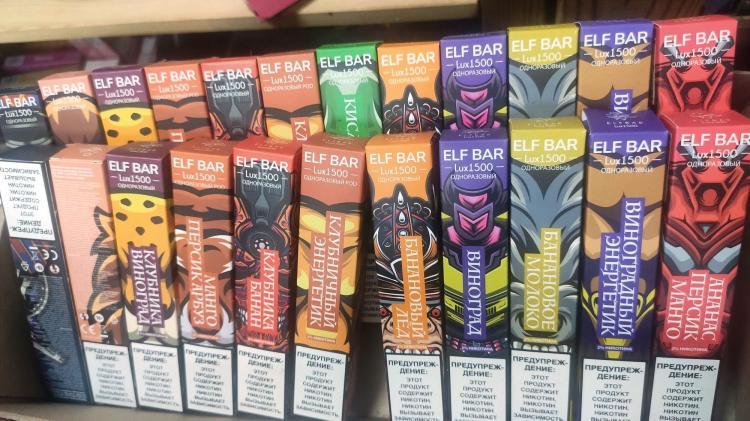
For example, 1,299 Chinese disposable e-cigarettes were found without the EAC mark during inspections, with a total cost of 1.1 million rubles. Additionally, the vendor did not provide information on customs declarations for the e-cigarettes.


The product labeling confirms that they comply with the technical regulations of the EAEU and also indicates that they have passed all required assessment procedures," said Olga Tsypysheva, the head of the service.


According to a report from the Krasnoyarsk customs public relations office, all unmarked and illegally imported goods have been confiscated and temporarily stored. The businessman and his products will undergo inspection by experts.


Illegal electronic cigarettes worth 1 million rubles were found in tobacco shops in Krasnoyarsk.


Krasnoyarsk Region, NIA-Krasnoyarsk: September 28, 2022, 10:51 AM.


Employees of the Krasnoyarsk Customs Service inspected tobacco shops in the Oktyabrsky, Central and Sverdlovsk districts of the city. In six retail outlets, customs officers discovered illegal products from one entrepreneur.


On 1,299 packages of disposable electronic cigarettes from China, there was no EAC branding. The total value of the "disposables" was 1.1 million rubles. Additionally, the entrepreneur did not have any information on customs declaration for the electronic cigarettes.


The labeling of products confirms their compliance with the technical regulations of the Eurasian Economic Union and signifies that they have successfully passed all conformity assessment procedures," noted Olga Tsypysheva, chief of the department.


The press service of the Krasnoyarsk customs reports that all unmarked and illegally imported goods have been confiscated and placed in temporary storage. Specialists will be examining both the entrepreneur and their products.


The source of this article is "24 Hours Russia," which was adapted from Krasnoyarsk News.


Disclaimer

This article is provided solely for professional research, industry discussion, and informational purposes. Any references to brands, companies, products, technologies, or policies are made for factual reporting and analytical purposes only, and do not constitute endorsement, recommendation, promotion, or advertising by 2Firsts.

Nicotine-containing products, including but not limited to cigarettes, e-cigarettes, heated tobacco products, and nicotine pouches, carry significant health risks. Readers are responsible for complying with all applicable laws and regulations in their respective jurisdictions, including age restrictions and access limitations.

The information contained in this article should not be regarded as investment, legal, medical, regulatory, or commercial advice. While 2Firsts strives to ensure the accuracy and reliability of its content, it does not assume liability for any direct or indirect loss arising from errors, omissions, inaccuracies, or reliance on the information contained herein.

This article is not intended for individuals below the legal age for accessing tobacco or nicotine-related information in their jurisdiction.


Copyright Notice

This article is either original content produced by 2Firsts or content reproduced, translated, summarized, or adapted from third-party sources with attribution where applicable. The intellectual property rights of the original content remain with 2Firsts or the respective original rights holders.

No individual or organization may copy, reproduce, distribute, republish, modify, translate, or otherwise use this content without prior authorization. Any unauthorized use may result in legal action.

For copyright-related inquiries, corrections, or removal requests, please contact: info@2firsts.com.


AI-Assisted Translation and Editing Notice

Portions of this article may have been translated, edited, or reviewed with the assistance of artificial intelligence tools to improve efficiency and readability. Due to the limitations of AI-assisted translation and editing, discrepancies, omissions, or inaccuracies may exist when compared with the original source.

Where applicable, readers are advised to refer to the original source for the most complete and accurate information. If you identify any errors or believe that any content infringes upon your rights, please contact us at info@2firsts.com, and we will review and address the matter promptly.

China Tobacco Yunnan files patent for cellulose-free nicotine pouch scaffold to replace microcrystalline cellulose
China Tobacco Yunnan Industrial Co., Ltd. has filed a patent application for a cellulose-free scaffold material for nicotine pouches, proposing a combination of bioceramic material, polydextrose and sugar alcohols to replace conventional microcrystalline cellulose and cellulose derivatives. The filing aims to address issues including powdery mouthfeel, residue and limited release control, while also reducing reliance on existing cellulose-based patent portfolios. In patent examples, one fast-release formulation reached a nicotine release rate of 50% at 10 minutes and more than 90% at 20 minutes.
Sep.02
Malaysia’s Vape Rules Face Review as Health Minister Dzulkefly Ahmad Addresses Dropped Nicotine Appeal
According to Free Malaysia Today on August 26, 2026, Malaysia’s Health Minister Dzulkefly Ahmad said the Health Ministry would explain the government’s decision to withdraw its appeal against a High Court ruling involving the exemption of liquid nicotine used in vape products from the Poisons List. The High Court previously ruled that the exemption decision was irrational. Dzulkefly said withdrawing the appeal did not mean the government would stop regulating vaping, and that future regulatory approaches would continue under existing legal frameworks.
Aug.28
Malaysia Liquid Nicotine Returns to Poisons List, Leaving Vape Retail and RM354 Million Tax Collection in Legal Uncertainty
Malaysia’s withdrawal of its appeal in a landmark liquid-nicotine case has left a High Court ruling that struck down the 2023 nicotine exemption in force, bringing liquid and gel nicotine used in vaping products back under the Poisons Act 1952. At the same time, the Control of Smoking Products for Public Health Act 2024 continues to provide a regulatory framework for vaping products, creating uncertainty over retail sales, taxation and existing inventory. MPs are calling for nicotine vape sales and excise collection to stop, including refunds of more than RM354 million collected since 2023, while industry and consumer groups are asking the government to clarify the current legal position.
Sep.04
As JUUL2 Wins FDA Authorization, Harm Reduction Journal Highlights the Role of Real-World Evidence in Nicotine Product Regulation
A commentary published in the international open-access, peer-reviewed Harm Reduction Journal argues that randomized controlled trials remain central to evaluating smoking cessation efficacy but cannot alone capture real-world uptake, complete switching, longer-term use and population impact of non-combustible nicotine products such as e-cigarettes, heated tobacco and nicotine pouches. The authors frame impact as “reach × efficacy” and call for real-world evidence to complement RCTs. Three days after publication, the FDA authorized three JUUL2 products and highlighted complete switching among adult smokers in explaining its decision, providing a timely regulatory backdrop to the debate.
Sep.08
NAS 2026 | Cliff Douglas: Risk Continuum Should Play a Central Role in Tobacco Policy
Cliff Douglas, a veteran U.S. tobacco-control and public health policy figure, told NAS 2026 that the “continuum of risk” should play a central role in tobacco policy. He called for clearer market pathways, stronger risk communication, differentiated regulation and enforcement, and said possible FDA reforms to PMTA reviews could be a “welcome correction” if they create a more efficient, predictable route for scientifically substantiated lower-risk products. Read 2Firsts’ on-site coverage.
Sep.26
Smoore Seeks to Toss CCELL Price-Fixing Claim as Court Weighs Vertical Distribution Versus Horizontal Conspiracy
Smoore and four authorized U.S. CCELL distributors are asking a California federal court to permanently dismiss a core antitrust claim brought by direct purchasers. Plaintiffs allege that Smoore coordinated minimum wholesale prices, customer allocation and limits on price competition among distributors, amounting to a per se unlawful horizontal conspiracy. The defendants say the alleged conduct reflects ordinary vertical relationships between a manufacturer and its distributors. The court previously dismissed a similar claim, and the latest dispute centers on whether the second amended complaint adds sufficient facts to establish a horizontal agreement.
Sep.14