Indonesian Presidential Candidate Exploring Potential of Tobacco Downstream in Central Java

Regulations by 2FIRSTS.ai
Dec.27.2023
Indonesian Presidential Candidate Exploring Potential of Tobacco Downstream in Central Java
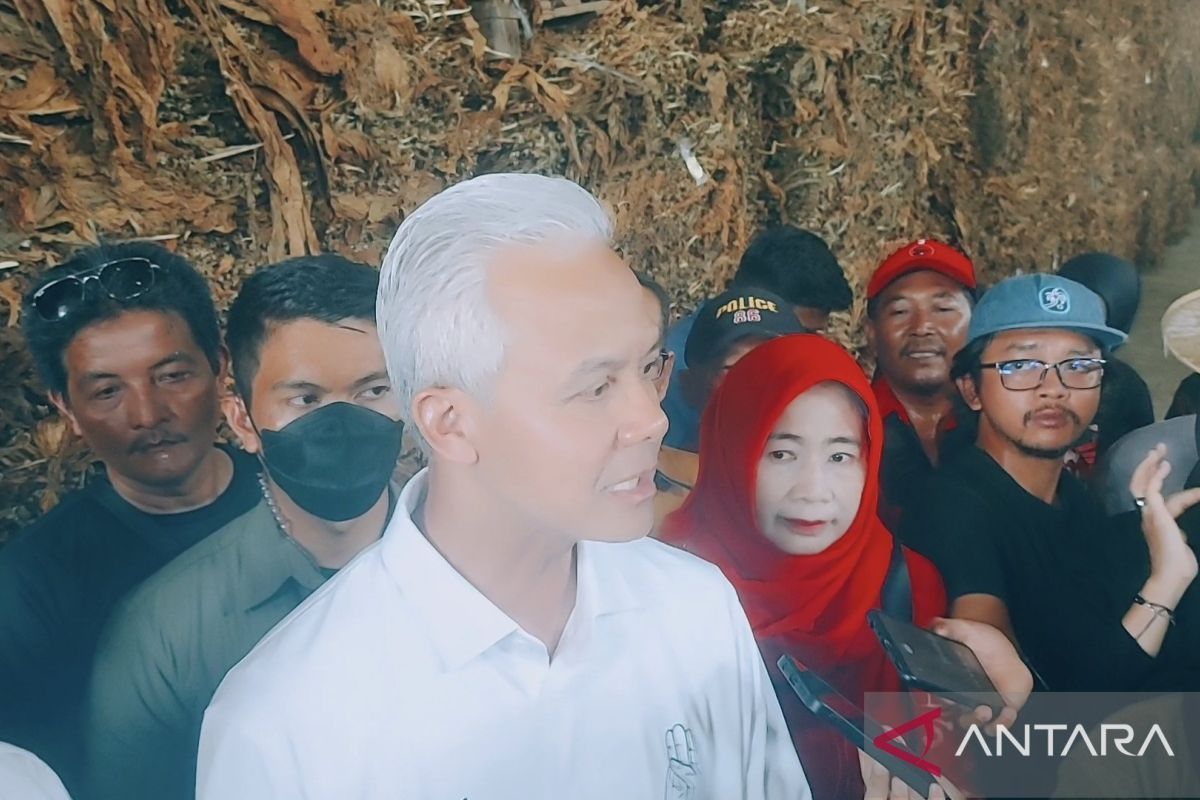
Ganjar Pranowo, Indonesian presidential candidate, explores the potential for tobacco downstreaming in Klaten, Central Java.

According to Indonesian media outlet ANTARA's report on December 27th, presidential candidate Ganjar Pranowo discussed the possibility of enhancing downstream research on tobacco during his visit to Warehouse 45 in Klaten Regency, Central Java. The aim is to explore the potential of transforming tobacco into various products beyond cigarettes, such as cosmetics and pharmaceuticals.


According to a report by ANTARA on November 23rd, Pranowo visited Kraden directly to gather insights from farmers, entrepreneurs, and the local community regarding tobacco products. He stated that as long as there is research, we can use tobacco for any purpose. He hopes that tobacco farmers in Kraden can learn from certain regions in Central Java, which are able to export high-quality tobacco and make it a major product in the agricultural sector.


We welcome news tips, article submissions, interview requests, or comments on this piece.

Please contact us at info@2firsts.com, or reach out to Alan Zhao, CEO of 2Firsts, on LinkedIn


Notice

1.  This article is intended solely for professional research purposes related to industry, technology, and policy. Any references to brands or products are made purely for objective description and do not constitute any form of endorsement, recommendation, or promotion by 2Firsts.

2.  The use of nicotine-containing products — including, but not limited to, cigarettes, e-cigarettes, nicotine pouchand heated tobacco products — carries significant health risks. Users are responsible for complying with all applicable laws and regulations in their respective jurisdictions.

3.  This article is not intended to serve as the basis for any investment decisions or financial advice. 2Firsts assumes no direct or indirect liability for any inaccuracies or errors in the content.

4.  Access to this article is strictly prohibited for individuals below the legal age in their jurisdiction.


Copyright


This article is either an original work created by 2Firsts or a reproduction from third-party sources with proper attribution. All copyrights and usage rights belong to 2Firsts or the original content provider. Unauthorized reproduction, distribution, or any other form of unauthorized use by any individual or organization is strictly prohibited. Violators will be held legally accountable.

For copyright-related inquiries, please contact: info@2firsts.com


AI Assistance Disclaimer


This article may have been enhanced using AI tools to improve translation and editorial efficiency. However, due to technical limitations, inaccuracies may occur. Readers are encouraged to refer to the cited sources for the most accurate information.

We welcome any corrections or feedback. Please contact us at: info@2firsts.com

Bangladesh High Court Questions Legality of BEZA’s Approval for Philip Morris Nicotine Pouch Factory
The High Court in Bangladesh has asked government bodies to explain why the approval granted to Philip Morris to establish a nicotine pouch factory should not be deemed illegal. Petitioners argue the decision contradicts existing policies and a 2016 Appellate Division ruling that restricts new tobacco-related enterprises. Authorities have ten days to respond.
Nov.20 by 2FIRSTS.ai
WHO MOP4 Focuses on Justice and Prosecution to Combat Illicit Tobacco Trade
The Fourth Meeting of the Parties (MOP4) to the Protocol to Eliminate Illicit Trade in Tobacco Products opened in Geneva on November 24, 2025. With 60 Parties participating, the meeting focuses on strengthening legal action and international cooperation to combat illicit trade, which accounts for about 11% of the global tobacco market and costs governments billions in lost tax revenue.
Nov.25 by 2FIRSTS.ai
Product | FLONQ Parent Company Launches New Vaping Brand ROQY: Two Hybrid-Nicotine Devices Debut in Russia
Alfabet Labs, the parent company of FLONQ, has recently launched its new vaping brand ROQY in Russia, debuting two products: ROQY L and ROQY M. Both devices use a hybrid nicotine formulation combining nicotine salts and freebase nicotine and are each available in 19 flavors. The two products are now on sale via the official ROQY website as well as multiple online and offline retailers across Russia.
Nov.19 by 2FIRSTS.ai
South Korea Implements Law Requiring Full Disclosure of Tobacco Harmful Substances
South Korea has enacted the Tobacco Harm Management Act, effective November 1, 2025, requiring tobacco manufacturers and importers to test and report harmful substances in their products every two years. Results for all tobacco types—including combustible cigarettes, heated tobacco, and e-cigarettes—will be publicly available from mid-2026.
Nov.04 by 2FIRSTS.ai
UK Experts Raise Concerns Over High-Dose Nicotine Pouches Amid Rising Sales
According to The Guardian, health experts in the UK are warning about the potential health effects of high-dose nicotine pouches as their sales continue to rise. Recent studies show teenagers reporting nicotine rushes, sickness and fainting, while researchers say packaging and marketing increasingly appeal to younger age groups. Although viewed as less harmful than cigarettes, experts remain concerned about their use among non-smokers, especially adolescents.
Nov.13 by 2FIRSTS.ai
Special Report | Anti-Vaping Campaign in the Baltics Goes Sideways
2Firsts analyzes vaping regulations across the Baltic states. Following Latvia’s flavor ban, tax revenues fell and the black market expanded, while similar measures in Estonia and Lithuania have also failed to deliver results. The region’s anti-vaping policies are now triggering market imbalance and policy reassessment.
Oct.13