Initiatives from El Salvador, Mexico, and the United States of America recognized with World No Tobacco Day Awards

Events
Jun.13.2022

Washington D.C. May 27 2022 (PAHO) – A tobacco control advocate in El Salvador, Violeta de Palomo, the President of Mexico, Andres Manuel Lopez Obrador, and a researcher and academic from the United States of America, Thomas Novotny, received the 2022 World No Tobacco Day (WNTD) Awards.

The winners, selected by the World Health Organization (WHO) from global nominations in response to a public call, have been recognized for their efforts to ensure progress towards tobacco control in their countries.
Initiatives from El Salvador, Mexico, and the United States of America recognized with World No Tobacco Day Awards

In El Salvador, Violeta de Palomo won the award for her work with Fundahabla, an organization she founded in 2014 to provide health care, psychological support, speech therapy, and rehabilitation for people with laryngeal cancer. As a leader of the anti-tobacco movement in El Salvador, Violeta also coordinates the @sumatecontraeltabaco initiative to ensure 100% smoke-free public spaces, support for smoking cessation, and advocacy for increasing taxes on tobacco products.


In Mexico, President Andres Manuel Lopez Obrador received the WHO Director-General’s Special Recognition Award for his leadership and unwavering support for strengthening tobacco control measures in his country. His efforts led to the unanimous approval of the reform of the General Law for Tobacco Control in 2021, which has resulted in a complete ban on tobacco advertising, promotion and sponsorship, as well as the creation of smoke-free environments throughout the country. Over the course of the past year, Lopez Obrador has reaffirmed the importance of tobacco control, ensuring that the right to health of all Mexicans supersedes the interests of the tobacco industry.


In the United States, Thomas Novotny, Professor Emeritus at San Diego State University School of Public Health, won the award in recognition of his research and advocacy around the environmental impact of tobacco, particularly regarding post-consumer waste such as filters. Novotny is a founding member of the Cigarette Butt Pollution Project (CBPP), an organization that campaigns against the environmental impact of tobacco products, particularly cigarette butts.

World No Tobacco Day was created by WHO Member States in 1987 and is commemorated each year on 31 May. The aim of the day is to raise awareness of the harmful effects of tobacco use and second-hand smoke exposure.


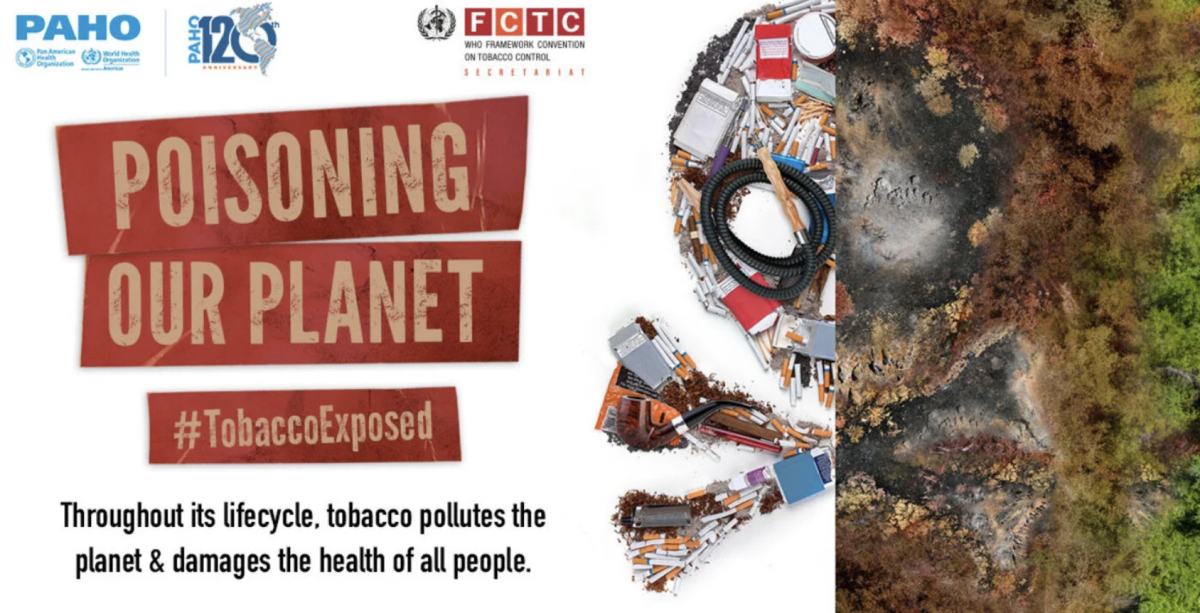
The theme of World Not Tobacco Day 2022 is “Poisoning our planet”. Tobacco kills over 8 million people every year and destroys the environment, further harming human health through its cultivation, production, distribution, consumption, and through post-consumer waste.


Also read:

Juul Gets Temporary Reprieve to Keep Selling Its E-Cigarettes

Will the new Juul ban help Colorado’s high teen vape use?

Philippine public health groups urge an absolute ban on e-cigarettes and heated tobacco products
Public health groups in the Philippines are urging the government to impose an absolute ban on e-cigarettes, heated tobacco products, and other nicotine delivery products, citing health harms and increasing accessibility among youth. The call follows Myanmar’s move to become the eighth ASEAN country to implement a total vape ban and comes as the Philippine Congress deliberates tobacco and vape taxation.
Feb.28 by 2FIRSTS.ai
PMI Faces Setback in India: Global Regulatory Fragmentation Complicates Its Smoke-Free Transition
India has reaffirmed its 2019 ban on e-cigarettes and heated tobacco devices, effectively blocking Philip Morris International (PMI) from launching IQOS in the country despite years of lobbying. Together with Taiwan, China’s conditional opening of heated tobacco products, and Japan’s planned 2026 excise tax hikes, these moves highlight increasingly divergent national regulatory pathways—an external uncertainty shaping PMI’s smoke-free growth trajectory.
Feb.12
DTI drafts administrative order proposing an open-pod and e-liquid ban and opens it for public consultation
Department of Trade and Industry’s (DTI) proposed move to restrict harmful vape products to protect young people, but said only a total ban on all vaping and novel tobacco products would effectively safeguard public health. The group warned that limiting rules to certain products such as open pods and e-liquids could create a “dangerous behavioral loophole,” leading users—especially youth—to switch to disposable or closed-system alternatives instead of quitting.
Feb.10 by 2FIRSTS.ai
EVO NXT: two days, four zones, countless opportunities
Mar.30
Special Report | Breeze and Glas Seek White House Review as FDA Advances Flavored ENDS Guidance
Breeze Smoke and Glas, Inc. have separately requested White House review under Executive Order 12866 as the FDA advances draft guidance on flavored ENDS (RIN 0910-ZC78). The guidance aims to clarify evidentiary standards under the statutory “appropriate for the protection of public health” (APPH) framework. The parallel filings highlight industry concern over regulatory predictability, particularly as Glas’s PMTA review status has recently drawn market attention.
Special Report
Mar.03
Special Report | New Patents Show China Tobacco Hubei Industrial Testing Gas-Releasing Nicotine Pouches
Newly published patent filings indicate that China Tobacco Hubei Industrial Co., Ltd., a subsidiary of China National Tobacco Corporation (CNTC), is exploring nicotine pouch technologies capable of releasing gas during oral use. The designs include carbon-dioxide microcapsules that burst in the mouth and effervescent systems that generate gas through chemical reactions with saliva, suggesting efforts to introduce new sensory dynamics into modern oral nicotine products.
News
Mar.04