Kentucky lawmaker proposes directing Juul settlement funds to youth vaping prevention

Jan.14
Kentucky lawmaker proposes directing Juul settlement funds to youth vaping prevention
A Kentucky state senator has filed Senate Bill 74 to steer settlement money the Commonwealth received from vaping manufacturer Juul Labs into youth vaping prevention and cessation efforts.

Key Takeaways


• Location: Frankfort, Kentucky, United States

• Sponsor: Sen. Craig Richardson (R-Hopkinsville)

• Bill: Senate Bill 74

• Settlement amount cited: Kentucky has received more than $14 million from a multistate Juul settlement

• Current status cited: no requirement on how funds must be spent; funds not specifically allocated to youth prevention

• Proposal: create a Vaping Settlement Trust Fund for future Juul proceeds

• Intended use: youth vaping prevention and cessation via the Department for Public Health’s Tobacco Prevention and Cessation Program


2Firsts, January 14, 2026 – According to FOX 56, a Kentucky lawmaker wants the state to consider using settlement funds received by the Commonwealth from vaping manufacturer Juul Labs to fund youth vaping prevention efforts.


The report says Sen. Craig Richardson, R-Hopkinsville, filed Senate Bill 74. According to the Senate Majority Caucus, Kentucky has received more than $14 million in a multistate settlement related to Juul’s targeted marketing practices aimed at children and young adults. The report adds that the settlement did not include any requirement directing how those funds must be spent.


Officials reportedly said the settlement money has not been specifically allocated to anti-vaping or youth prevention efforts. SB 74 seeks to address that by creating the Vaping Settlement Trust Fund. Under the bill, future settlement proceeds received from Juul Labs would be deposited into the fund and directed exclusively toward youth vaping prevention and cessation initiatives.


The report says funds in the trust would be used solely by the Tobacco Prevention and Cessation Program within the Department for Public Health to support education, prevention, and cessation efforts aimed at reducing youth nicotine use.


“Kentucky held Juul accountable for its role in the youth vaping crisis, but the settlement itself did not guarantee those dollars would be used to protect kids,” Richardson said. “This bill provides that direction and accountability by ensuring the money is invested where it can do the most good.”


Doug Hogan, government relations director at the American Cancer Society Cancer Action Network, was also quoted as supporting the approach, saying directing future Juul settlement funds to tobacco prevention would help address e-cigarette use and protect middle and high school students from addictive tobacco products.


The report says SB 74 seeks to ensure settlement dollars tied to youth vaping are not used for unrelated spending, but instead are used to educate younger generations about the dangers of smoking.


Photo credit: FOX 56


We welcome news tips, article submissions, interview requests, or comments on this piece.

Please contact us at info@2firsts.com, or reach out to Alan Zhao, CEO of 2Firsts, on LinkedIn


Notice

1.  This article is intended solely for professional research purposes related to industry, technology, and policy. Any references to brands or products are made purely for objective description and do not constitute any form of endorsement, recommendation, or promotion by 2Firsts.

2.  The use of nicotine-containing products — including, but not limited to, cigarettes, e-cigarettes, nicotine pouchand heated tobacco products — carries significant health risks. Users are responsible for complying with all applicable laws and regulations in their respective jurisdictions.

3.  This article is not intended to serve as the basis for any investment decisions or financial advice. 2Firsts assumes no direct or indirect liability for any inaccuracies or errors in the content.

4.  Access to this article is strictly prohibited for individuals below the legal age in their jurisdiction.


Copyright


This article is either an original work created by 2Firsts or a reproduction from third-party sources with proper attribution. All copyrights and usage rights belong to 2Firsts or the original content provider. Unauthorized reproduction, distribution, or any other form of unauthorized use by any individual or organization is strictly prohibited. Violators will be held legally accountable.

For copyright-related inquiries, please contact: info@2firsts.com


AI Assistance Disclaimer


This article may have been enhanced using AI tools to improve translation and editorial efficiency. However, due to technical limitations, inaccuracies may occur. Readers are encouraged to refer to the cited sources for the most accurate information.

We welcome any corrections or feedback. Please contact us at: info@2firsts.com

As JUUL2 Wins FDA Authorization, Harm Reduction Journal Highlights the Role of Real-World Evidence in Nicotine Product Regulation
A commentary published in the international open-access, peer-reviewed Harm Reduction Journal argues that randomized controlled trials remain central to evaluating smoking cessation efficacy but cannot alone capture real-world uptake, complete switching, longer-term use and population impact of non-combustible nicotine products such as e-cigarettes, heated tobacco and nicotine pouches. The authors frame impact as “reach × efficacy” and call for real-world evidence to complement RCTs. Three days after publication, the FDA authorized three JUUL2 products and highlighted complete switching among adult smokers in explaining its decision, providing a timely regulatory backdrop to the debate.
Sep.08
Special Report | Can Nicotine Be Replaced? 6-MN Is Already on the Market While Key Human Evidence Is Still Missing
Nicotine analogues such as 6-methylnicotine are already appearing in e-cigarettes and oral pouches, even as key human evidence remains limited. A new Nixodine-S study adds nonclinical data showing differences from nicotine in cytotoxicity and receptor activity, while independent studies point to a more complex toxicological picture. With supply-chain activity growing and FDA seeking clearer authority over nicotine analogues, the industry now faces a larger question: what evidence is needed before these substances can credibly replace nicotine?
SCIENCE
Sep.23
NAS 2026 | Cliff Douglas: Risk Continuum Should Play a Central Role in Tobacco Policy
Cliff Douglas, a veteran U.S. tobacco-control and public health policy figure, told NAS 2026 that the “continuum of risk” should play a central role in tobacco policy. He called for clearer market pathways, stronger risk communication, differentiated regulation and enforcement, and said possible FDA reforms to PMTA reviews could be a “welcome correction” if they create a more efficient, predictable route for scientifically substantiated lower-risk products. Read 2Firsts’ on-site coverage.
Sep.26
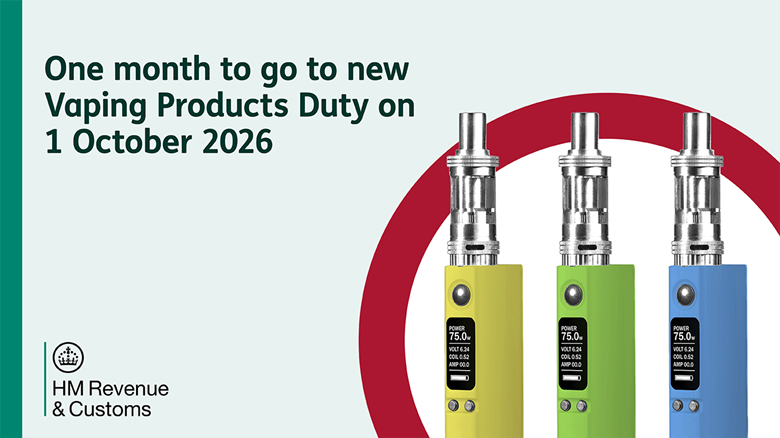
UK HMRC Issues One-Month Countdown Warning, Urges Vape Businesses to Prepare for New Tax Rules
The UK’s Vaping Products Duty and Vaping Duty Stamps Scheme will take effect on October 1, 2026. All vaping liquids manufactured in or imported into the UK will face a flat excise duty of £2.20 per 10ml, whether or not they contain nicotine. Newly manufactured or imported products released onto the UK market from October 1 will require a valid duty stamp, while eligible existing unstamped inventory can continue to be sold through March 31, 2027. From April 1, 2027, all vaping products outside duty suspension must carry a valid stamp.
Sep.03
China Tobacco Plans CNY 60 Billion Investment in ICBC, Agricultural Bank as Strategic Ties Extend Beyond Equity
China National Tobacco Corporation and several subsidiaries plan to invest a combined CNY 60 billion ($8.7 billion) in share placements by Industrial and Commercial Bank of China and Agricultural Bank of China as strategic investors. The agreements extend beyond equity investment to corporate governance, banking services and supply-chain finance. The filings also disclose 2025 data on China Tobacco’s tax and profit contributions and industry scale.
Sep.07
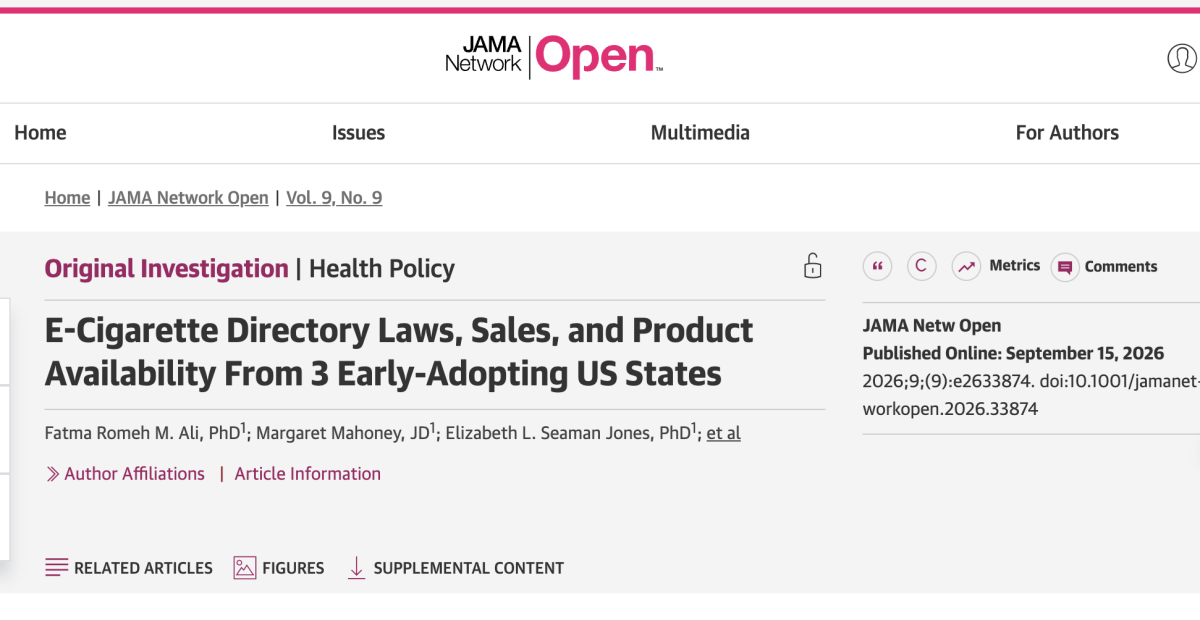
JAMA Study: U.S. Vape Directories Fail to Sustainably Curb Unlisted Sales as Product Shifts May Redistribute Brand Share 2Firsts Recommended
A study by CDC Foundation researchers found no sustained decline in e-cigarette sales across Alabama, Oklahoma and Louisiana, the first three U.S. states to implement e-cigarette directory laws. Louisiana initially saw a significant sales decline, followed by a rebound and a persistent reduction in product availability. Sales also shifted from nontobacco-flavored disposables toward prefilled cartridges, with Vuse Alto driving much of the increase in menthol cartridges. By April 2025, unlisted products still accounted for more than half of e-cigarette nicotine sales in all three states.
Sep.18