Kyrgyzstan Plans to Increase Minimum Prices for Tobacco Products

Sep.29.2024
Kyrgyzstan Plans to Increase Minimum Prices for Tobacco Products
Kyrgyzstan plans to increase the minimum wholesale retail prices for tobacco and nicotine products, aiming to improve public health.

According to a report by The Economist on September 27th, Kyrgyzstan plans to increase the minimum wholesale retail prices of tobacco and nicotine-containing products.


According to reports, the cabinet of Kyrgyzstan has issued a relevant resolution and is seeking public feedback. The resolution aims to increase national budget revenues and reduce citizens' consumption of harmful products to improve public health.


The resolution proposes minimum price standards for four categories of tobacco and nicotine-containing products.


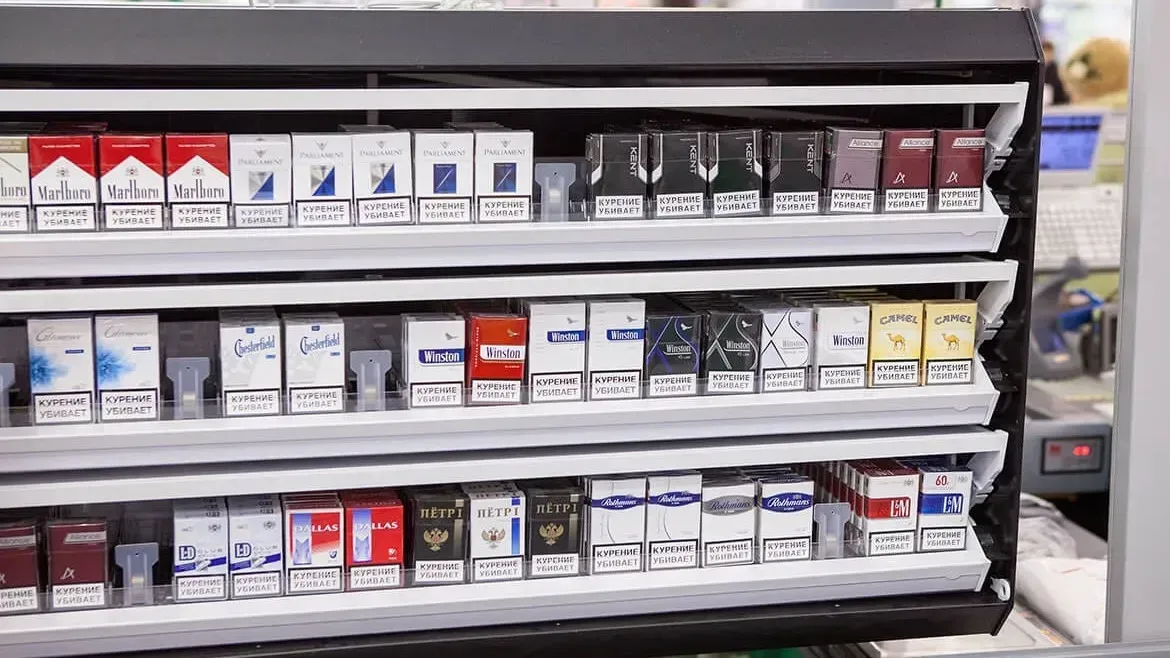
Cigarettes with filtered and unfiltered tips, as well as small cigars, are available for a minimum price of 110 som (1.3 USD) for a pack of 20. Heating tobacco products, such as pods, are also priced at 110 som (1.3 USD) for a pack of 20. Disposable e-cigarettes are priced at 350 som (4 USD) each, while e-cigarettes and similar devices are priced at 1500 som (18 USD) each.


We welcome news tips, article submissions, interview requests, or comments on this piece.

Please contact us at info@2firsts.com, or reach out to Alan Zhao, CEO of 2Firsts, on LinkedIn


Notice

1.  This article is intended solely for professional research purposes related to industry, technology, and policy. Any references to brands or products are made purely for objective description and do not constitute any form of endorsement, recommendation, or promotion by 2Firsts.

2.  The use of nicotine-containing products — including, but not limited to, cigarettes, e-cigarettes, nicotine pouchand heated tobacco products — carries significant health risks. Users are responsible for complying with all applicable laws and regulations in their respective jurisdictions.

3.  This article is not intended to serve as the basis for any investment decisions or financial advice. 2Firsts assumes no direct or indirect liability for any inaccuracies or errors in the content.

4.  Access to this article is strictly prohibited for individuals below the legal age in their jurisdiction.


Copyright


This article is either an original work created by 2Firsts or a reproduction from third-party sources with proper attribution. All copyrights and usage rights belong to 2Firsts or the original content provider. Unauthorized reproduction, distribution, or any other form of unauthorized use by any individual or organization is strictly prohibited. Violators will be held legally accountable.

For copyright-related inquiries, please contact: info@2firsts.com


AI Assistance Disclaimer


This article may have been enhanced using AI tools to improve translation and editorial efficiency. However, due to technical limitations, inaccuracies may occur. Readers are encouraged to refer to the cited sources for the most accurate information.

We welcome any corrections or feedback. Please contact us at: info@2firsts.com

China’s E-cigarette Exports Reach $1.694 Billion in Jan–Feb 2026; U.S., UK, Germany Lead, Japan Rises to Fourth
China Customs Administration released e-cigarette export data for January and February 2025, showing varied monthly performances in 2026.In January, the export value was $940 million, a decrease of 6.2% compared to January 2025's $1.02 billion. In February, the export value was $754 million, a 51.2% increase compared to February 2025's $498 million.
Mar.20 by 2FIRSTS.ai
Japan Says Heated Tobacco and E-Cigarette Use Is a Key Factor Behind Rising In-Flight Smoking
Japan’s transport ministry said on April 14 that major Japanese airlines reported 429 passenger smoking incidents on domestic and international flights in 2025, the highest level since comparable data collection began in 2004. The government said the spread of heated tobacco products and e-cigarettes was an important factor behind the increase. Japan plans to work with airlines to raise public awareness of fire risks on aircraft.
Apr.14 by 2FIRSTS.ai
Virginia Attorney General Backs Vape Enforcement Act Limiting Sales to FDA-Authorized or Pending Products
Virginia Attorney General Jay Jones is backing new vape enforcement legislation that he said would do more than warn people about the dangers of vaping. The proposal would tighten rules on which products can be sold and increase enforcement aimed at keeping vapes out of the hands of young people.
Mar.24 by 2FIRSTS.ai
BAT France Confirms Full Compliance as France Implements Nicotine Pouch Ban on April 1from April 2026
BAT France said that, under the decree of September 5, 2025 that entered into force on April 1, 2026, it has stopped commercialising its nicotine pouch products in France from that date.
Apr.03 by 2FIRSTS.ai
Australia’s Tasmania Tables New Bill to Strengthen Crackdown on Illicit Tobacco and Vapes
The Tasmanian government has tabled the Public Health Amendment (Prohibited Tobacco and Other Products) Bill 2026 in Parliament, proposing new offences, higher penalties and stronger enforcement powers to crack down on illicit tobacco and vaping products.
Mar.25 by 2FIRSTS.ai
IMF Article Sets Out Three Principles: Cover All Harmful Products, Match Tax Rates to Harm, Improve Cross-Border Coordination
A March 2026 article in Finance & Development, “Taxing Harmful Habits,” argues that taxes on harmful products such as tobacco, alcohol and sugary drinks should better reflect the health harm they cause. The authors propose three principles: capture all harmful products, align tax rates with health harm, and strengthen cross-border coordination to reduce evasion and smuggling.
Mar.24 by 2FIRSTS.ai