Latvia Imposes Fines for Minors' Possession of E-cigarettes

Regulations by 2FIRSTS.ai
Nov.17.2023
Latvia Imposes Fines for Minors' Possession of E-cigarettes
Latvia government equates e-cigarettes with cigarettes, imposing fines on minors and adults for purchasing and sharing them.

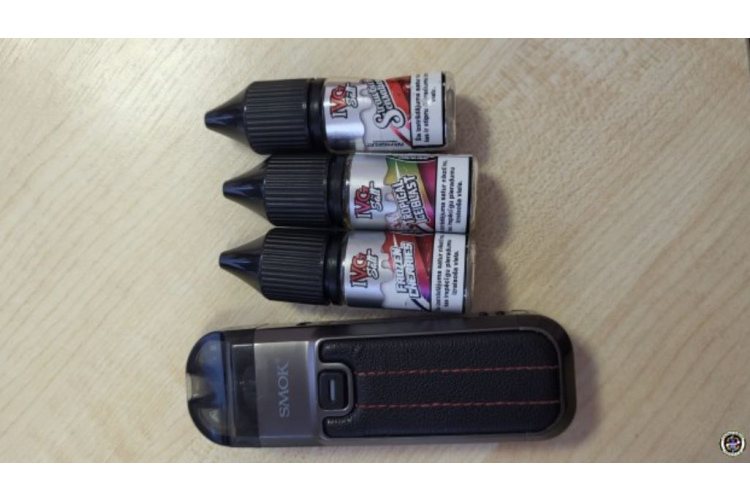
According to a news report from Latvia's media outlet Reitingi on November 15th, the Latvian government has enacted a Tobacco Products Act that equates e-cigarettes with regular cigarettes. As a result, minors may be subject to fines for purchasing, using, or possessing e-cigarettes and their cartridges, even if they simply pick them up off the ground.


Adults who purchase e-cigarettes and share them with minors will face fines ranging from 35 to 200 euros (approximately 275 to 1572 RMB). The maximum penalty for selling tobacco products and e-cigarettes to minors is 280 to 350 euros (approximately 2201 to 2751 RMB) for individuals and 400 to 700 euros (approximately 3144 to 5503 RMB) for corporations.


We welcome news tips, article submissions, interview requests, or comments on this piece.

Please contact us at info@2firsts.com, or reach out to Alan Zhao, CEO of 2Firsts, on LinkedIn


Notice

1.  This article is intended solely for professional research purposes related to industry, technology, and policy. Any references to brands or products are made purely for objective description and do not constitute any form of endorsement, recommendation, or promotion by 2Firsts.

2.  The use of nicotine-containing products — including, but not limited to, cigarettes, e-cigarettes, nicotine pouchand heated tobacco products — carries significant health risks. Users are responsible for complying with all applicable laws and regulations in their respective jurisdictions.

3.  This article is not intended to serve as the basis for any investment decisions or financial advice. 2Firsts assumes no direct or indirect liability for any inaccuracies or errors in the content.

4.  Access to this article is strictly prohibited for individuals below the legal age in their jurisdiction.


Copyright


This article is either an original work created by 2Firsts or a reproduction from third-party sources with proper attribution. All copyrights and usage rights belong to 2Firsts or the original content provider. Unauthorized reproduction, distribution, or any other form of unauthorized use by any individual or organization is strictly prohibited. Violators will be held legally accountable.

For copyright-related inquiries, please contact: info@2firsts.com


AI Assistance Disclaimer


This article may have been enhanced using AI tools to improve translation and editorial efficiency. However, due to technical limitations, inaccuracies may occur. Readers are encouraged to refer to the cited sources for the most accurate information.

We welcome any corrections or feedback. Please contact us at: info@2firsts.com

PMI says it submitted evidence to FDA panel backing ZYN bid for modified-risk status
Philip Morris International said it presented scientific evidence to the U.S. Food and Drug Administration’s Tobacco Products Scientific Advisory Committee to support its ZYN nicotine pouches seeking a modified risk tobacco product designation, which would allow the company to communicate to adult smokers that switching completely to ZYN could reduce the risk of multiple smoking-related diseases.
Jan.26 by 2FIRSTS.ai
Malaysia moves ahead with vape sales ban plan; PMI urges Japan-style differentiated excise taxes
Malaysia plans to implement a ban or restrictions on e-cigarettes and vaping products as early as mid-2026 and no later than year-end. The head of Philip Morris Malaysia and Singapore said the government should look to Japan’s approach of regulating and taxing different tobacco and nicotine products differently, warning that an outright ban could push demand into illicit channels.
Feb.02
Comedian Shuib fined  US$2,460 after pleading guilty to promoting an e-cigarette on a podcast
Comedian Shuib fined US$2,460 after pleading guilty to promoting an e-cigarette on a podcast
Bernama reported that comedian Shahmira Muhamad, better known as Shuib Sepahtu, was fined RM10,000 (about US$2,460.93) after pleading guilty to promoting an electronic cigarette product on a YouTube podcast in 2024. The magistrate ordered one month’s jail in default of payment, and he paid the fine. He was charged over a promotion at 4.26pm on Oct 22, 2024, under Section 9(1) of the Control of Smoking Products for Public Health Act 2024 (Act 852).
Jan.08 by 2FIRSTS.ai
China Business Journal Reports: Multiple New E-Cigarette Policies Enter Public Consultation Phase in China, Covering Capacity Control and Credit Management
China Business Journal, citing a review of policy documents released by the State Tobacco Monopoly Administration in early 2026, said China’s latest e-cigarette rules target credit-based regulation, capacity controls and national standards revisions.Alan Zhao, co-founder of 2Firsts, said tighter oversight will speed consolidation, curb noncompliance and reduce destructive competition.
Jan.12 by 2FIRSTS.ai
Report Says Teen e-cigarette use on the rise, with majority of sales coming from disposable products
Monitoring a Changing Tobacco Product Market in the United States is the second annual review from the Monitoring Tobacco Product Use project, analyzing retail scanner data from January 2019 to December 2024 and TEEN+ survey data.
Jan.07 by 2FIRSTS.ai
Poland to ban “characterising flavours” in heated tobacco sticks from Jan. 18, 2026
Poland will implement an amended health protection law on January 18, 2026, restricting the availability of tobacco inserts used in heated tobacco devices. The new rules prohibit products with a “characterising flavour,” meaning a clearly noticeable taste or smell other than tobacco, derived from additives and detectable before or during use.
Jan.20 by 2FIRSTS.ai