Philip Morris Faces Zyn Lawsuit: A Closer Look at Their Deceptive Marketing

Regulations by 2FIRSTS.ai
Mar.13.2024
Philip Morris Faces Zyn Lawsuit: A Closer Look at Their Deceptive Marketing
Schmidt National Law Group, a San Diego-based firm, initiates legal action against Philip Morris, accusing the company of deliberately marketing Zyn nicotine pouches to underage audiences.

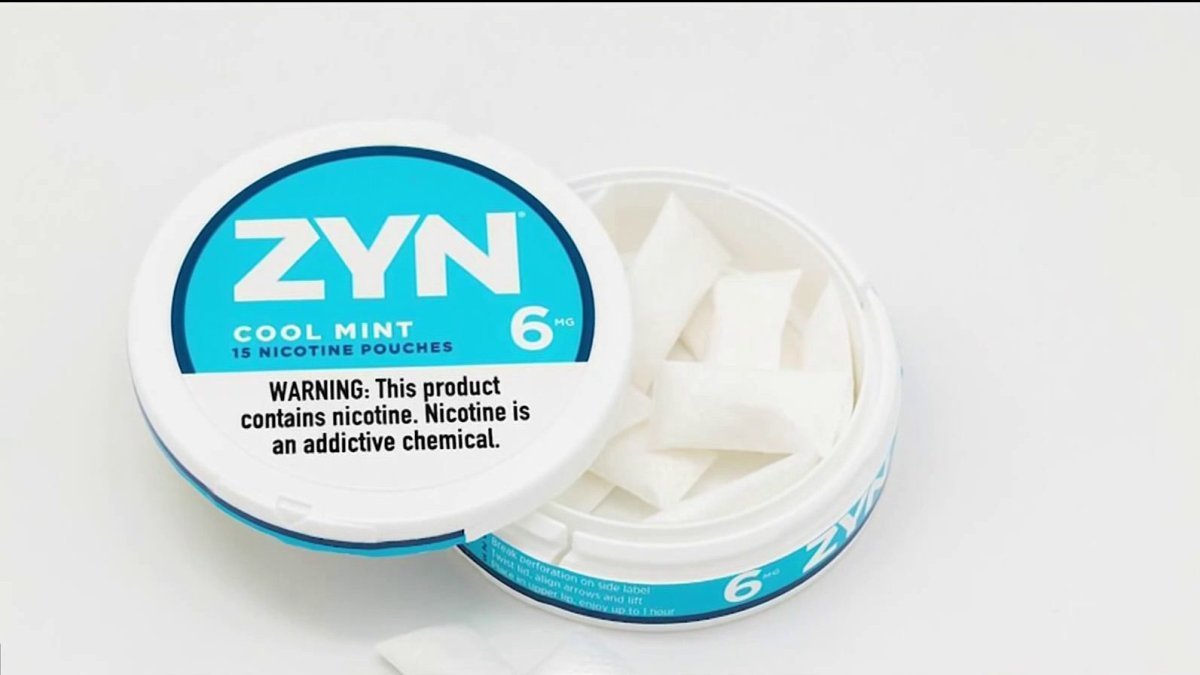
According to NBC San Diego on March 13th, the law firm Schmidt National Law Group in San Diego, California has filed a lawsuit against Zyn's manufacturer, Philip Morris, alleging that PMI is using deceptive marketing tactics to addict young people.


Martin Schmidt, owner of the firm, stated that with the introduction of Zyn, all these nicotine products share a common feature: they are targeted towards children, I mean children, middle school students, high school students, getting younger and younger.


Schmidt stated that one must be at least 21 years old to legally purchase the product, but it is still easily accessible to those under 21. The class action lawsuit seeks to obtain damages from PMI, and Schmidt expressed his desire for stricter restrictions on the product.


However, some people claim that Zyn is a safer alternative and it has become popular among college students.


We welcome news tips, article submissions, interview requests, or comments on this piece.

Please contact us at info@2firsts.com, or reach out to Alan Zhao, CEO of 2Firsts, on LinkedIn


Notice

1.  This article is intended solely for professional research purposes related to industry, technology, and policy. Any references to brands or products are made purely for objective description and do not constitute any form of endorsement, recommendation, or promotion by 2Firsts.

2.  The use of nicotine-containing products — including, but not limited to, cigarettes, e-cigarettes, nicotine pouchand heated tobacco products — carries significant health risks. Users are responsible for complying with all applicable laws and regulations in their respective jurisdictions.

3.  This article is not intended to serve as the basis for any investment decisions or financial advice. 2Firsts assumes no direct or indirect liability for any inaccuracies or errors in the content.

4.  Access to this article is strictly prohibited for individuals below the legal age in their jurisdiction.


Copyright


This article is either an original work created by 2Firsts or a reproduction from third-party sources with proper attribution. All copyrights and usage rights belong to 2Firsts or the original content provider. Unauthorized reproduction, distribution, or any other form of unauthorized use by any individual or organization is strictly prohibited. Violators will be held legally accountable.

For copyright-related inquiries, please contact: info@2firsts.com


AI Assistance Disclaimer


This article may have been enhanced using AI tools to improve translation and editorial efficiency. However, due to technical limitations, inaccuracies may occur. Readers are encouraged to refer to the cited sources for the most accurate information.

We welcome any corrections or feedback. Please contact us at: info@2firsts.com

The Volume Illusion: Measuring the Future of Nicotine with the Tools of the Past
As next-generation nicotine products become economically central rather than marginal, traditional volume-based metrics are increasingly unable to explain consumption, risk, and value. Units designed for a cigarette-based economy struggle to describe systems defined by delivery speed, pharmacokinetics, and adaptive user behavior. Drawing on financial reporting, regulation, and nicotine science, a fundamental question: can the future of nicotine still be measured using the tools of its past?
Feb.09 by Alan Zhao | 2Firsts Perspectives
KDCA youth panel: health indicators worsen with grade level; liquid e-cigarette use tops cigarettes among 11th-grade students
Korea Disease Control and Prevention Agency’s Youth Health Panel Survey (2025) Final Results Report says key adolescent health indicators worsen as students move up grade levels. By 11th grade, lifetime tobacco experience rose to 9.59%. Among 11th-grade girls, current use of liquid e-cigarettes (1.54%) surpassed conventional cigarettes (1.33%) for the first time.
Feb.10 by 2FIRSTS.ai
Singapore to Extend Etomidate Controls and Table New Vape Legislation in 2026
Singapore will maintain etomidate’s classification under drug control laws while preparing new legislation targeting e-vaporisers, as authorities reinforce a hardline regulatory stance on vaping.
Feb.05
Denver’s Flavored Tobacco Ban Faces Constitutional Challenge From Vape Trade Group
A Colorado vape industry trade group says Denver’s voter-approved flavored tobacco sales ban is unconstitutional and too vague to enforce. The group is asking a state court for a permanent injunction blocking enforcement of Ordinance 24-1765 and for a declaration allowing flavored tobacco and vape sales, citing state constitutional vagueness concerns and multiple U.S. constitutional issues.
Jan.27 by 2FIRSTS.ai
Virginia HB 308 would overhaul tobacco and nicotine rules, and creating a vape “white list”
Virginia’s HB 308 (Substitute) proposes a sweeping rewrite of how tobacco, nicotine and certain smokable hemp products are regulated, consolidating enforcement under ABC, requiring retailer permits, creating a vape product directory and escalating penalties for violations.
Feb.06 by 2FIRSTS.ai
Malaysia maritime officers seize nearly 16,500 vapes in suspected cross-border smuggling bid
According to Malay Mail and Bernama, Malaysia’s maritime enforcement agency intercepted a suspicious lorry at a jetty in Kedah’s Kuala Sanglang and seized nearly 16,500 vape devices worth more than RM500,000 (about US$125,000). Three men were detained for investigation, and the case is being probed under Malaysia’s Customs Act 1967.
Mar.09 by 2FIRSTS.ai