Longhua Street Conducts Supervision and Inspection of E-cigarette Enterprises

Dec.30.2024
Longhua Street Conducts Supervision and Inspection of E-cigarette Enterprises
Longhua Street conducts supervision and inspection on e-cigarette businesses to prevent illegal activities and ensure product quality and safety.

Longhua Street conducts supervision and inspection on e-cigarette companies, strengthening drug control and governance in the e-cigarette industry to eliminate illegal activities such as the addition of ethyl maltol to e-cigarettes.


During the operation, staff members will conduct thorough inspections on e-cigarette companies, checking their raw material procurement records to ensure legal sources. They will also focus on inspecting retail stores and verifying their business licenses. Product labels will undergo strict scrutiny to prevent false advertising that may mislead consumers, especially in order to avoid negative marketing influences on adolescents.


Staff members also visited relevant companies door-to-door to promote anti-drug efforts and explained the "Shenzhen Special Economic Zone Drug Control Regulations.


According to the relevant officials, a total of 27 businesses (retail stores) were inspected during this operation, which not only regulated business practices but also protected the health rights of residents. Longhua Street will continue to strengthen supervision and conduct regular inspections to urge e-cigarette companies to prioritize quality and safety, ensuring the legal development of e-cigarettes.


We welcome news tips, article submissions, interview requests, or comments on this piece.

Please contact us at info@2firsts.com, or reach out to Alan Zhao, CEO of 2Firsts, on LinkedIn


Notice

1.  This article is intended solely for professional research purposes related to industry, technology, and policy. Any references to brands or products are made purely for objective description and do not constitute any form of endorsement, recommendation, or promotion by 2Firsts.

2.  The use of nicotine-containing products — including, but not limited to, cigarettes, e-cigarettes, nicotine pouchand heated tobacco products — carries significant health risks. Users are responsible for complying with all applicable laws and regulations in their respective jurisdictions.

3.  This article is not intended to serve as the basis for any investment decisions or financial advice. 2Firsts assumes no direct or indirect liability for any inaccuracies or errors in the content.

4.  Access to this article is strictly prohibited for individuals below the legal age in their jurisdiction.


Copyright


This article is either an original work created by 2Firsts or a reproduction from third-party sources with proper attribution. All copyrights and usage rights belong to 2Firsts or the original content provider. Unauthorized reproduction, distribution, or any other form of unauthorized use by any individual or organization is strictly prohibited. Violators will be held legally accountable.

For copyright-related inquiries, please contact: info@2firsts.com


AI Assistance Disclaimer


This article may have been enhanced using AI tools to improve translation and editorial efficiency. However, due to technical limitations, inaccuracies may occur. Readers are encouraged to refer to the cited sources for the most accurate information.

We welcome any corrections or feedback. Please contact us at: info@2firsts.com

South Korea Constitutional Court Upholds Volume-Based E-Liquid Tax, With Challenged Rates at KRW 370 and KRW 628 per Milliliter
South Korea's Constitutional Court has upheld fixed taxes on nicotine-containing e-cigarette liquids based on solution volume, ruling that challenged provisions imposing KRW 370 per milliliter in individual consumption tax and KRW 628 per milliliter in tobacco consumption tax do not violate the Constitution. The cases stemmed from historical disputes involving importers that reported nicotine as being extracted from tobacco stems rather than leaves. South Korea has since broadened its tobacco definition to include synthetic nicotine, while current tax laws provide reduced rates for certain products not derived from tobacco.
Sep.18
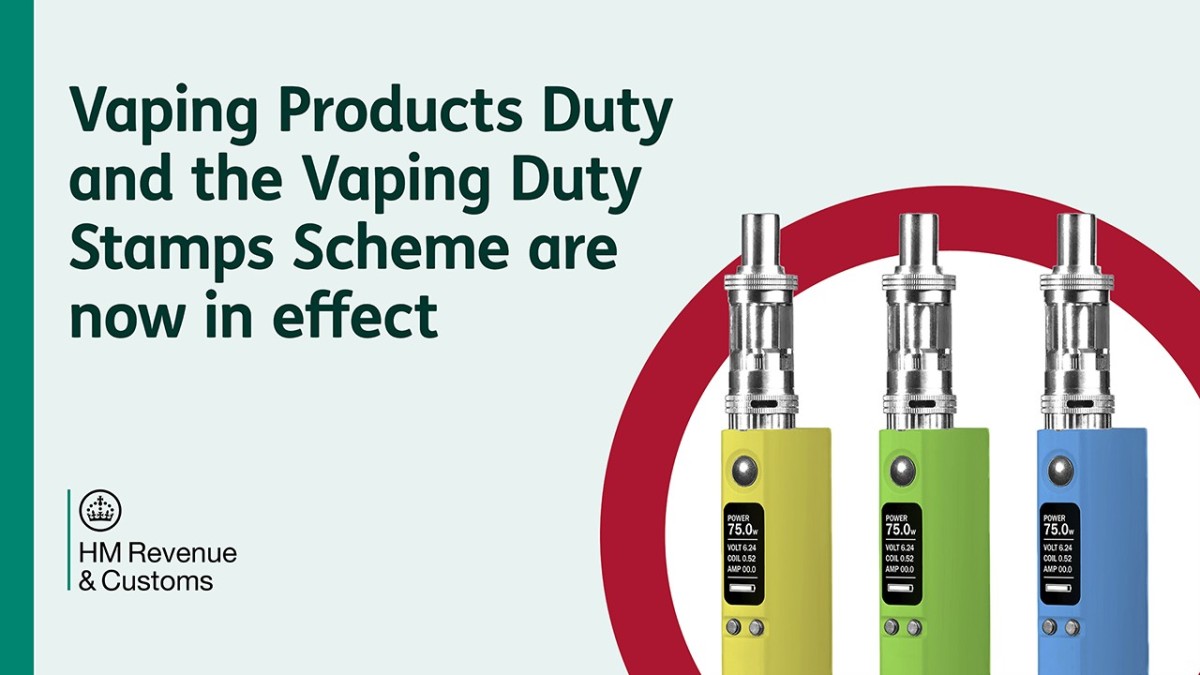
UK HMRC Launches Vape Duty Stamps on October 1, Ushering in Supply-Chain Traceability as Chinese Exporters Face New Compliance Hurdles
HM Revenue & Customs put the UK's Vaping Products Duty and Vaping Duty Stamps Scheme into effect on October 1. All vaping liquids manufactured in or imported into the UK are now subject to duty at £2.20 per 10ml, regardless of nicotine content. The stamp regime will introduce digital functionality designed to provide traceability throughout the supply chain, with approved manufacturers, importers and warehousekeepers required to report product movements and retailers and consumers eventually able to scan stamps to verify authenticity. China exported $177 million of vape-related products to the UK in August, up 51.4% year over year, increasing the significance of the new compliance regime for China's Shenzhen-centered vape supply chain.
Regulations
Oct.04
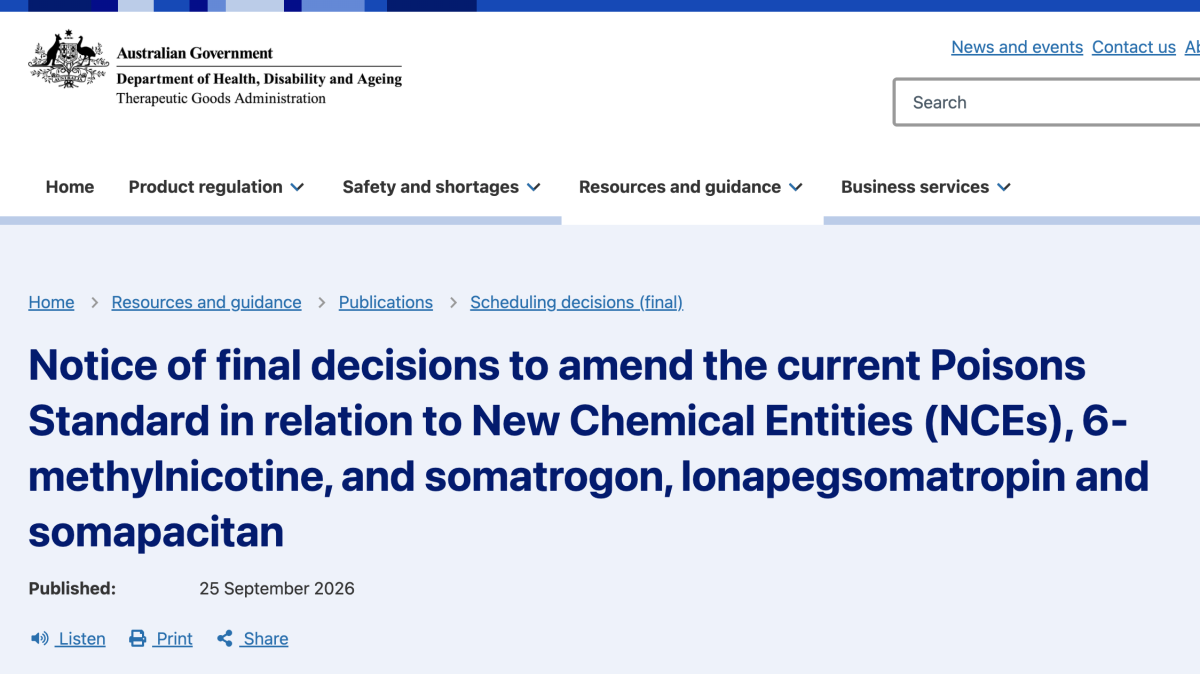
Australia Adds 6-Methylnicotine to Schedule 9 Prohibited Substances, Effective October 1
Australia's Therapeutic Goods Administration published a final decision on September 25 to classify 6-methylnicotine as a Schedule 9 prohibited substance under the Poisons Standard, effective October 1, 2026. TGA said the chemical has been reported in e-cigarette liquids sold in Australia and marketed as nicotine-free or nicotine alternatives, while evidence also indicates its use in preparations such as oral pouches. The government originally proposed a Schedule 7 classification but ultimately adopted the stricter Schedule 9 designation, citing acute toxicity, dependence risk, use in unapproved consumer products and misleading marketing.
News
Sep.29 by 2Firsts Perspectives
PMI Pushes Smoke-Free Business in Latin America as Argentina Lifts Heated Tobacco Ban, Mexico City Share Tops 7%
Philip Morris International (PMI) showcased IQOS heated tobacco systems and nicotine pouch products at Technovation 2026 in Buenos Aires on October 7–8, presenting research on consumer attitudes, regulatory developments and illicit cigarette trade across Latin America. PMI Chief Global Growth Officer Stefano Volpetti said smoke-free products accounted for more than 7% of the Mexico City market. Argentina repealed its heated tobacco ban in May 2026 and introduced registration requirements for tobacco and nicotine products, while local media reported nicotine pouch sales in Mendoza. A PMI-commissioned survey found that only 8% of respondents across four Latin American countries were familiar with nicotine pouches. A separate KPMG study estimated illicit cigarette consumption at 77 billion sticks across 11 markets in Latin America and Canada in 2025.
PMI
Oct.13
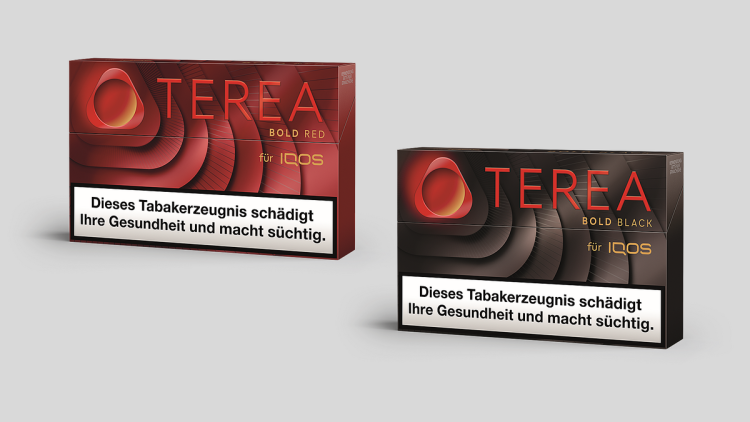
Product | Philip Morris Launches TEREA Bold Red and Bold Black in Germany With Level-10 Tobacco Intensity at €8 per Pack
Philip Morris International (PMI) introduced TEREA Bold Red and Bold Black heated tobacco sticks in Germany in October 2026, both carrying a brand-rated tobacco-flavor intensity of 10, the highest level in the country's TEREA portfolio. Bold Red features leather and warm woody notes, while Bold Black combines woody and subtle floral notes. Both are sold in 20-stick packs at €8, approximately 2.6% above standard TEREA products. Germany's TEREA range now includes 11 flavor variants, alongside a separate 26-stick XL format priced at €10. IQOS Germany announced the new products on October 12, followed by a phased retail rollout from late October and an IQOS Club campaign running through December.
product
Nov.02
Wisconsin Vape Directory One Year On: Retailer Reports Four Store Closures and 70% Staff Cuts
Wisconsin's electronic vaping device directory has been fully enforced for more than a year, and local vape retailers say the reduced range of eligible products has contributed to declining sales, store closures and layoffs. Johnny Vapes owner Ben Hall said he has closed four of seven locations and cut about 70% of his staff. State law bars the sale of vaping devices not listed on the Wisconsin Department of Revenue directory and allows penalties of $1,000 per day for each unlisted device sold or offered for sale. In April 2026, the U.S. Court of Appeals for the Seventh Circuit allowed enforcement of the law to continue.
Regulations
Oct.10