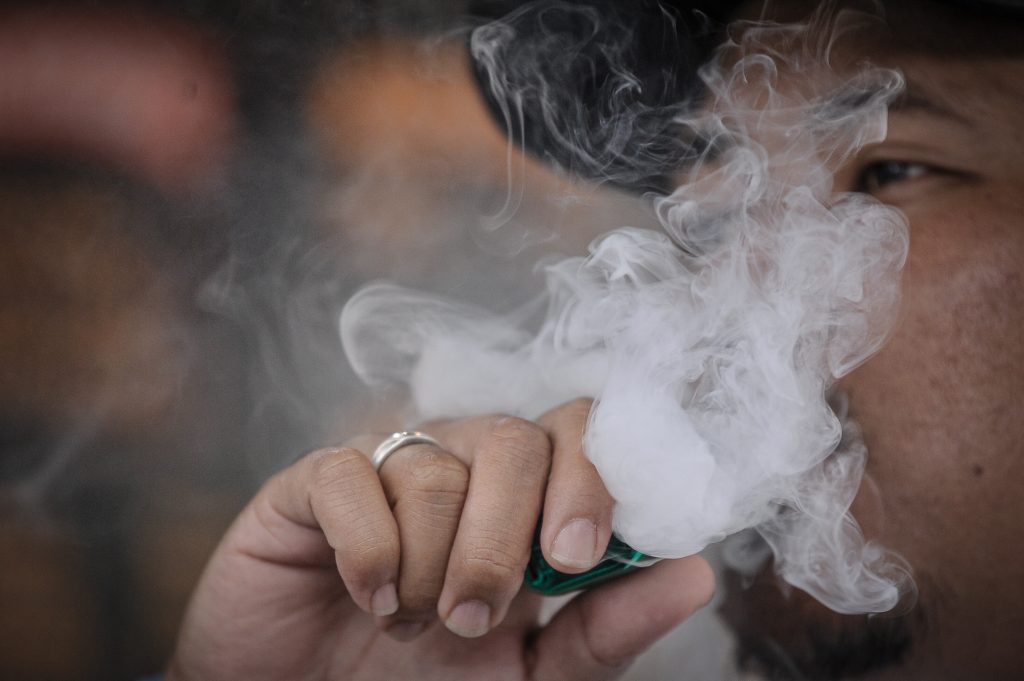
Malaysia’s vape industry flags “policy U-turn” concerns after ban on refillable open-system e-cigarettes

Jan.08
Malaysia’s vape industry flags “policy U-turn” concerns after ban on refillable open-system e-cigarettes
Malaysia’s vape industry has raised concerns over the government’s decision to ban refillable open-system e-cigarettes, describing it as a policy reversal despite earlier regulatory approvals.

Key Takeaways


• Issue: industry concerns over a ban on refillable open-system e-cigarettes despite prior approvals

• DPVM view: Ridhwan Rosli says approved products completed lab testing and formal application processes

• Uncertainties: fate of existing inventories and whether approval fees will be refunded

• State differences: some states ban retail sales while allowing manufacturing, import and export

• Requests: clear enforcement mechanisms, a transition period to clear legally approved stock, and disclosure on approvals and fees


2Firsts, January 8, 2026 – According to The Star, Malaysia’s vape industry is raising concerns over what it describes as a policy reversal following the government’s decision to ban refillable open-system electronic cigarettes despite earlier regulatory approvals.


Industry players said the decision shows a lack of policy consistency and regulatory clarity despite prior Health Ministry approvals. Dewan Perniagaan Vape Malaysia (DPVM) secretary-general Ridhwan Rosli said the ban raised serious questions as approved products had already undergone laboratory testing and formal application processes.


Ridhwan said fees had been paid, with some products already approved, others still being processed, and some already in production. He said banning vape products after approvals were granted represents a policy U-turn that unfairly penalises traders, particularly those holding stock worth hundreds of millions of ringgit.


He said uncertainty now surrounds the fate of existing inventories and whether fees paid for approvals would be refunded. He also said there are inconsistencies at the state level, where some states ban retail vape sales but continue to allow manufacturing, import and export activities.


Ridhwan warned that banning products without clear enforcement mechanisms risks fuelling illicit markets and unregulated products, undermining consumer safety and compliant businesses. He said if the ban proceeds, the government should provide a reasonable transition period to allow traders to clear stocks that were legally approved.


He also said the government should clearly detail the total number of products already approved, those still under review, and the status of existing approvals and fees to prevent major industry losses and damage investor confidence.


Image Source: MEDIA MULIA

We welcome news tips, article submissions, interview requests, or comments on this piece.

Please contact us at info@2firsts.com, or reach out to Alan Zhao, CEO of 2Firsts, on LinkedIn


Notice

1.  This article is intended solely for professional research purposes related to industry, technology, and policy. Any references to brands or products are made purely for objective description and do not constitute any form of endorsement, recommendation, or promotion by 2Firsts.

2.  The use of nicotine-containing products — including, but not limited to, cigarettes, e-cigarettes, nicotine pouchand heated tobacco products — carries significant health risks. Users are responsible for complying with all applicable laws and regulations in their respective jurisdictions.

3.  This article is not intended to serve as the basis for any investment decisions or financial advice. 2Firsts assumes no direct or indirect liability for any inaccuracies or errors in the content.

4.  Access to this article is strictly prohibited for individuals below the legal age in their jurisdiction.


Copyright


This article is either an original work created by 2Firsts or a reproduction from third-party sources with proper attribution. All copyrights and usage rights belong to 2Firsts or the original content provider. Unauthorized reproduction, distribution, or any other form of unauthorized use by any individual or organization is strictly prohibited. Violators will be held legally accountable.

For copyright-related inquiries, please contact: info@2firsts.com


AI Assistance Disclaimer


This article may have been enhanced using AI tools to improve translation and editorial efficiency. However, due to technical limitations, inaccuracies may occur. Readers are encouraged to refer to the cited sources for the most accurate information.

We welcome any corrections or feedback. Please contact us at: info@2firsts.com

Australia Brings in Deloitte to Support Illicit Tobacco and Vape Enforcement Across Data, Processes and Project Delivery
Australia’s Department of Home Affairs has hired Deloitte to provide data analytics, business-process, communications and project-delivery support to the Office of the Illicit Tobacco and E-Cigarette Commissioner. The government says Deloitte personnel do not provide policy advice to the Commissioner or the Australian government, with policy development and decision-making remaining with public officials. The arrangement has nevertheless drawn scrutiny because Deloitte has previously provided professional services to several tobacco and vaping companies.
Sep.03
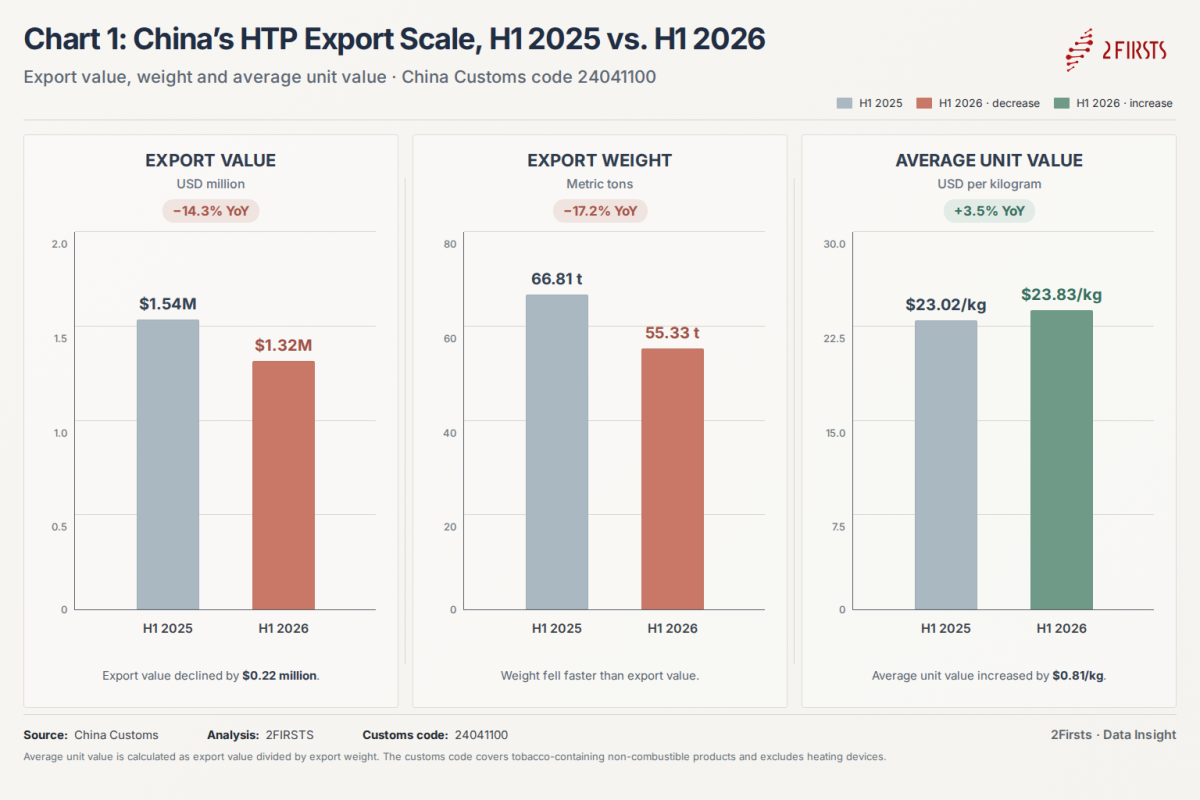
China’s HTP Exports Fell 14.3% in H1 2026 as Russia and Belarus Accounted for 76% Lead
In H1 2026, China’s HS 24041100 exports stood at $1.32 million, down 14.3% YoY, with volume falling 17.2% to 55.33 tons. Market distribution shifted drastically amid overall export drops. Exports to Russia and Belarus totaled $1 million, taking 76.0% of all shipments versus 29.5% in H1 2025. Belarus became the top destination with export value jumping 177.5%, while the Philippines, Singapore and Indonesia’s combined share slumped from 49.3% to 11.2%.Domestically, Yunnan led exporter registrations; Jiangsu and Shanghai were key suppliers, yet Anhui and Sichuan had no exports. Heavy concentration means order or declaration changes for Russia/Belarus greatly affect national aggregate data. The data shows customs entry points (not end markets), covering tobacco consumables only, excluding heating equipment and the complete HTP supply chain.
Aug.11
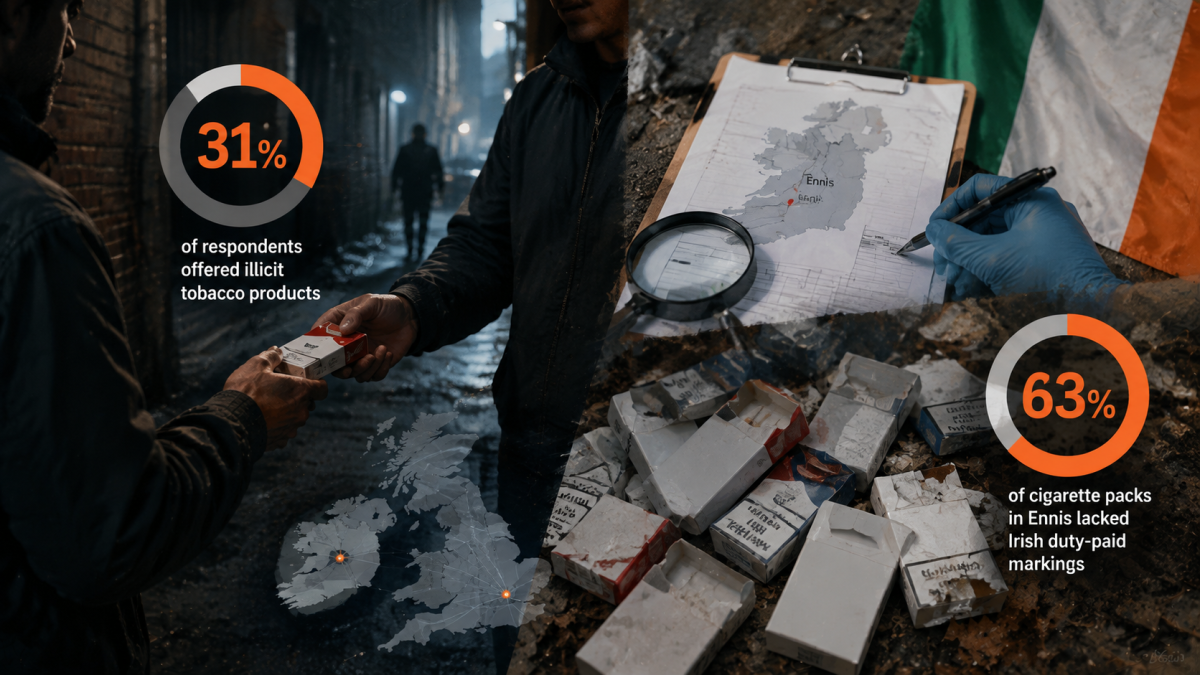
JTI Research Finds 31% of UK Respondents Offered Illicit Tobacco, While 63% of Ennis Packs Lack Duty Marks
Multiple JTI-backed studies in the UK and Ireland indicate that illicit tobacco remains visible across consumer interactions and local markets. In the UK, JTI research found that 31% of respondents said they had been offered illicit tobacco products. In Ireland’s Ennis area, a JTI-commissioned empty pack survey found that 63% of sampled cigarette packs did not carry Irish duty-paid markings. The findings come from industry research rather than official government estimates of illicit tobacco market size, but highlight continued concerns among regulators, legitimate retailers and tobacco companies over illicit trade.
Aug.19
Altria Smokeable Profit Rises 2.4% as Marlboro Share Falls and U.S. Discounts Gain
Altria’s second-quarter results show a U.S. nicotine market splitting across price, product and regulation. Smokeable profit rose 2.4% as Marlboro pricing offset lower volumes, while discount brand Basic gained share among value-conscious smokers. In oral nicotine, on! PLUS expanded distribution but faced intensifying competition from ZYN and Velo. NJOY remained off the market as patent and regulatory hurdles delayed its return. The broader lesson: U.S. growth increasingly depends on price-tier strategy, retail execution, authorisation and enforcement readiness across the industry.
Special Report
Jul.31
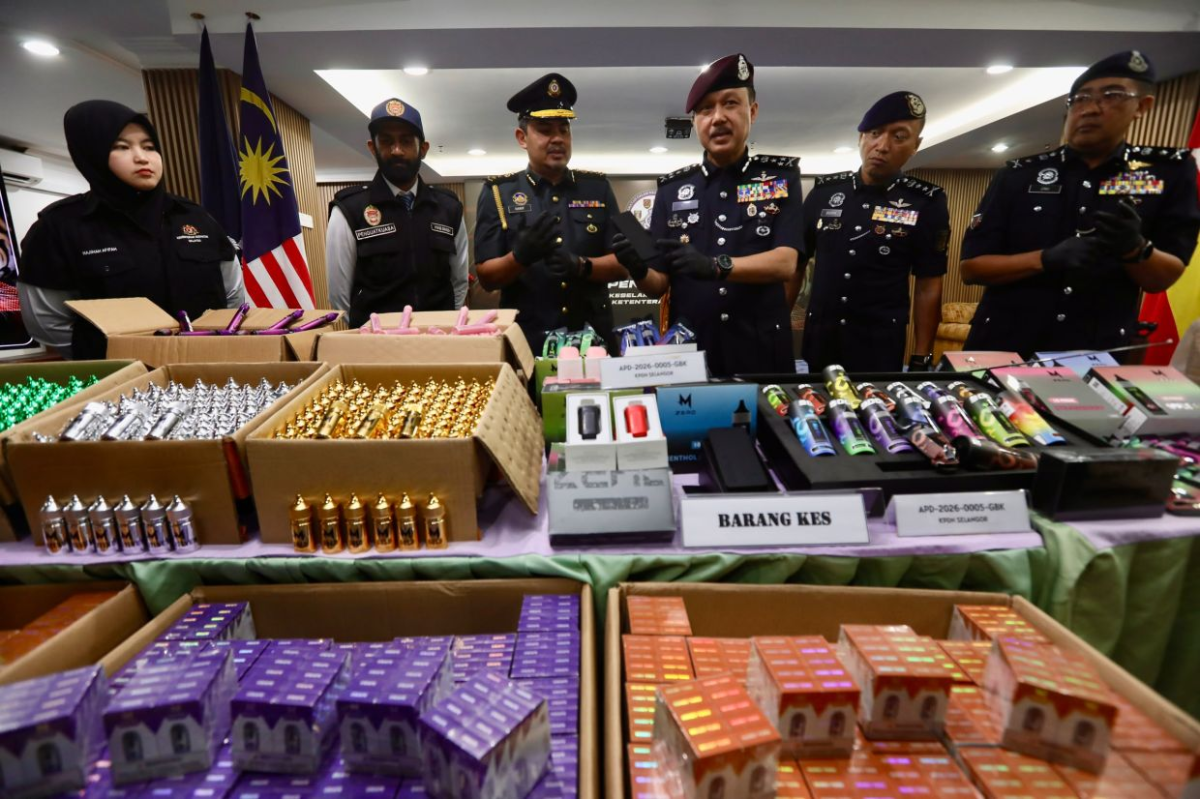
Malaysia Police Seize RM12.7 Million in Illegal Vapes and Cigarettes as Probe Points to Sea Shipments From China
Police in Malaysia’s Selangor state seized illegal vape products and contraband cigarettes worth about RM12.7 million (approximately $3 million) in two enforcement operations. According to New Straits Times and The Star, the vape-related operation uncovered 131,036 boxes of vape products, 4,900 bottles of e-liquid and 25,510 vape devices, valued at about RM9.4 million. Police said preliminary investigations indicated that some illegal vape products entered Malaysia through sea shipments from China before moving through storage and distribution networks.
Aug.10
Philip Morris Malaysia Again Meets Religious Authority Over Cigarette Alternatives as Perlis Mufti Responds on Halal Criteria
Philip Morris Malaysia Managing Director Naeem Shahab Khan met Perlis Mufti Mohd Asri Zainul Abidin on September 17 and presented the company's shift from conventional cigarettes toward alternative products. The mufti said a product could be considered halal if it is clean, its side effects are not harmful or can be controlled, and it does not involve excessive waste. His remarks did not mention IQOS or any other specific PMI product and did not amount to a new product-specific religious ruling. It was at least the second publicly reported engagement between Philip Morris Malaysia and a Malaysian religious institution over cigarette alternatives within six months.
Regulations
Sep.18 by 2Firsts Perspectives