Editor's Note: According to a report from the Malaysian business media outlet "The Page" in April 2024, INGOO Soul Sdn Bhd is the first and only company in Malaysia to obtain full licenses for the production, sale, import, and export of e-cigarettes. Due to the unclear nature of the licensing system and the background of the company mentioned in the article, in order to uncover the truth, 2FIRSTS interviewed various parties, including the Malaysian E-Cigarette Association, the Malaysian E-Cigarette Consumers Association, the Consumers' Choice Center, and more industry experts.
According to a report from the Malaysian business media "The Page" in April 2024, the Malaysian government is considering introducing a licensing system for specific retailers selling e-cigarette products. This is seen as the first step towards regulating the domestic e-cigarette market to ensure compliance with industry standards. The report stated that according to the final announcement by Malaysian government agencies, INGOO Soul Sdn Bhd is the first and only company to be granted a full license for production, sale, and import/export of e-cigarettes in Malaysia. This license includes the production and sale of e-cigarette smoking devices and e-liquids containing nicotine in Malaysia.
In the new system, compliance e-cigarette products in the future Malaysian market will only be produced and supplied by companies holding the national e-cigarette license (Electronic Vape Liquid/Gel Production License), or legally imported from overseas; Malaysian e-cigarette companies that meet safety and compliance production conditions can apply to government agencies for production and sales qualifications licenses for e-cigarettes and related products, including e-liquid, smoking devices, disposable e-cigarettes, etc. Companies that have not obtained an e-cigarette license will not be allowed to produce and sell e-cigarette products within Malaysia, and violators will be subject to legal sanctions.
Malaysia's decision to "open up e-cigarette licenses" raises questions about the origins of the first company to receive one. What led to the proposal and implementation of the "license system"? How will the new system of licensing guide the direction of the Malaysian and even the entire Southeast Asian market?
True Identity of INGOO
According to public information, INGOO SOUL SDN BHD in Malaysia is registered with the registration number 202201006483 (1452180-V). However, there is limited information available about the company and no official website to refer to.
In the Chinese online sphere, apart from the suspected advertorials published by "The Page Business Page," there have been no other related reports. Among the searchable commercial entities, one named Shenzhen Ying Gehun Technology Co., Ltd. was established on September 23, 2021, with a registered capital of 5 million RMB, a unified social credit code of 91440300MA5H0KKX3Q, and Xie Xiaofan as the legal representative. The company is located in the Qianhai Shenzhen-Hong Kong Cooperation Zone of Shenzhen City, with its business scope including the sales of e-cigarette vaporizers (non-tobacco products, no tobacco ingredients).
The Malaysian E-Cigarette Association and the Malaysian E-Cigarette Consumers Association responded to queries from 2FIRSTS by stating that they have not heard of the company in question and are also not aware of any companies that have obtained a so-called "full license.
Ridhwan Rosli, the president of the Vape Consumers Association Malaysia (VCAM), stated that according to the current Malaysian legal system, licenses are issued at the federal, state, and local levels for production, import, and retail of e-cigarettes. It is not possible to have a single license that allows for the full production and retail of e-cigarettes. The discussion surrounding pre-market approval for e-cigarette products in Malaysia, similar to the US PMTA process, is ongoing and has not yet been finalized.
2FIRSTS attempted to contact the media outlet "The Page" for confirmation. A spokesperson stated that their colleague responsible for the article in question would respond to the matter, but as of the time of publication, 2FIRSTS has not received a response.
Licensing System: from Eliminating Tax Loopholes to Regulating Retail
In the past year, Malaysia has seen a period of intensified regulation implementation.
On November 30, 2023, the Alliance for the People's Health passed the "2023 Public Health Control of Smoking Products Act" through a majority voice vote. A total of 27 members of parliament participated in a heated debate, with the removal of the "Smoke-Free Generation" clause from the bill, which aimed to ban smoking for individuals born after 2007.
In addition to discussions about the "smoke-free generation" and the upcoming elections, debates and conflicts regarding the "registration system" and "licensing system" are also brewing in Malaysia.
In April 2023, Malaysia has mandated that domestic e-cigarette manufacturers register their production activities with the Customs Department (JKDM) by April 30, 2023. In a statement on April 2nd of that year, the Ministry of Finance (MoF) stated that registering early within the prescribed period (April 1st to April 30th) would prevent manufacturers from being fined for late registration.
The Ministry of Finance stated that this registration, conducted in accordance with the 1976 Goods and Services Tax Act, aims to ensure full industry compliance and smooth tax collection by May 2023. Effective from April 1, 2023, the government will impose a consumption tax on e-cigarette liquids or gels containing nicotine at a rate of RM 0.40 per milliliter, as published in the Federal Government Gazette in the 2023 Consumption Tax (Amendment) Order. "With the implementation of this consumption tax, the government will continue to ensure that all regulations and controls on taxable goods by the Customs Department are improved to prevent revenue loss for the country." This will allow for the fulfilment of the promise made in the 2023 budget, where "half of the revenue from e-cigarette consumption tax will be reallocated to the Ministry of Health to enhance the quality of health services."
The registration drive in April 2023 was synchronized with Malaysia's implementation of a consumption tax on liquids or gels containing nicotine used in e-cigarette devices. This action aims to increase government revenue and eliminate tax loopholes.
The store licensing system being discussed for 2024 was proposed by former Health Minister Khairy Jamaluddin. Health Minister Dzulkefly Ahmad announced that he will be submitting a memorandum to the cabinet outlining regulatory proposals based on the Public Health Control of Tobacco Products Act 2024 (Act 852). In the memorandum, former minister Khairy Jamaluddin suggested that the government introduce a licensing system to restrict the sale of e-cigarettes to licensed specialty stores.
A market observer from Malaysia told 2FIRSTS that the former Health Minister, Dr. Dzulkefly Ahmad, who proposed the licensing scheme, is now the driving force behind the "Smoke-Free Generation" initiative. He believes that after the "Smoke-Free Generation" initiative was halted in Malaysia, the introduction of the licensing scheme is another political attempt by Dr. Dzulkefly to regulate e-cigarettes.
Controversy: Can Licensing System Bring Better Future?
According to reports, the Malaysian government is considering introducing a licensing system for e-cigarettes and will also provide tax incentives to support local e-cigarette businesses in order to promote the sustainable development of the industry and help transition domestic e-cigarette products from the current chaotic market into a regulated market.
In the future, possessing a license will become the standard for regulating the e-cigarette market in Malaysia. The Consumer Choice Center (CCC), in an interview with 2FIRSTS, expressed concerns about the potential consequences that could affect consumers' access to safer e-cigarette alternatives.
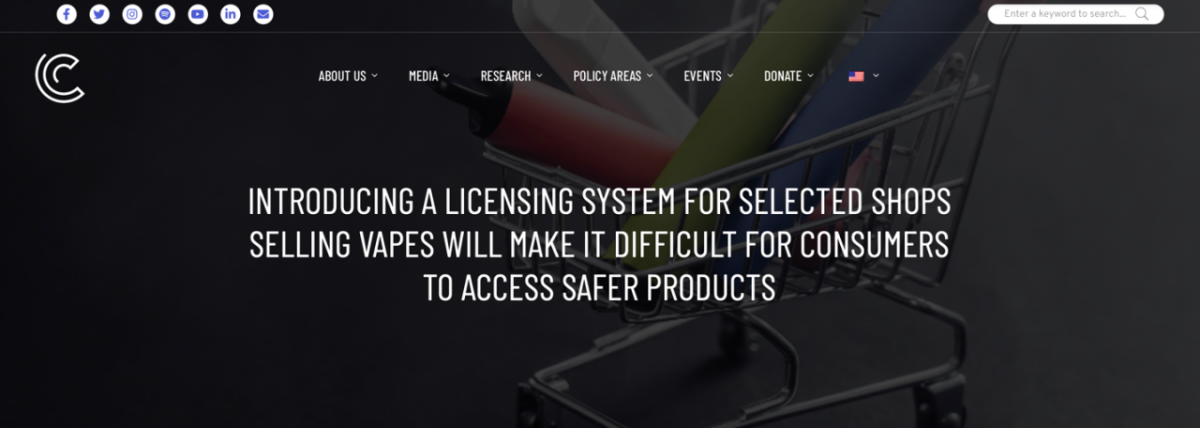
The association stated that while the proposed licensing system aimed to address concerns related to e-cigarettes, introducing a selective licensing for e-cigarette stores could inadvertently hinder consumers' access to safer smoking alternatives and push them towards unregulated channels, thus undermining public health goals. Tarmizi Anuwar, a representative from the Malaysian Consumers' Choice Center, emphasized that e-cigarettes offer a safer nicotine intake option and suggested that regulated products could be sold in convenience stores without the need for specialty shops. The suggestion of a "licensing system" would result in a monopoly.
Access to alternative products is crucial in helping consumers quit smoking. It emphasizes the need for balanced regulation that prioritizes public health goals while respecting consumer choice. By restricting the supply of licensed e-cigarette shops, consumers may face limited choices and may turn to less regulated or unsafe alternatives. Providing opportunities for alternative products is key in aiding smoking cessation. Selective shop licensing systems will only make it harder for consumers to access safer products, leading to a higher likelihood of returning to smoking and black market products.
He also pointed out to 2FIRTS that a viewpoint that would put rural or semi-urban residents at a disadvantage in accessing e-cigarettes is unfair treatment for consumers in different regions.
Tarmiz Anuar stated that the association advocates for policies to be implemented that would allow consumers to access a variety of safer e-cigarette products, while also ensuring proper regulation.
When commenting further on e-cigarette regulation, Tamiz emphasized the importance of maintaining technological neutrality. By acknowledging the diversity of nicotine delivery products available on the market, including open, closed, or disposable e-cigarettes, heated tobacco, and oral nicotine, policymakers can create an environment that promotes consumer choice and innovation.
Technological neutrality ensures freedom of choice, neither forcing consumers nor businesses to use specific technology. Having to use specific technology can discriminate against other technologies, leading to increased production costs and ultimately higher product prices. Furthermore, for consumers, it can be difficult to access and purchase less harmful and more affordable e-cigarettes or alternative products.
It is worth noting that this licensing system is still in its early stages and has not yet been fully implemented. As for INGOO Soul Sdn Bhd, the company claiming to be the first and only enterprise to obtain a full license for the production, sale, and import/export of e-cigarettes in Malaysia, its true identity remains questionable. Industry insiders speculate that this press release may be a precursor action to open up the Malaysian market before the policy is fully implemented.
2FIRSTS will continue to focus on the Malaysian market and regulatory trends surrounding licensing.
We welcome news tips, article submissions, interview requests, or comments on this piece.
Please contact us at info@2firsts.com, or reach out to Alan Zhao, CEO of 2Firsts, on LinkedIn
Notice
1. This article is intended solely for professional research purposes related to industry, technology, and policy. Any references to brands or products are made purely for objective description and do not constitute any form of endorsement, recommendation, or promotion by 2Firsts.
2. The use of nicotine-containing products — including, but not limited to, cigarettes, e-cigarettes, nicotine pouchand heated tobacco products — carries significant health risks. Users are responsible for complying with all applicable laws and regulations in their respective jurisdictions.
3. This article is not intended to serve as the basis for any investment decisions or financial advice. 2Firsts assumes no direct or indirect liability for any inaccuracies or errors in the content.
4. Access to this article is strictly prohibited for individuals below the legal age in their jurisdiction.
Copyright
This article is either an original work created by 2Firsts or a reproduction from third-party sources with proper attribution. All copyrights and usage rights belong to 2Firsts or the original content provider. Unauthorized reproduction, distribution, or any other form of unauthorized use by any individual or organization is strictly prohibited. Violators will be held legally accountable.
For copyright-related inquiries, please contact: info@2firsts.com
AI Assistance Disclaimer
This article may have been enhanced using AI tools to improve translation and editorial efficiency. However, due to technical limitations, inaccuracies may occur. Readers are encouraged to refer to the cited sources for the most accurate information.
We welcome any corrections or feedback. Please contact us at: info@2firsts.com